


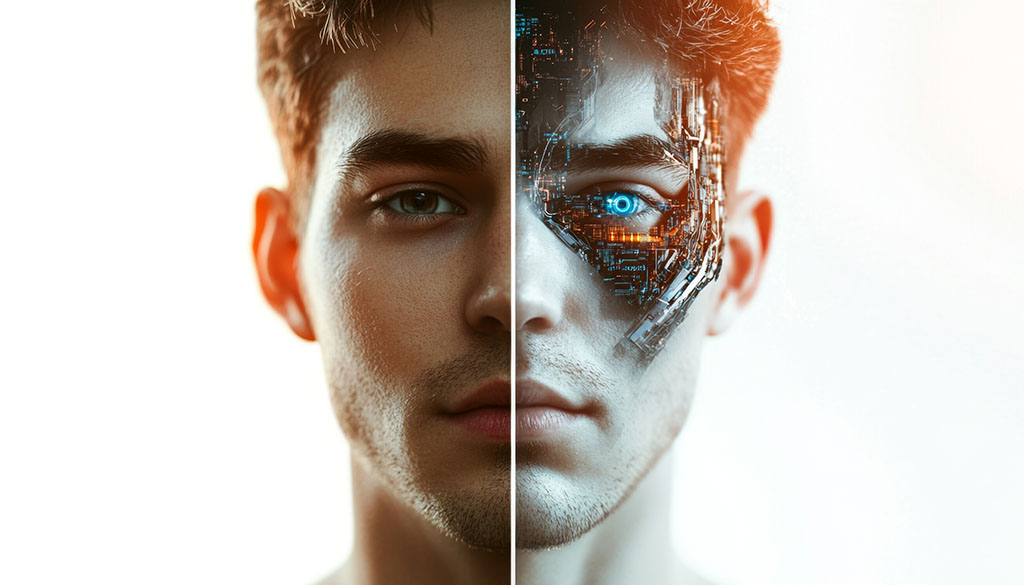
In 2026, Human-First Marketing is the most concrete answer to a paradox that every entrepreneur feels on his or her skin: the more we invest in technology, the more customers demand humanity.
In an environment dominated by AI, automation, algorithms and platforms, what really differentiates a company is not “having AI,” but how it manages to use it to build authentic, transparent and value-oriented relationships for people.
This consideration implies that AI adoption is no longer an option, but a choice now taken for granted, almost a competitive obligation.
However, I was pleased to write this article because it returns the person to a central role.
Why Human-First Marketing is a priority for the entrepreneur
If we look at the trends of the past few years, a key point emerges: consumers are hyper-exposed to messages and content, but increasingly unwilling to tolerate cold, standardized, impersonal experiences.
You know the chats and bots that answer different questions the same way? 😅
Technology alone is no longer enough to convince, retain and grow a brand.
For an entrepreneur, this means two very operational things:
- the choice of tools is no longer just an “IT” or “marketing” decision, but a strategic one for positioning;
- corporate culture-how you talk to customers, how you listen to them, how you handle mistakes and problems-becomes an integral part of your communication strategy.
Human-First Marketing, in practice, is a way of designing the entire customer experience from people: from their needs, their fears, their real expectations, and not just from short-term KPIs.
We could say that what is taking place is a paradox.
The further we go in adopting technology and artificial intelligence, the more value is gained by those elements that have always been at the heart of a marketing strategy: putting people at the center of all actions and activities carried out by your company.
AI, automation and “human garrison”: finding the balance
Many companies, especially SMEs, experience technology as an aut aut: either I automate everything to reduce costs, or I stay “artisanal” and give up efficiency.
In fact, in 2026 the real competitive advantage comes from being able to design an intelligent balance between automation and human oversight.
Imagine your customer care.
- AI and bots can handle simple, repetitive requests that do not require empathy or complex assessments.
- Your human team needs to step in exactly where the relationship is decided: a major issue, a complaint, a strategic order, a doubt that may turn into a cancellation or an upgrade.
Human Marketing asks you to design this flow in advance: not to let automation “cage” the customer, but to allow the AI to act as an intelligent filter, setting the stage for the person to intervene with context, appropriate tone, and decision-making skills.
For the entrepreneur, this approach also has a clear economic advantage: people are used where they generate real value (loyalty, cross-selling, reputation), while technology absorbs the low value-added operational part.
Putting a face to the company: the return of the human voice
A hallmark of Human-First Marketing is the conscious choice to “put your face on it.”
In a world of similar sites, generic content and posts that are all the same, the ability to see and hear who is behind a brand is a very strong differentiator.
For an entrepreneur or business owner, this translates into some very concrete actions:
- speak for themselves, through articles, videos, podcasts, signed newsletters;
- bring out the team, not just the product: technicians, consultants, production people who tell about their work, the problems they solve, the choices they make;
- show processes and behind the scenes, giving up a bit of the “perfect” image to gain credibility. You know this live on social that makes social media managers so happy? 😂
The tone of voice, in this context, is crucial: it must be professional but understandable, competent but not self-referential, direct but respectful. The goal is not to astonish but to clarify, reassure and guide.
When an entrepreneur decides to expose himself or herself in this way, the effect is twofold: on the one hand, it brings customers closer, and on the other hand, it consolidates the internal culture, because employees recognize themselves in a consistent vision and way of speaking.
Human to Human marketing: ethics as a competitive lever
An often-overlooked pillar of Human-First Marketing is ethical data management.
In 2026, customers are increasingly aware that every click, every choice, every interaction is tracked. This is not a problem in itself; it becomes a problem if it is not clear how and why the data is being used.
For a human-first oriented company, the key question is not “How much can I track?” but “What concrete value am I giving back to the customer in exchange for their data?”
It is a profound change in perspective:
- privacy is not just a regulatory obligation, but a promise of respect;
- customization is not a trick to sell more, but a service to save time, reduce complexity, simplify choices.
In terms of communication, this means rewriting disclosures and messages in clear language, dispensing with unnecessary technicalities, and explaining, with concrete examples, what the company does with the data and what it will never do.
For the entrepreneur, it also means a stronger positioning: in a market that is racing toward data over-exploitation, being perceived as a brand that puts people at the center is a distinguishing factor, especially in B2B and high-trust industries.
Human-First throughout the customer journey
Thinking Human-First means to stop looking at channels in isolation and start thinking in terms of a pathway: from first contact to the advocacy phase, what are the moments that really matter to your customer?
Basically, you can imagine the customer journey as a sequence of “key moments.”
At this point your funnel marketing can become:
- The first time the potential client hears about you;
- when visiting the site and trying to figure out if you are trustworthy;
- When asking for a quote or demo;
- When it has a problem after purchase;
- When considering whether to renew, repurchase, recommend.
Human-First Marketing invites you to design each of these moments with simple but decisive questions:
- What is the customer experiencing at this point?
- What does he really need (clarity, reassurance, speed, listening)?
- What is the right mix of content, automation, and contact to make everything more human?
This planning, if done methodically, becomes a lever of strategy: it allows you to invest better, to avoid waste on “fashionable” but irrelevant initiatives for your customers, and to strengthen exactly those steps where the fate of the relationship is decided.
H2H marketing: community, listening and co-creation
Another central aspect, often forgotten, is that Human-First Marketing is not just “talking to people,” but also creating spaces for people to talk to each other and to the brand.
For an entrepreneur, this means changing perspective on the concept of “community.”
- not just social pages where they post content, but places (physical or digital) where customers can engage with each other, give feedback, and contribute to the development of products and services;
- Ambassador programs built on truly satisfied customers, not just passing influencers;
- structured listening, not just sporadic surveys: periodic calls with key customers, working tables, interactive webinars where questions become input to improve the offering.
From a Human-First perspective, the company is not afraid of confrontation; on the contrary, it seeks and facilitates it.
This generates a number of very concrete benefits: ideas to innovate, reduced risk of launching off-target projects, increased qualified word-of-mouth.
Human-First Marketing: closing argument
I have always believed that the human aspect should be at the center of every digital marketing and business strategy.
Over time, I have often written and explored topics such as user experience, customer relationship, and touchpoint care, precisely because I believe they are the real infrastructure of a solid brand.
Today, however, I feel an additional concern: artificial intelligence risks dehumanizing not only our relationship with customers, but more importantly our relationships with the people we work with every day, our colleagues and suppliers.
They are part of our own gear and, caught up in the race to “save time, resources and do everything right away,” we risk reducing them too to functions, tasks, workflows.
Instead, after years of working online and smart working, I feel a deep need to get back to sitting around a table, looking people in the eye, sharing thoughts, goals, and strategies as we drink coffee, take a walk downtown, ask a colleague how his weekend went.
I am convinced that this truly HUMAN side of the business – made up of real conversations, trust, confrontation, and presence – will be one of the hallmarks of brands that are able to grow in the next decade
H2H marketing: related articles
- AI consulting for businesses
- Google Deep Thinking Ratio: what changes for Italian SMEs in the next 3 years
- How AI crawlers are changing the rules of the game for online sellers
- Human-First Marketing: what is your Brand’s strategy?
- SEO and artificial intelligence: how are they connected?
- Google VEO video generator: amaze your customers
- YouTube AI: what changes for users, creators and companies
- LLM optimization: how to get found by AI models
- Artificial intelligence applied to marketing in 2026
- Google AI Mode: make the most of it for your Business