


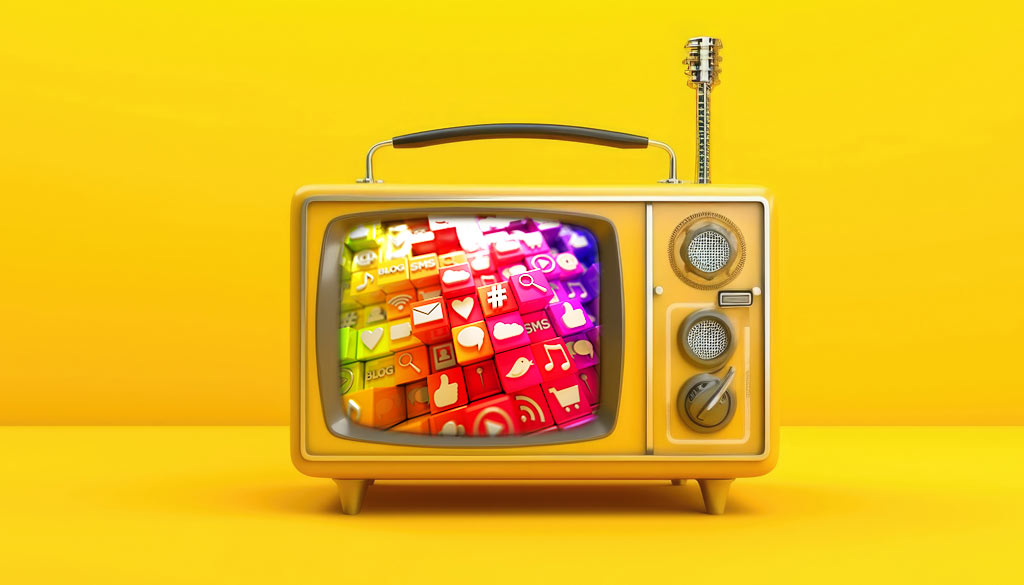
Social TV represents the convergence of television and social media, that is, the set of technologies, platforms and practices that allow viewers to interact in real time with television content through social networks.
This interaction can take place through comments, shares, votes, memes and discussions on platforms such as Twitter, Facebook, Instagram and WhatsApp, both during the live broadcast and afterwards.
The phenomenon is often based on the use of the so-called second screen: while watching TV, people simultaneously use a smartphone, tablet or PC to participate in digital conversation.
Instagram and TikTok are actually working to bring their platforms directly to smart TVs, with the development of native apps dedicated to large screens.
This move represents a significant shift in the way social media is enjoyed, aiming to expand its presence beyond smartphones and tablets and also win over the living room audience that traditionally prefers to watch television.
Social TV transforms television viewing from a passive experience to a participatory and collective one, expanding the reach and impact of programs through the active involvement of viewers and the virality of user-generated content.
In this article we look at how Companies can implement these new technologies in their Social Media Marketing strategies.
Social TV: Instagram and TikTok from mobile to the big screen
Recent news says that Instagram and TikTok are indeed working to bring their platforms directly to smart TVs, with the development of native apps dedicated to large screens.
This move represents a significant shift in the way social media is enjoyed, aiming to expand its presence beyond smartphones and tablets and also win over living room audiences traditionally associated with TV entertainment.
- Content format: Instagram and TikTok TV videos are designed primarily in portrait format, while TVs have horizontal screens. Apps will then have to adapt the interface to make viewing comfortable and engaging even on TV.
- Interaction: The experience on TV will be more focused on viewing than social interaction.
Features such as comments and messaging will play a less central role, while navigation between content could be simplified and optimized for use with the remote control or voice commands. - Target Audience: The goal is also to reach a more adult audience that is less accustomed to using social on smartphones, replicating the success YouTube has had in bringing video to TVs and thus expanding the user base and advertising opportunities.
How Companies Can Leverage Social Network TV
Companies can use Social TV in several strategic ways to increase visibility, engagement and return on advertising investment:
1. Brand integration and product placement
Integrating the brand within television content, as is done in successful programs (e.g., Caffè Borbone in Maria De Filippi’s formats), allows for the development of an emotional connection with the viewer and reinforces brand memorability.
Brand presence can be amplified by spontaneous social sharing and digital word of mouth.
Interacting in real time makes the brand more human, accessible and close to the audience.
When brands respond, joke or simply participate in online conversations during TV events, they become more recognizable and memorable.
Authentic and timely engagement creates a sense of belonging and strengthens the relationship with consumers, who tend to prefer brands with which they feel a personal connection
2. Real-time engagement: turning viewers into active players
When a TV content is relaunched on social media, it transcends the space and time limits of airing: it can be commented on, reinterpreted and shared even days later, generating a continuous cycle of interactions.
This phenomenon increases the visibility of corporate messages and prolongs the life of communication campaigns
Social TV allows viewers to comment, share and interact in real time while watching TV programs, transforming viewing from a passive to a participatory experience.
Conversations generated during the airing of a TV event exponentially increase brand visibility.
The presence of dedicated hashtags, contests, live polls, voting systems and live comments, branded tweets or posts during the program stimulates viewers’ participation, who share opinions, emotions and content.
This generates a real “buzz” that results in increased brand awareness and attention, often well beyond the duration of the event itself.
This fosters the creation of a community around the brand and its values, increasing loyalty and engagement.
3. Stimulating emotions, sharing and engagement
TV remains a powerful vehicle of emotion. Social TV amplifies this impact by fostering the sharing of experiences and feelings among users.
Formats that focus on human stories and authentic faces generate a deeper connection with the audience, which is also reflected in higher engagement for the companies associated with this content.
Images and videos are the most effective content for generating engagement in Social TV.
Instagram, in particular, is confirmed as the best performing platform: although it has less content posted than Twitter, it generates more than 80 percent of total engagement, especially among young people.
Studies show that buzz generated on social during TV events is closely correlated with increased sales and purchase consideration of brand-related products.
For example, the presence of hashtags and tweets in the TV schedule has led to an increase in conversations and, consequently, sales of promoted products
4. Creation of Brand Communities
Companies can then focus on engaging visual content to maximize audience participation.
The ability to actively participate in real time turns viewers into brand ambassadors.
Campaigns that invite audiences to share photos, messages or vote during the TV event increase engagement and loyalty, growing digital communities around the brand.
A concrete example is the 30 percent increase in a brand’s Facebook fanbase through an interactive campaign linked to a TV event.
Active and transparent brand participation in real-time conversations helps build a positive reputation.
Responding quickly to questions, comments or criticisms shows care and attention to the public, strengthening brand trust and credibility
5. User-generated content (UGC)
User-created content (photos, videos, comments) can be collected and integrated into TV programs or social campaigns, enriching the corporate narrative and making the audience the protagonist.
A prime example might be TikTok Shop, featuring live shows made by contact creators to sell all kinds of products.
Basically, thanks to Social TV, with one click we will go from presentations made by micro influencers to Alessandro Borghese’s 4 Restaurants.
6. Audience analysis and measurement and new monetization models
Social interactions provide valuable data on audience preferences, emotions, and sentiment.
Social TV offers valuable data on viewer conversations and sentiment, allowing companies to measure campaign effectiveness in real time, identify trends and optimize communication strategies.
Today, the popularity of a program (and an associated brand) is no longer measured only by TV share, but also by digital metrics such as online mentions, social interactions and user-generated content(UGC).
Companies that know how to integrate TV and social can gain a competitive advantage by building active and loyal communities around their values and products
The integration of TV and social enables experimentation with new monetization models, such as targeted ads, sponsored content, and influencer partnerships, increasing targeting accuracy and return on investment.
7. Internal and external corporate communication
Companies can create internal “social TV” channels to share messages, events and strategies with employees and contractors, or use dedicated platforms to tell the story of products and services in a direct and engaging way to the external market as well.
Social Network TV: benefits for companies at a glance
- Increased brand visibility and memorability
- Direct and participatory involvement of the public
- Real-time data collection and feedback
- Ability to create more targeted and customized campaigns
- Strengthening community and brand loyalty
Social TV increases companies’ engagement with audiences by making communication more interactive, emotional and participatory.
Companies that leverage this integration can amplify brand visibility, stimulate authentic conversations, collect useful data, and build stronger, longer-lasting relationships with their audience.
Do you want to increase your online visibility to gain new contacts and customers and increase online sales?
Also read these articles:
- Native Advertising: What it is and benefits for Companies
- TikTok TV and Instagram TV: new opportunities for Companies
- YouTube AI: what changes for users, creators and companies
- Web and social networks: is it essential to have both?
- Influencer marketing integrated into digital strategy
- Influencer Marketing ROI: how to calculate it?
- Influencer Marketing: strategies to increase the visibility of your brand
- UGC Creator: the future of influencer marketing is real, authentic and performing.