



Customer Journey what is it?
It is literally translated as “Consumer Journey,” and this definition expresses very well the concept that is intended to be explained.
Probably if you are reading this article you have typed keywords like:
- customer journey example
- customer journey meaning
- customer journey what is
- customerjourney
We use the term Customer Journey to refer to the path each customer takes to reach a brand. And generally this journey ends with the purchase stage.
It is, in fact, a real journey that the client undertakes unconsciously. The first step in this journey is precisely his declaration of a need, a necessity.
From here, walk walk walk, the consumer will come into contact with various touchpoints, i.e., the contact points between him and the company.
These can be online and offline, such as a website or store, an advertisement or word of mouth from a friend.
Let’s think of a concrete example: we have been invited to a 6-year-old girl’s birthday (we express a need: we need to buy her a present!).
The first step is to inquire, perhaps by asking parents or girls her own age, to find out what she might like to receive (offline touchpoin). Or we search the Internet for the classic “6-year-old girl gift” (online touchpoin).
Of course, the touchpoints we will encounter on our way will be many, endless, especially if we focus on the world of the Web.
Every company in its marketing strategies considers the use of touchpoints.
They have the ability to imprint in the consumer’s mind that that particular company can definitely solve his or her problem.
Here is the great potential of customer journeys, the possibility of accompanying the customer through his or her decision-making process, right up to, of course, the purchase stage.
The importance of how each stage of the customer journey should be integrated with the right content is often lost sight of.
What is the Customer Journey
Today, we decided to get into the specifics of the topic, through examples and tips, to go into detail about which content formats we can use for each stage of the Customer Journey, which is divided into 3 phases:
- Awareness
- Consideration
- Decision-making
Such a purpose-designed path can increase your company’s sales so what are you waiting for, get comfortable and continue reading.
Next, we will look at the benefits that the CRM (customer relationship management) HubSpot, in the acquisition and profiling of our contacts and customers.
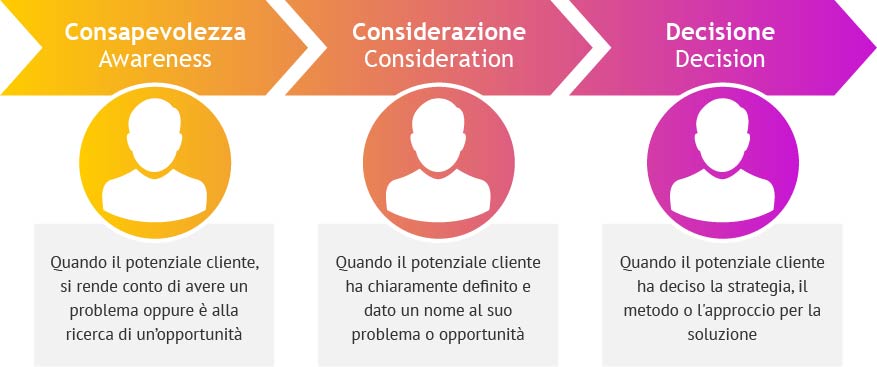
Examples of content for the Awareness Phase.
The awareness stage refers to the moment when the potential client realizes that he or she has a problem, or is looking for an opportunity.
At this stage, the user is focused on finding answers, so he performs an initial online search to get a general idea, identify solutions and products that can solve his problem.
The customer journey map is developed with all these factors in mind.
So let’s look at some examples of effective content that you can implement in your customer journey.
Blog articles
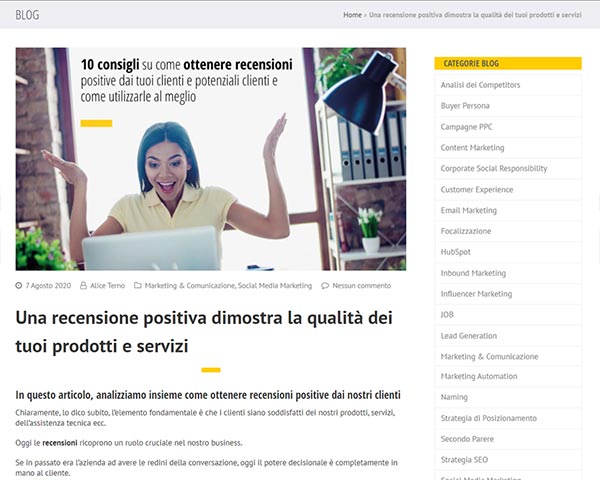
A blog post is an ideal piece of content to fuel the awareness phase.
By fully and comprehensively responding to the needs of the prospective research client, we laid the foundation for building a trusting relationship.
Try to think of how many times you will have done a Google search.
You went through several sites, read reviews and then found exactly the answer to your need.
We could say, The right content, at the right time.
To achieve this important goal, it is essential to clearly identify:
- What is our potential customer
- What problems can we solve for him
- How can we solve them
- What keywords do you use on Google to find the answer to your problems
The next step is to write content for the site and social channels to intercept his needs and provide him with the right answers.
In addition, by focusing on the specific problem that our target audience wants to solve, we have the ability to better position our content on Google.
In this way, our blog article will become usable by users, making it a resource for our potential customers, and at the same time “an opportunity,” to attract them to our business.
Social Media Posts
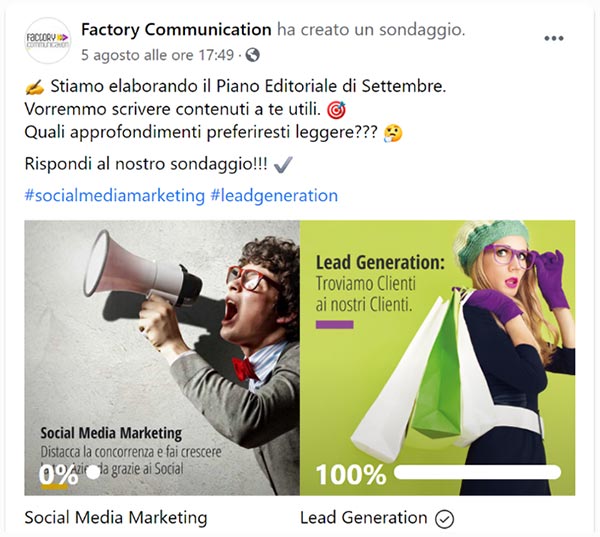
Social media is a great tool for promoting our content. Considering that we can create custom posts, for each channel we decide to use.
In this case, Hubspot allows us to preview how our content will be displayed on various social channels. In addition, we can link them to our CRM quickly and easily, mapping user behavior even outside of our website.
Unlike blog articles, social media posts are usually shorter, and more image-focused.
In addition, videos, which are becoming increasingly popular in the social landscape, are also very effective.
White Paper

Another example of content suitable for this stage of the customer journey is the white paper.
A white paper is the report, or guide, that deals with a particular topic. White papers are very useful to use as a “downloadable product” when a reader wants to learn more about a particular topic, or is looking for a particular solution to a problem.
A good way to use this tool, is to create an automated system that allows users to download this content, in exchange for their data. And here again, Hubspot comes to our rescue.
In fact, what is special about the White Paper, is that it specifies information not found elsewhere.
And this feature, makes the white paper a necessary element in achieving the user’s goal.
The purpose, is to provide guidance and updates on the topic, useful to entrepreneurs, marketers, and sales managers.
Checklist
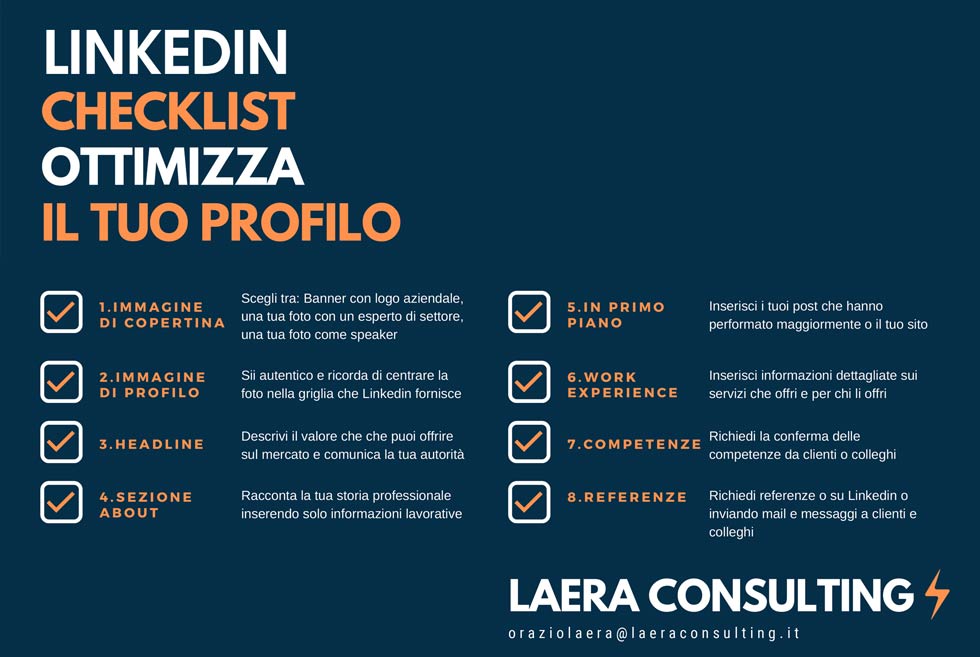
For more complicated tasks, people may simply want a “to-do list,” explaining what they can do to achieve their goal.
Very useful in these cases are Checklists, in the form of infographics. Besides being intuitive, they explain briefly and in a simple way, the various steps of an entire process.
Here you will find an example of a Check list made by Laera Consulting related to optimizing one’s profile on Linkedin.
Instructional video
Often, the best way to solve a problem, or a need, is to learn something new. And with the advent of the Internet, and social media, videos have become increasingly popular, in terms of training.
In fact, tutorials continue to excel on YouTube, from make-up to marketing techniques, from cooking recipes to fitness. Because they are fast, immediate, direct, and above all explanatory.
Being excellent tools for the Awareness Phase, and for demonstrating our knowledge and skills, we can propose our videos to users in various ways. For example, through a personal YouTube channel.
Ebook

Similar to the white paper, the ebook is a great way to provide users with downloadable content.
Their format is very convenient to fit any reading device, which is why they are much more widely used and downloaded by users, compared to white papers.
We at Factory Communication have produced the white paper “Create the Right Buyer Personas for Your Business,” which you can download from this article: The Right Content at the Right Time by Following the Buyer Journey
Webinar
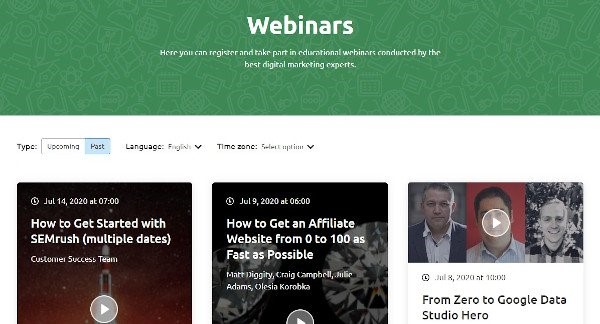
A webinar, is an online seminar in which information is generally delivered via video.
A webinar can be prerecorded or streamed live, and this provides an opportunity to disseminate information to an audience that prefers visual and auditory content.
SEMrush makes webinars a key part of its content marketing strategy, and often covers a specific topic multiple times to emphasize its expertise in the field.
QR Code
Of course, we must not forget that marketing is also offline.
And that means we can offer valuable content, even outside the web.
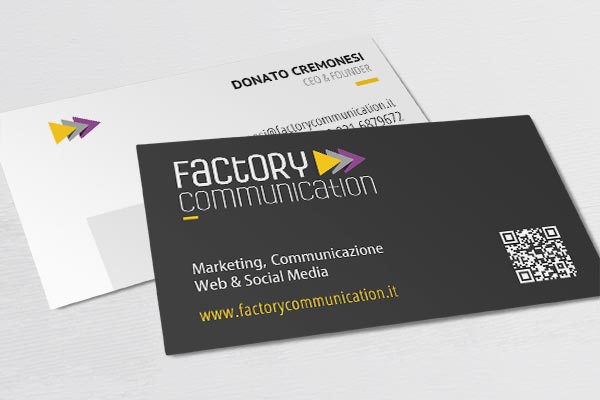
For example, this is the case with the QR Code, which is widely used on products, catalogs and business cards.
Thanks to the QR Code, we have the possibility to insert a real “entrance ticket” for our website, our video-tutorials, our online catalog, etc.
In fact, the user will only need to frame the QR Code with their smartphone camera to access exclusive content.
We can place the QR Code on one of our products, which links to a video where we explain its use.
Or on our business cards, to link more quickly to our social profiles, or to our references.
Content examples for the Customer Journey Consideration phase.
This is the stage when the user acknowledges the problem and begins to evaluate and seek solutions.
At this stage of the customer journey, we need to provide him with all the information that can help him best understand what we are offering and why it might be the solution to his problem.
Good examples of content for this stage of the Customer Journey are:
- Product comparison guide
- Case Study
- Free sample
Product comparison guide
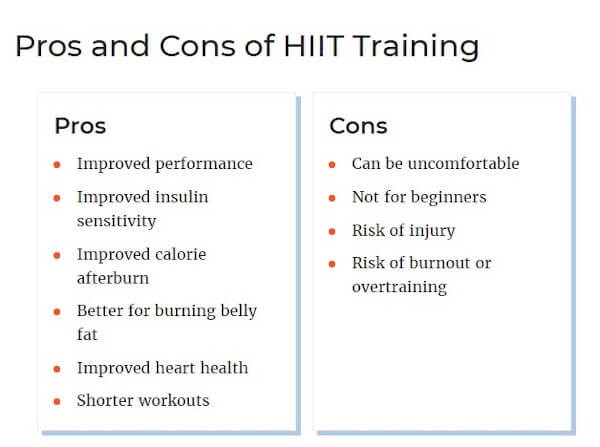
In the Consideration Phase, our Buyer Persona is still evaluating various solutions to their problem. Therefore, comparing products is a great way to help them make a decision.
In this example from the Customer Journey consideration phase, Verywell Fit provides a comparison of high-intensity and cardio workouts, providing pros and cons, and use cases for each.
In this way, users are helped, and guided, toward the solution that suits them best.
Case Study
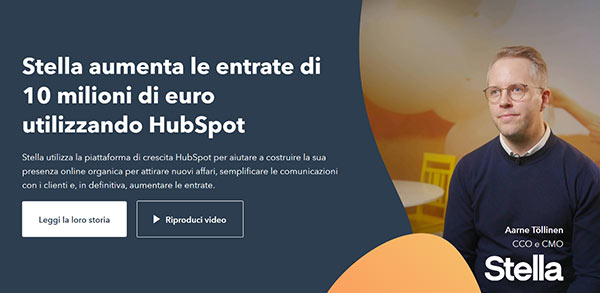
A Case Study can be used simultaneously in both the Consideration and Decision Phase.
A good case study, will appeal to the emotions and logic of our Buyer Persona, providing detailed information and quantitative data on the final solution.
In addition, the Case Study could be seen by the user as a positive review. So positive that it could be posted on our site.
So, with just one video, we too can get both a positive review and a Case Study, to be included in the list of our business successes.
Free sample
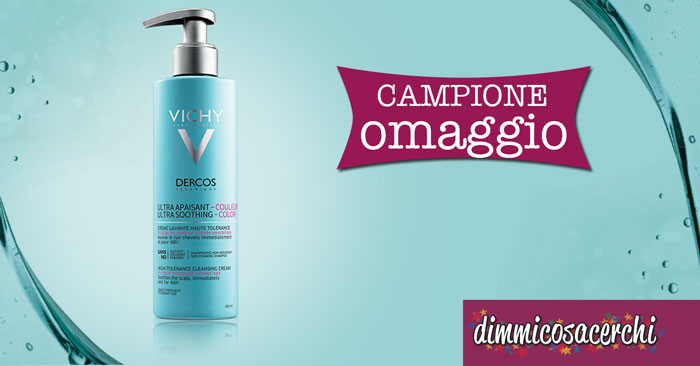
Even a free sample can be seen as a means of communication, in the buyer’s journey.
Let’s try to think: we want to paint the walls of our house, but we haven’t decided what color to use yet. With a free sample, the choice will be much easier!
So as we begin to consider the possibility of using some specific color (the solution to our problem), we check in the Pantone® that the hardware store gave us.
That way, having a small portion of what I need at my disposal, at the time of the final decision, I will know who to turn to.
Examples of content for the Decision Phase.
We have reached the final stage of the buying process. At this stage, the potential customer has already decided how to solve the problem, he only has to choose whether to rely on you.
All that remains is to motivate him. But how to do it? Here are some examples to best conclude this stage of the Customer Journey:
- Free trial
- Free consultation
- Coupon
Free trial
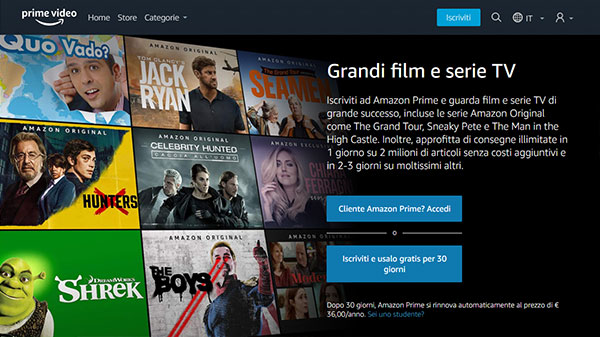
This is probably one of the most functional examples of creating an effective customer journey.
Testing a product or service, is the best way to find out whether you want to proceed with the actual purchase, or not.
This is the case with giants such as Amazon, which, for example, offers a 30-day free trial for its Amazon Prime service.
In this way, users have the opportunity to personally verify the effectiveness of the service, while still having time to think about it and possibly proceed with the purchase.
Free consultation
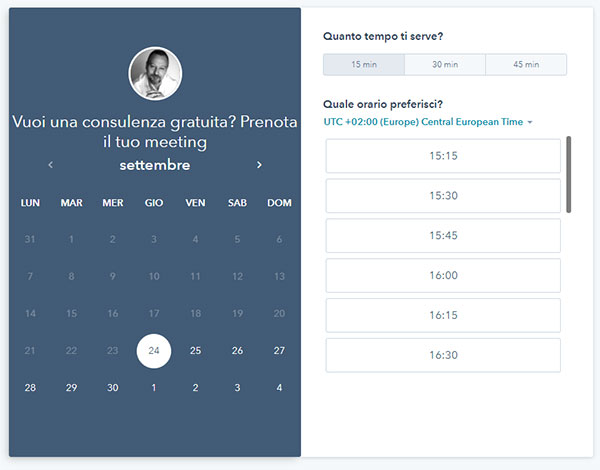
We could call free consulting “the free sample of services.” In fact, if our company is in the business of providing customer services, and not tangible goods, the free sample cannot be of much help to us.
A practical example of a Free Consultation is the one conducted by Donato Cremonesi, CEO of our Agency, which you can book directly on his calendar
A free consultation is tantamount to providing a bit of our service, giving the potential client a way to test our expertise, then considering a purchase.
Free consultations thus allow us to make ourselves known to our potential client, without placing an obligation to purchase, or constraints of any kind.
Of course, it is up to us to demonstrate our expertise in the field, and to incentivize the potential client to purchase our services.
Coupon
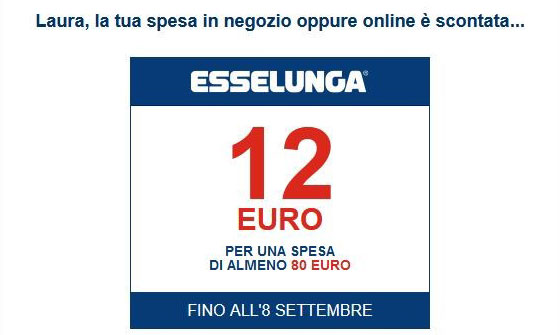
A coupon, appeals to the fear of missing the opportunity to close a deal.
Let’s think about it: the coupon reduces the price of a certain good, usually for a limited period.
By not using the coupon, potential customers will get the idea that they are “throwing away some free money.”
In itself this is an all too simple reasoning, but very effective.
We find many examples of coupons, especially in supermarket chains.
Surely you are no longer asking “what is the customer journey?”
We have helped you understand through these examples, the different types of content you can integrate into the Customer Journey so that it is smooth and effective.
All you need to do is figure out what content is best suited to optimize your typical customer’s journey.
Now that you have your content, however, you should have a world to keep all your activity monitored so that everything is in order and you can act promptly if needed.