



In this article we look at 7 strategies to increase customer loyalty, improve your Business and your Company’s brand awareness.
What could be better than acquiring a new customer?
It sounds like a very simple question, but the answer is not “acquire two customers.” In fact, the right answer is “to retain existing customers.”
Acquiring new customers conveys a certain allure, however, the real challenge is keeping existing customers, and convincing them to return to us again and again.
Many companies focus mainly on acquiring new customers while taking the retention of existing ones for granted.
Unfortunately, this is not the case. It is essential to pamper and give the utmost attention to those who have already chosen us.
Customer loyalty meaning
Customer retention is the set of strategies and activities implemented by a company to create lasting and profitable relationships with its customers.
The goal is to turn casual customers into loyal customers who buy regularly, spend more, and promote the brand to others.
Importance of customer loyalty
There are several reasons why customer loyalty is important for companies:
- Increase profit: Loyal customers spend more on average and buy more frequently than new customers.
- Reduce costs: It is cheaper to retain existing customers than to acquire new ones.
- Improve brand reputation: Loyal customers are more likely to recommend the brand to others, which can improve brand reputation and attract new customers.
- Increase market share: Loyal customers are less likely to switch to competitors, which can help a company increase its market share.
Loyalty: Why is it important to pamper the Customer?
Because he trusted our company and bought a product or tried a service.
Not only that.
It costs 5 times more to acquire a new customer than to keep an existing customer, with all the unknowns involved.
Will he be a good customer? Will he pay regularly? Will he complain about everything?
Customer retention can lead to an additional benefit for the company: increasing revenue per customer. This element further amplifies the meaning of retention.
In our more than 20 years of experience at the Agency, we have been able to ascertain both on our own skin and by analyzing the business of the Companies that have turned to us, that the end customers know only a part of the services and products that we “sell.”
So the watchword is, first of all, to invest in existing customers. We can put in place activities that in marketeering jargon are called cross selling and up selling.
The first is to sell a related product to what we have already sold.

For example, if we provided a printer, we can sell the toner, paper, technical support, etc.
The second is to sell a superior product or service, such as a higher-performance printer.
Whatever business we decide to do, pampering existing customers means making them feel important.
This will translate into trust, positive word of mouth and increased sales.
Because a happy customer will tell at least five other people about us, our company, products and services.
But how do we create a loyalty strategy that keeps our customers happy and satisfied?
We analyzed the strategies that some Companies are currently using, to increase loyalty toward the Brand.
So we decided to collect all the information gathered here, so that any Company can implement its strategy, tailored and in line with its goals.
Customer loyalty: our checklist
A customer loyalty program is a specific initiative, or set of initiatives, designed to increase customer value. And encourage them to repurchase, and promote, a company’s product or service.
If you don’t know where to start, here is a list of programs, which you can implement in your strategy to improve your retention rate.
1. Onboarding program.
Onboarding is a function that teaches new customers how to use your product or service.
Instead of learning on their own, clients are instructed by a company representative, who tailors the training to their needs.
In this way, customers not only save time, but also understand how the product can help them achieve their goals.
Onboarding is a very effective customer retention activity because it counteracts user frustration, and incentivizes interaction with the Company.
In fact, when users first use your product, they may feel frustrated if they do not understand how to use it.
Customers have deadlines, and they cannot afford to spend time learning how to master your product or service.
And therein lies the importance of onboarding, which ensures that customers have the information they need to use your products or services, so that they can complete their goals on time, and without frustration.
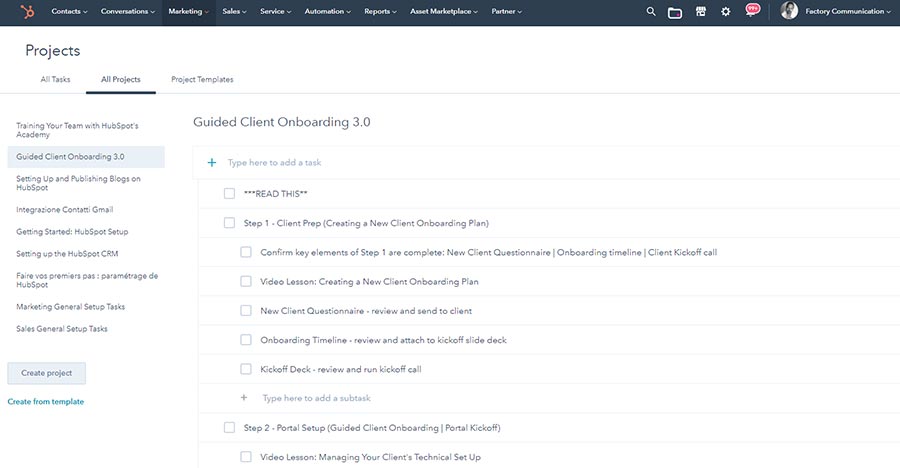
For example, when 1 year ago, we decided to become HubSpot Certified Partners, in order to start using the platform and discover, from the very beginning, its specificities, HubSpot provided us with onboarding for Agencies.
A series of procedures, documents, video tutorials and questionnaires to quickly and thoroughly discover each element of the platform.
2. Feedback loop of repeat customers
It is difficult to improve your business if you do not know the state of mind of your customers.
So you need to get their feedback, regarding your products and services, and share this information with the rest of your team.
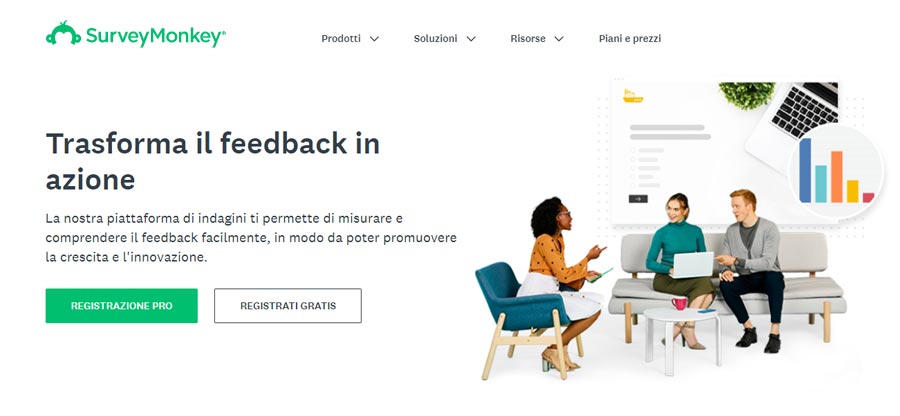
There are many methods of collecting customer feedback. And the most common is the survey.
In this article we cover the topic more specifically: How to get good reviews from customers.
Once feedback has been collected from customer service, it is necessary to analyze the results obtained, looking for trends in their behaviors, and areas to improve the customer experience.
Therefore, it is strategic to share this information with internal teams that will benefit most.
For example, product reviews could be distributed to engineers and development teams so that they can fix defects in product design.
Or to customer care or technical support who, thus, can give the right answer and support.
By using this system to collect and share customer reviews, your company can efficiently respond to criticism and improve the customer experience.
3. Calendar of Communications
If customers have not interacted with our brand for a while, we need to reach out to them, and try to re-establish the relationship with them.
And for this purpose, it might help us to use a communication calendar.
A communication calendar is a chart that keeps track of customer communication.
It tells us the last time a customer contacted us, and alerts us when existing customers have not interacted with our brand.
This simplifies the launch of promotional offers and customer service activities.
For example, if a customer’s subscription is about to expire, we can send an email, informing them of the impending expiration, and incentivizing them to renew.
In such cases, Hubspot is a great tool to use.
4. Customer loyalty program
Although it is important to focus on customers to be retained, we cannot forget about our already loyal customers.
After all, what will these customers think if they see us devoting all this effort to users who do not like our Brand?
This is the case with telephone companies, which offer very convenient deals to attract new subscribers to the service, leaving existing customers on the back burner.
And all of this results in very little retention, as customers will continually switch from one operator to another to secure the best offer (the one that costs the least).
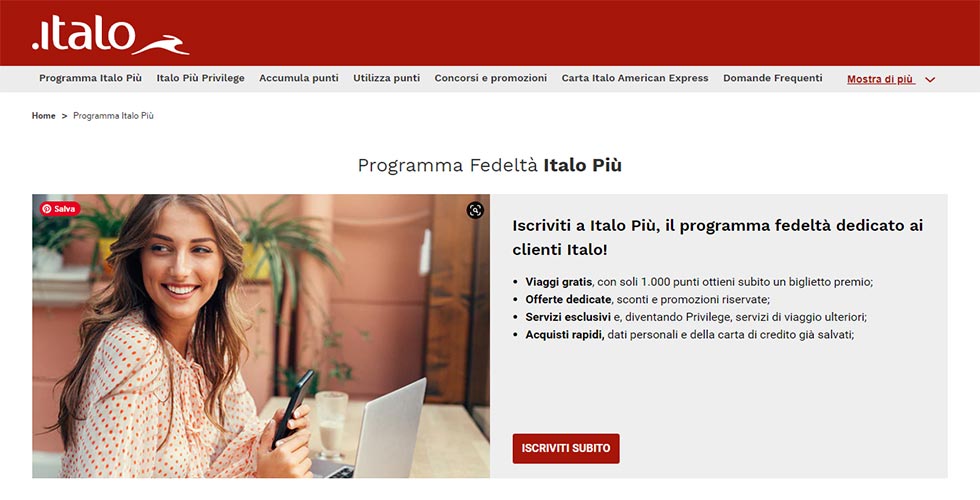
A customer loyalty program through loyalty cards and point collection serves to reward customers for their continued loyalty and improve the membership rate.
The more they shop and interact with our business, the more they are rewarded.
And this strategy keeps customers happy because they get more out of the purchased product or service.
Also, considering that 10 percent of loyal customers spend three times as much, compared to others, we suggest you make sure these users are more than satisfied!
5. Corporate Social Responsibility Program
Your business is more than just a product or service.
Customers look at everything your company buys, sells and advertises.
Therefore, if they perceive an inconsistency between the message you convey, and your actions, they will immediately feel that something is wrong, losing trust in the Company.
It is important to engage customers, even beyond products and services.
So we think about their core values, and create a program of Corporate Social Responsibility (CSR), which pursues a moral goal.
For example, Lego is investing over $150 million to make its product more environmentally friendly.
Of course, your initiatives don’t have to be that ambitious, but pursuing projects that support the community will only bring your company closer to your target audience.
We at Factory Communication have implemented several corporate social responsibility projects for our clients.
It is an activity that we firmly believe in and, in turn, carry out.
Each year we select a social project to support free of charge.
The first project we did was a fundraiser for the Simoncelli Foundation.
Subsequently, we were involved in the implementation of the Communication activities of several associations including the City Angels.
Every company is part of a more or less extended community, and it is extremely good to be able to help them in ways that are most appropriate and commensurate with the company itself.
6. Corporate newsletter
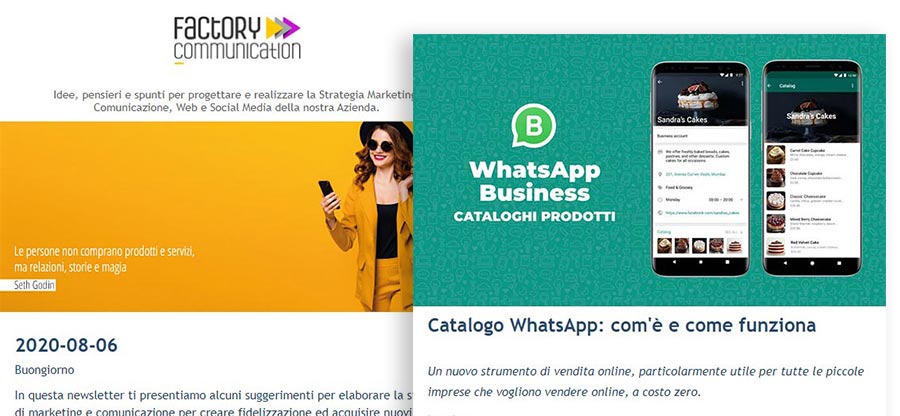
A business newsletter is an easy and inexpensive way to build customer loyalty.
There are several tools that allow you to organize, schedule, and send newsletters to your databases.
We at Factory Communication do this using HubSpot.
If you want to boost and energize your communication by sending the right message, at the right time, to the right person, you can use Hubspot’s Marketing Automation.
Regardless of the tool you decide to use to send out your Newsletters, it is essential to constantly track messages sent, emails opened, emails deleted, etc.
This allows us to understand which messages are of greatest value and interest to our contacts and customers.
An important element to keep in mind that Newsletter does not exclusively mean promotions.
Indeed. The newsletter should be the basic tool for sending valuable information.
How to use a service, how to prepare a recipe, how to repair a fault etc.
Useful information that improves the lives of your contacts and customers. The sale is only a consequence.

7. Customer training program
A training program for clients, is a long-term investment.
Under this initiative, your company can create a variety of self-service tools for customers, such as a knowledge base and a community forum.
Thus, customers use these features to identify solutions to their problems, even before they contact the Customer Service team.
This program can extend beyond your products and services.
For example, the courses HubSpot Academy cover generic marketing, sales and customer service topics.
In this way, the HubSpot user not only knows how to use the tools, but also how to best employ them in everyday life.

As the philosophy ofInbound Marketing teaches us, investing in customer satisfaction costs much less than acquiring new customers.
In fact, the real advantage in a marketing and communication strategy is to generate new sales by increasing customer loyalty. All of this allows for more visibility, more word of mouth, and thus generation of new business.
As Seth Godin, global marketing guru, says:
“It is easier to love a Brand when the Brand also loves you back.”
Did you find this article interesting? You can explore further by reading these articles.
- Inbound Marketing, the strategy that respects the customer
- Content Marketing: increase your company’s visibility
- Promotion strategies: did you run a Black Friday campaign?
- Pricing strategies: how they can make a difference
- Those who do Community Marketing build an empire
- Buyer Journey Marketing: monitor results this way
- Emotional Marketing: when the brand puts its heart into it