


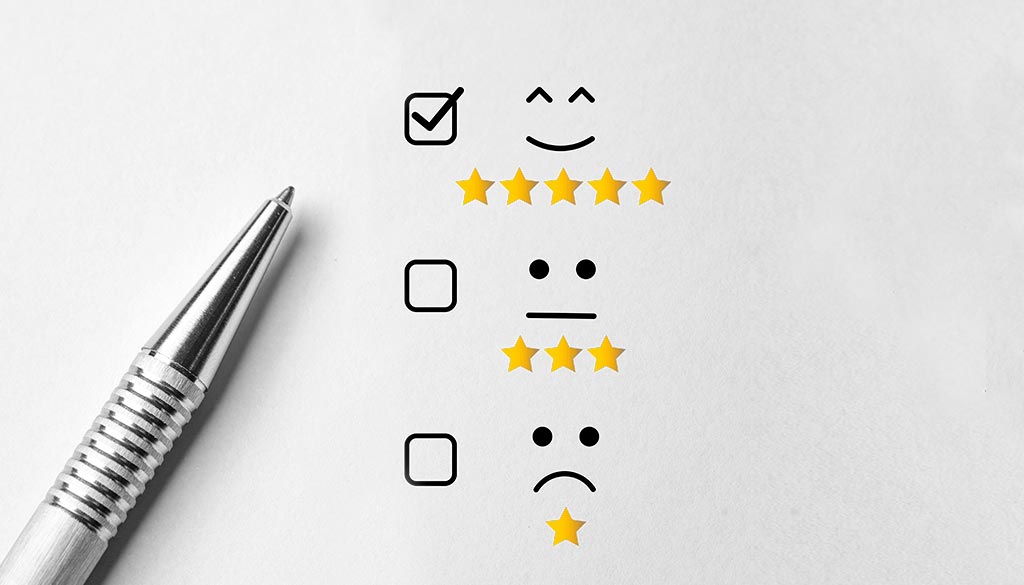
In this article, let’s look at how to handle reviews professionally, what tools to use, and why it makes sense to get an agency to work with you.
Let’s start by saying that online reviews (both positive and negative reviews) are now one of the most strategic assets for a company’s growth: they influence sales, trust, positioning, and even the ability to attract talent and partners.
The strategic importance of online reviews
For a business owner, reviews are no longer “comments, or customer opinions,” but a true channel for marketing, sales and customer care.
People who evaluate a product or service systematically read other users’ experiences before deciding whether to contact you or buy.
Reviews affect:
- Trust and conversion rate: a profile with many positive reviews and timely responses increases propensity to purchase and reduces decision time.
- Online visibility: the quantity and quality of reviews affect local SEO (Google Business Profile), the performance of your eCommerce and the performance of adv campaigns.
- Brand reputation: consistent reviews over time build perceptions of trustworthiness; conversely, few reviews or many unmanaged negative ones create an “alarm effect” that is difficult to recover from.
- Customer insight: a system for collecting and analyzing reviews gives you valuable insights into products, customer service, delivery time, and after-sales service.
A concrete example: platforms such as Feedaty show that systematic use of certified reviews on eCommerce leads to a measurable increase in perceived trust and sales. It is therefore not an “image” issue, but a revenue issue.
The main tools and services for managing online reviews
There are three broad categories of solutions in the current landscape: specialized review management platforms, online reputation management systems, and vertical tools for eCommerce or specific industries.
Here are the main groups (with some well-known examples, useful to guide you):
- Review Management Platforms (Review Management)
Tools such as Birdeye, Review Trackers, Tagembed or similar solutions allow reviews from different channels (Google, Facebook, vertical portals) to be aggregated, tracked in a single dashboard, responded to and sentiment analyzed. - Online Reputation Management (ORM) solutions
Platforms such as Qualtrics (Online Reputation Management modules) or other CX suites enable the integration of reviews, surveys, social listening and advanced analytics, with real-time alerts and in-depth reporting. - Tools for eCommerce and User Generated Content (UGC)
Tools such as Yotpo, Feedaty, Tagembed and other aggregators allow you to collect, moderate and publish product and business reviews directly on eCommerce sites, synchronizing them with marketplaces and marketing campaigns. - Review aggregators and widgets
Solutions that collect reviews from various portals (Google, TripAdvisor, Booking, Facebook, Yelp, etc.) and display them on the site via customizable widgets. - Marketplaces and software directories
Portals such as Capterra have sections devoted to review and reputation management software that are useful for quickly comparing features, prices and reviews of the same tools.
For an entrepreneur, the real challenge is not so much knowing the names as figuring out which combination of tools makes the most sense with respect to the business model(B2B, B2C, local, national, eCommerce, complex services, etc.).
Tool types: online, on-site and website/eCommerce reviews
To design an effective strategy, it is important to distinguish between different “families” of solutions. Each category presides over a specific piece of your digital ecosystem.
1. Online review tool (external platforms)
These are the tools focused on review management that are born and live on third-party platforms (Google, Facebook, Tripadvisor, Booking, vertical portals, marketplaces, app stores).
Typical features:
- They automatically monitor what is written about your brand on multiple channels.
- They centralize notifications in a single dashboard.
- They allow direct response or guided workflows.
- They offer sentiment analysis, reports by location, product, department, period.
They are critical for multi-location businesses, franchises, retail chains, hotels, restaurants, and all businesses that make their living from local presence and reviews on external portals.
2. Tool for on-site reviews (on your site).
These tools manage reviews and testimonials directly on your site or eCommerce pages (e.g., product reviews, company page ratings, case study testimonials).
Typical functions:
- Automatic sending of review requests after purchase or service.
- Moderation (anti-spam, language filters, legal compliance).
- Customizable widgets (sliders, badges, product cards, carousels).
- Integration with email marketing, CRM and automation tools.
The focus here is to increase conversion on your proprietary ecosystem, improve the browsing experience and strengthen social proof alongside offers, product sheets and contact forms.
3. Integrated solutions for websites and eCommerce
Then there are “hybrid” platforms that work on both on-site and off-site reviews, integrating them with your site, eCommerce and marketing channels (social, adv, newsletter).
Key points:
- Unified feed of internal (site/eCommerce) and external (Google, portals) reviews.
- Ability to display badges and ratings from certified sources on the site.
- Using reviews in advertising campaigns (e.g., ad extensions, social creative).
- Integration with CRM to link reviews to customers, segments, funnel.
This approach is especially effective when you want to align sales, marketing and customer care strategy, turning the review into a piece of the customer journey, not an “isolated event.”
Comparative table of the main types of solutions
The following table compares the three macro-categories from the perspective of an entrepreneur who must choose where to invest first.
| Solution type | Where it acts | Main goals | Benefits for the company | When it is prioritized |
|---|---|---|---|---|
| Online review tool (external platforms) | Third-party portals (Google, Facebook, Tripadvisor, Booking, marketplace, app store) | Monitor, respond to and analyze external reviews, manage overall brand reputation | Centralized vision, rapid alerts, reduced reputational risk, improved local SEO | Multi-location businesses, tourism, catering, retail, services with strong dependence on review portals |
| On-site review tool (widgets, forms, certified systems) | Corporate website pages, blogs, service pages | Increase conversions, show testimonials, collect post-purchase feedback on your domain | Increased trust on the site, editorial control, use of reviews in CRO and UX logics | B2B and B2C companies generating contacts from the site, professionals, high-value services, lead generation |
| Integrated solutions for websites and eCommerce | Site, eCommerce + external portals + marketing channels | Unifying the collection, management and use of reviews in an omnichannel strategy | Synergy between marketing, sales and customer care, use of reviews in adv, email, social, continuous funnel optimization | Structured eCommerce, companies with complex funnels, realities that want to scale reputation across multiple markets and channels |
A mature approach often involves a combination: for example, a retail chain may preside over external portals with an online review platform and, in parallel, integrate certified widgets on the site to consolidate social proof on key pages.
Why outsource review management to Factory Communication
Effectively managing online reviews is not just about “responding to comments,” but designing a strategy that touches branding, customer experience, internal processes, and technology.
Factory Communication was founded precisely as an agency specializing in marketing, web communication and social media strategy, with strong experience on integrated projects that include structured review management.
How to manage reviews: FAQ
Managing reviews should be strategic: responding promptly, thanking for feedback, and maintaining a professional tone helps build credibility. It is important to analyze customer opinions, both positive and negative, to continuously improve products and services.
Negative reviews should not be ignored. Responding empathetically and constructively shows that the company listens to customers and seeks solutions. This approach can turn a criticism into a loyalty opportunity.
Yes, it may happen that fake reviews are published. In such cases, it is advisable to report them to the platform and document any evidence. Proper management of reviews allows you to maintain transparency and protect the brand’s online reputation.
Giving visibility to positive reviews builds trust, but negative feedback also has value: it helps identify areas for improvement and shows that the company is open to dialogue. Online reputation must be balanced and authentic, not just perfect.
Customers can be invited to share their experience through follow-up emails or loyalty programs, but without forcing or non-transparent rewards. The goal must be to obtain real customer opinions to effectively manage reviews and improve brand trust.