

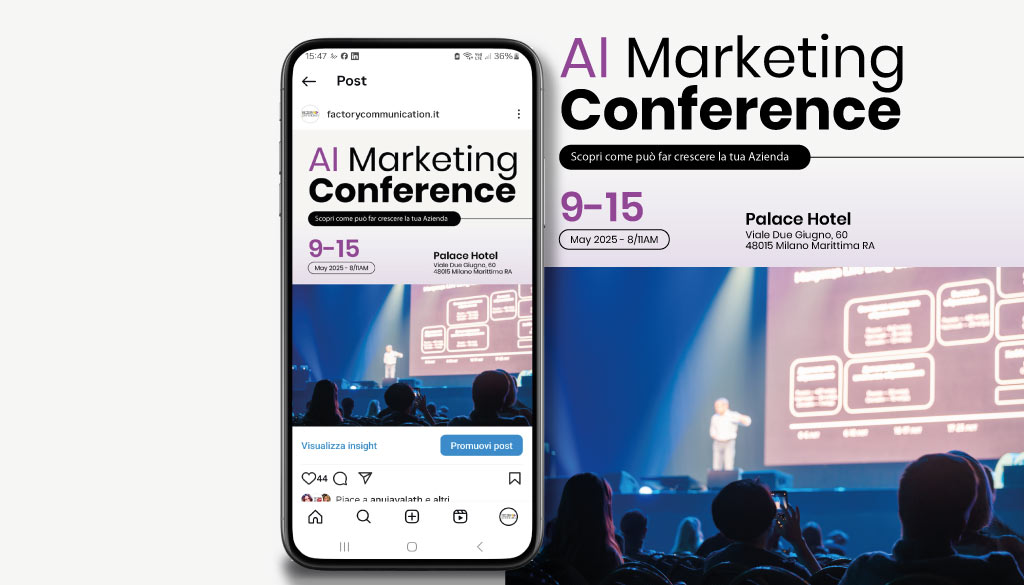
In this article we discuss how to promote a corporate event with paid campaigns.
If you are in the event marketing business and want your corporate event to be successful, it is not enough to just post an ad and hope someone notices it.
It needs a targeted strategy, a dedicated budget, and messages that hit the mark.
Here is a practical guide designed for entrepreneurs and business owners to achieve concrete and measurable results.
Together we will look at how to make the most of paid Google and social campaigns to increase enrollment and participation.
What corporate events can you promote with Ads?
Paid campaigns are ideal for giving visibility to many types of events, including:
- Conferences (online and live)
- Webinars and trainings
- New product launches
- Open days and openings
- Seasonal promotions or special sales
- Participation in trade shows or industry events
- Local festivals or community-based initiatives
- Sports events or sponsorships
- Registration for courses or workshops
An event is any special activity, outside the corporate routine, that takes place during a limited period.
The goal? To attract the right audience at the right time.
6 Strategic choices to be made before launching the campaign
1. Create a dedicated campaign
Don’t mix event promotion with your “standard” advertising campaigns.
A separate campaign allows you to:
- Managing the budget better
- Customizing the audience
- Optimize messages
- Tracking conversions accurately
2. Get straight to the point
Your ad must be clear and immediate. Communicate now:
- Event name
- Date and time
- Physical location or online link
- Call to Action (CTA)
Example:
“Only 3 days to register for the Free Artificial Intelligence Workshop!”
3. Create a dedicated landing page
Create an Event landing page on your website complete with all necessary information and any photos and videos explaining how the event will take place.
Make sure all the information is just a click away:
- Event name, date and time
- Map of the place and all the information to be able to reach it conveniently
- Contact information: the more options you offer the more opportunities to help your prospects: email, phone, WhatsApp, chat
- Clear call to action such as “Sign up now” or “Reserve your spot”
- If you offer discounts or promotions, highlight them.
4. Plan the timing
Timing is everything. Divide the promotion into three stages:
- Pre-event: generate interest and collect registrations
- During the event: push last-minute attendance or streaming viewing
- Post-event: retargeting for registration for future events or to suggest registration that you can use for a lead generation activity: you must provide us with your email to receive registration.
5. Communicate the event through your online channels
Before launching your ADS Campaigns publicize your Event by taking 100% advantage of your communication channels:
- Implement an ad hoc social media marketing strategy
- Plan your editorial calendar according to the channels you have available to you
- Publish posts on your social channels
- Create a hashtag and invite users (especially Partners, Customers and colleagues) to use it
- Make specific articles in your Blog
- Carry out a link building strategy by publishing articles for publication in editorial titles and blogs
6. Take advantage of events even if you are not the main character
You don’t have to organize the event yourself to benefit from it.
If a trade show or initiative related to your industry is taking place in your area, you can intercept traffic with targeted campaigns.
For example, if there is a wedding expo, a florist can promote his or her services to users looking for ideas during the event.
Works for:
- Industry conferences
- Seasonal events or anniversaries
- World days or promotional months
Create a parallel campaign with offers or content in line with the interest of the audience at that moment.
How to promote an event on the Web with paid advertising
Promoting an event today means maximizing the potential of online paid campaigns.
Promoting a corporate event with paid campaigns is not a job to be improvised.
It takes a strategic approach, clear messages, and targeted targeting. In doing so, you can:
- Increase brand visibility
- Generate qualified contacts
- Leave a lasting impression
Even if you’re not the organizer, you can still be the star and get noticed. Put your event in the spotlight: with the right campaigns, results really do come!
7. Establish a specific budget
Don’t risk taking resources away from the main campaigns.
Even a small amount invested in a targeted audience can generate excellent results.
In addition, having a dedicated budget means you can monitor the results and ROI of your campaign.
8. Choose the right platforms
Google Ads
Ideal for intercepting those who are already looking for events similar to yours. You can use:
- Search Ads: appear in search results when someone types in keywords related to your event.
- Display ads: banners on thematic sites, useful for increasing notoriety.
- YouTube ads: if you have a promotional video, you can show it as a pre-roll to interested users.
Promoting an event on Facebook and Instagram
If you want to promote an event on Instagram and Facebook to reach an audience you can accomplish:
- Sponsored posts with call to action (“Sign up,” “Buy now”).
- Interactive stories with countdowns and polls.
- Event Ads: directly advertise the Facebook event promotion page.
- Lead Ads: collect contacts from potential participants in a simple way.
LinkedIn Ads
If your event is business, LinkedIn allows you to target professionals by industry, role and company.
Beware, however, of costs, which are generally higher than on other platforms.
Using both Google Ads and Meta Ads allows you to cover all stages of the funnel: from discovery (Display, YouTube, Facebook) to intent (Search Google) to conversion (remarketing and lead generation).
Combining the two strategies can result in up to twice as many recordings as using only one channel
9. Intelligently target the location and the audience
When setting up your ADV campaigns to publicize the event adapt the reach according to the event:
- Local: targeting by city or radius around the location
- Regional: select provinces or metropolitan areas
- National/online: target areas with the most interest or ROI
Analyze past sales or participation data to optimize geographic choice.
As for the target audience, do not always use the same keywords or audience segments.
If you need to promote an online event, identify the right audience: segment by age, interests, location, professional role, and online behaviors.
Create specific targeting on:
- Event name or related keywords (“Fuorisalone 2025”)
- Themes or products presented
- Competing brands or related categories
- Industry-related interests (“tools for SMEs,” “data analytics training”)
- Customer lists or lookalike audience
10. Aim for a targeted strategy
-
Create engaging and persuasive ads
Use catchy headlines, quality images and a clear call-to-action. Highlight key details: date, time, location and benefits for those who attend. -
Take advantage of ad extensions
On Google Ads you can add direct links to the sign-up page, special offers, phone numbers and other useful information. -
Remarketing
Reach those who have already visited your event page or interacted with your content, perhaps offering a discount or reminder to sign up -
Flexible and Measurable Budget
Set a dedicated event budget, monitor performance and shift resources to the campaigns that convert the most. -
Analyze and adapt strategy
Use platform analysis tools to understand what works and what doesn’t. Modify targeting, creative and offers based on the data collected -
Amplify visibility with collaborations with micro-influencers and partner companies
Engage local influencers or companies that share your target audience-they can promote the event on their channels, increasing trust and reach.
11. Promoting an event: Statistics related to ADV Campaigns.
Below you will find a report based on various sources and statistical data.
The average conversion rate for ADV campaigns aimed at registering for paid corporate events usually varies between 5 percent and 15 percent, depending on the quality of the target audience, ticket price, and relevance of the event.
Here are some specific benchmarks based on industry research:
- General Benchmark: 53 percent of organizations experience a conversion rate of 5 percent or higher for live events, while 35 percent exceed 12.6 percent.
- Paid Webinars: Conversion rates for high-value online events (webinars) range from 10 percent to 20 percent.
- Workshops and Courses: They can achieve higher conversion rates, often between 30 and 50 percent, because they attract a more qualified audience that is inclined to purchase.
- Target Sector: Rates vary widely, with sectors such as education or legal services that can see conversion rates between 5 percent and 10 percent.
Factors affecting conversion rate:
- Event cost: Higher prices require a longer sales process and usually lead to lower conversion rates than low-cost events.
- Channel ADV: Facebook/Meta Ads often offer competitive conversion rates (around 9% for arts & entertainment, but it varies), while Google Ads requires targeted optimization on search keywords.
- Landing Page Optimization: A clear call-to-action (CTA) and a simple sign-up process can increase conversions significantly.
In summary, while 2-5% is considered a general average for lead generation campaigns, for paid events (which are “harder” to sell), a good conversion rate often exceeds 10%.
ADV Campaigns: Related Articles
- Christmas marketing: ideas and strategies to increase sales
- Native Advertising: What it is and benefits for Companies
- PPC campaigns: trends and strategies for you Entrepreneur
- Advertising campaigns: our 8-point checklist
- SMS advertising: why it boosts sales!
- Remarketing Campaigns: Strategies, Benefits, and Best Practices.
- Marketing promotion: black Friday!