


In this article I analyze how the new satellite constellation created by Starlink could impact the business of our companies.
In an ever-changing world, a company’s strategy must consider multiple new factors.
I start, as always, with a “cue” that has either intrigued me, fascinated me or, as in this case…worried me.
The news I refer to is this: Elon Musk conquers the earth with Starlink
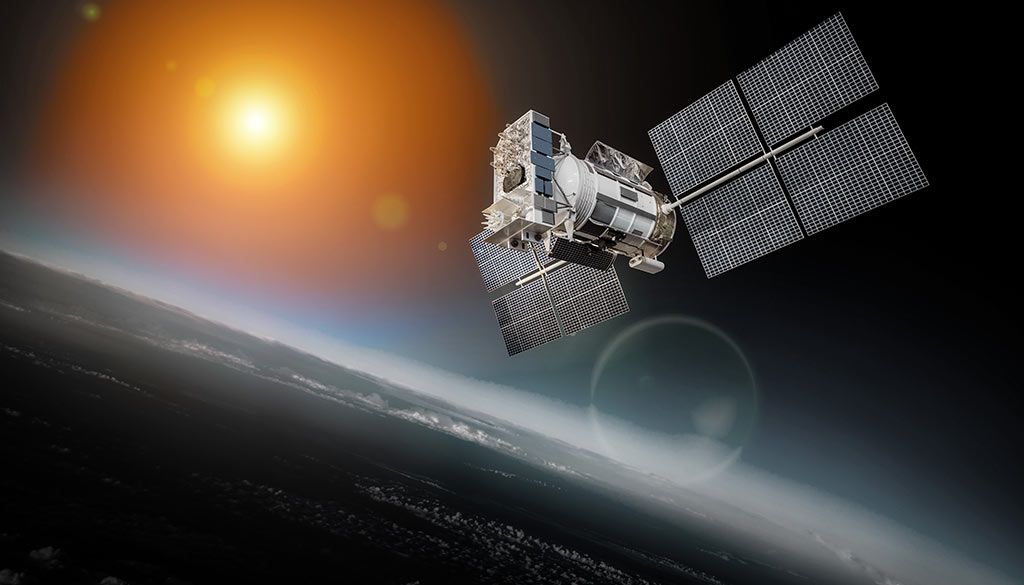
In a nutshell, Starlink Elon Musk ‘s creature has sent the first 60 satellites into earth orbit, with the primary goal of “providing a wide range of broadband and communications services for residential, commercial, institutional, government and professional users worldwide.”
Clearly this goal will be achieved, only when total coverage of the planet, which requires as many as 12,000 satellites, is realized.
The Starlink constellation is expected to be completed by 2020. That is tomorrow!!!!
As always, my approach to the news, revolves around issues of strategy and business.
As a first step, it is only fair to briefly introduce who Elon Musk is. For simplicity’s sake I avoid making explicit the position in the company:
- Founder of Space Exploration Technologies Corporation(SpaceX), that is, the company in charge of getting satellites into orbit;
- Co-founder of Tesla, whom we all know. Self-driving electric car;
- Co-founder of Neuralink, one of Elon Musk’s newest projects whose mission is to connect people’s brains with computers 😢
- President of SolarCity, a company that designs, finances and installs solar energy systems in the United States;
- Founder of The Boring Company, a company whose goal is to create tunnels under cities for fast motor vehicle transportation;
- Co-founder of PayPal, which probably needs no introduction;
- Co-founder of OpenAI, a nonprofitartificial intelligence research organization;
- He also proposed a super-fast transportation system known as Hyperloop.
According to Forbes, Elon Musk in December 2016 was ranked 21st on the list of the world’s most powerful people. As of May 2019, he ranks 51st on the list of the world’s richest people, thanks to assets of $20.3 billion.
What Starlink might generate, either from a social or scientific point of view, is beyond my expertise, so I avoid commenting.
I asked myself questions to which I dare not give answers:
- Orbit is already filled with debris from spacecraft, satellites, rockets etc. What could happen if one or more of these 12,000 orbiting satellites were to collide with space debris? As far as I know, if it were to plummet toward the earth, the impact with the atmosphere should disintegrate the whole thing. But what are the secondary effects?
- In Italy, as in other nations, we are sensitive to our privacy. Such a network would make Starlink as the main provider of connectivity. All data would be in the hands of one person or rather company. What are the implications?
- Elon Musk is also Co-founder of Neuralink which, as mentioned, is developing a connection between brain and computer. Will we do uploads and downloads via brains? Sorry maybe this is more of a joke than anything else, but the overall picture is nevertheless, personally, disturbing.
- What if the 12,000 satellites are equipped with high-definition cameras?
- What will be the relationship between Starlink and Governments, Military Corps and Intelligence?
I would have a thousand more questions, but I think these are more than enough already.
And now we come to a strategic and business analysis.
How will Starlink impact the business of our companies?
I trust that the timing of realization of the Starlink constellation, will be similar to Tesla’s business plan. That is, delayed!
This would give us a couple more years of relaxation.
Suppose that in five years Starlink has completed the placement of satellites in Earth orbit.
Inevitably some new questions spring to mind:
- What will be the relationship with traditional cable connectivity providers?
- What, for example, will be the future of Eolo, a company that is making major investments nationwide to offer connectivity?
- How will the businesses of small, large national connectivity companies be disrupted?
- Everyone who wants will be equipped with a receiver, let’s call it a modem, provided by Starlink?
- Who will do the installation and maintenance?
- Who will guarantee the data?
- Will the power be in the hands of those who deliver services or those who transport data?
- What will be the positive or negative spillover for Italian companies?
- What will be the agreements with large corporations such as Google or Amazon (see points 10 and 11)?
- It is now widespread news that Amazon primarily, but also other companies, are testing home delivery by drone. Imagine a deal between Starlink and Amazon what would it generate? Probably the Amazon service would become even more widespread and accurate and would no longer need thousands of deliverymen delivering goods 😔!
- There is not only Amazon. Think of Google and its integrated e-commerce, which goes by the name of Google Shopping. It could make a deal with Tesla, another Musk company, which could make a self-driving van, to deliver goods. Different player same result as previous point 😔.
My goal is to give a starting point for checking or rethinking the business of our companies based on these questions.
I try to write very brief reflections. I hope I can provide some interesting insights.
As always, every small or large revolution also brings with it opportunities.
- There will probably be a network of local or national installers springing up to install the Starlink modem. Personally, if I had an IT company, or were an electrical installer, I would start to inquire.
- If the satellites are also equipped with high-definition cameras, the entire topographic survey of the earth may also be integrated or revised. Also surveyed or unveiled will be all that information that is unknown today. This could lead to the development of new services. Making a joke, I would say that in Italy, these data would be used to prepare a new building amnesty 😳
I generally talk about solutions and strategy in my articles, starting with some specific questions.
In this case, the questions are really many and unfortunately, I was able to give myself few answers.
No other business insights come to me, but I promise to update the article as soon as possible.
Did you find this article interesting? You can explore further by reading these articles.