



Selling on WhatsApp is now one of the most powerful levers for turning contacts into revenue, especially for SMEs and local businesses that want to work in a direct and measurable way.
Working strategically, the channel becomes a true commercial engine, from contact acquisition to closing the sale.
Stats: why you can’t ignore WhatsApp to sell
WhatsApp is the most widely used instant messaging app in the world, with very high penetration in Italy as well, where it is now perceived as a “normal” channel for talking to businesses, stores and professionals.
For an entrepreneur, this means having privileged access to their customers’ daily lives, much more direct than email, social or SMS.
On the performance front, messages sent on WhatsApp have significantly higher open and response rates than other channels: people read almost everything that comes in on chat and tend to respond more often, greatly reducing friction in the sales process.
This results in shorter business cycles, more qualified conversations, and a greater likelihood of turning a simple contact into a paying customer.
In many industries-from retail to hospitality, from B2B services to the professions-selling on WhatsApp is already a well-established practice: quotes, reservations, orders, payments and upsells happen directly over chat.
Those who structure the channel professionally often see increased conversion rates compared to leads coming from traditional forms, emails or calls.
For your business, ignoring WhatsApp for your marketing strategies means leaving sales opportunities on the table with people who already follow you on social, visit your site or connect with your brand in other channels, but who would prefer to continue the conversation in a simple and immediate way.
In other words: your potential customers are already there, you just need to put the channel to work for your business.
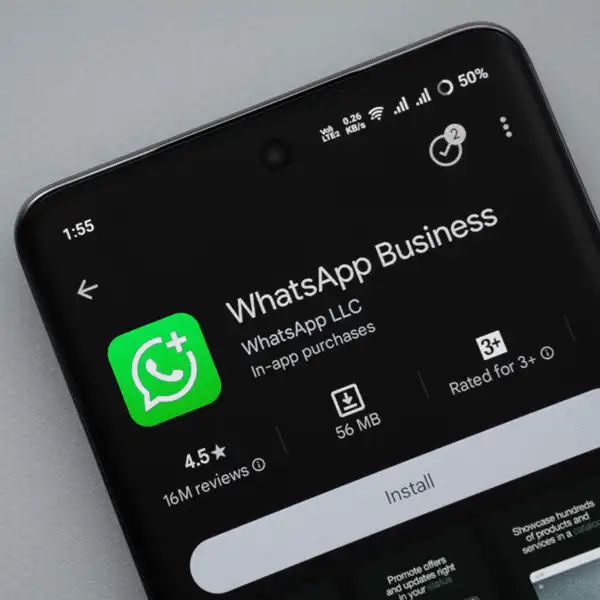
How to do marketing with WhatsApp business to sell more
To sell on WhatsApp seriously, you must consider it a full-fledged sales and relationship channel, not a “courtesy” phone number.
The starting point is to define a clear strategy: which products/services you want to push, which customer segments you want to reach, and which stages of the funnel you want to preside over (acquisition, consulting, closing, post-sale).
Here are some concrete applications for an entrepreneur:
- Lead generation and first contact
- Place “Write us on WhatsApp” button on website, landing page, Google Business Profile and social campaigns.
- Use a personalized automated welcome message to immediately gather essential information (name, interest, budget, urgency) and direct the contact to the right product/service.
- Pre-sales and personalized advice
- Use WhatsApp as a quick advice channel: send photos, videos, data sheets, examples, case studies, links to specific pages.
- Prepares scripts and templates for the sales team to handle objections, discount requests, product comparisons, with a consistent and professional style.
- Presentation of the offer with the WhatsApp catalog
- Activate whatsapp catalog on WhatsApp Business to show products or service packages with pictures, descriptions and prices.
- Create collections (best sellers, new releases, promotions of the month, subscriptions) that the salesperson can send out in a tap, making the proposal clear and quick to understand.
- Follow-up and closing of the sale
- Structure follow-up sequences: after a quote, after a store visit, after a cognitive call.
- Use targeted reminders (offer expiration, last places, last product availability) to encourage decision making without being aggressive.
- After-sales and retention
- After the sale, use WhatsApp to update on shipments, appointments, customer service, and product updates.
- Propose contextual upsells and cross-sells: accessories, service extensions, subscriptions, renewals, based on what the customer has already purchased.
From this perspective, selling on whatsapp means building a true relational path: the contact enters from a campaign, is managed in chat, receives a clear proposal, concludes the purchase and continues to be followed.
The value lies not only in the individual order, but in the ability to turn each conversation into a lasting relationship.
Platforms and services to do marketing via WhatsApp and maximize sales
When you go from a few chats to dozens or hundreds of conversations a day, selling on WhatsApp without dedicated tools becomes unmanageable.
To maintain control, performance and tracking you need WhatsApp Business API-based platforms that allow you to automate, segment, send campaigns and connect the channel to CRM and e-commerce.
The solutions available today cover a variety of needs: from sending campaigns and newsletters, to managing a sales team on a single inbox, to advanced abandoned cart features and chat payments for those who really want to sell on whatsapp as well as on an e-commerce.
The goal is to choose a few well-integrated tools that allow you to control the entire funnel: acquisition, conversation, business proposal, order, follow-up and repurchase.
Recommended platforms and services
Below is a summary table with some of the major international platforms and their role in sales strategies and marketing campaigns with WhatsApp.
| Platform/Service | What it is used for (in practice for a business) |
|---|---|
| WATI | SME-focused platform for centralized chat management, automation and WhatsApp broadcast; ideal for sales and service teams who want to do structured campaigns and follow-ups. |
| Brevo (formerly Sendinblue) | Marketing suite that integrates email, SMS, and WhatsApp; useful for sending campaigns and newsletters with whatsapp, orchestrating multichannel workflows, and maintaining CRM, automation, and reporting in one environment. |
| Respond.io | Inbox omnichannel to manage WhatsApp, Messenger, Instagram, etc. from a single dashboard; allows you to assign conversations to the team, create automations, and link the channel to CRM to measure sales. |
| Zoko | Platform designed for e-commerce: abandoned carts, order notifications, segmentation and campaigns; ideal for selling on whatsapp products with structured catalog and “shop in chat” logic. |
| Infobip | Enterprise solution for orchestrating campaigns, journeys and notifications on WhatsApp and other channels; suitable for companies that want high volume, advanced analytics and strong integration with internal systems. |
| MessageBird | Omnichannel platform with WhatsApp as a key channel; useful for integrating messaging, voice and other touchpoints, with automations and intelligent routing to different teams or departments. |
| Kaleyra | Provider with strong focus on compliance and traceability; suitable for regulated industries (finance, insurance, healthcare) that want to use WhatsApp for notifications and critical communications. |
| Vonage (Nexmo) WhatsApp API | API geared toward developers and tech companies that want to build custom tailored flows, integrating WhatsApp into applications, proprietary CRMs, and management systems. |
| Twilio | Global messaging infrastructure that includes WhatsApp; great for custom projects, complex automations, and integrations with existing enterprise-level technology stacks. |
| 360dialog | Official WhatsApp Business Partner focused on API access; ideal if you want a reliable technical foundation, clear costs, and ability to connect different marketing and CRM platforms over the API. |
| AiSensy | Specialized WhatsApp marketing platform with campaign features, automations, chatbots and integrations, designed for SMEs and brands that want to scale without complex internal development. |
| SendWo | Tool to send mass whatsapp messages and manage bulk campaigns with templates, segmentation and chatbots; useful for small business that want to start with low cost but official API. |
| Spoki | Platform geared toward European companies that want to integrate WhatsApp into their business with automations, funnels and specific tools for lead generation and follow-up in local languages. |
| Trengo | Shared inbox and API platform to centralize WhatsApp and other channels; useful for multiple teams (sales, customer care) who want to coordinate on the same conversations with automations and chatbots. |
For an entrepreneur, the criterion of choice is not “the most popular platform,” but the one that best integrates with the business model: if you sell online, favor strong tools on abandoned cart, order notifications, and catalog; if you work on leads and consultations, aim for shared inboxes, automation, and CRM.
In any case, invest initial time to properly set up opt-ins, message templates, segmentation, and reporting-this is what will allow you to sell on whatsapp with growing numbers, without losing control and without compromising customer relationships.
Only then does selling on WhatsApp stop being “artisanal” and become a repeatable and scalable process.
What not to do on WhatsApp to avoid losing trust (and sales)
WhatsApp is a very powerful channel, but also a delicate one: it enters directly into the personal sphere of the customer. Mistakes in approach can undo hard-built trust in no time, and in some cases even create legal or number-blocking problems.
Here are the main behaviors to avoid:
- Contacting people without consent
- Sending messages to people who have not requested information or have not agreed to receive promotional communications is perceived as spam.
- In addition to damaging corporate image, it can generate reports and regulatory compliance issues (especially in the EU).
- Using purchased or “recycled” lists
- Lists of numbers not collected by you, nor with a clear opt-in, are one of the quickest ways to burn the channel.
- People don’t know you, don’t expect your messages, and will block you very easily, reducing the number’s reputation.
- Bombard with worthless promotions
- If every message is a discount, a flash offer, or pressure to buy, the customer will perceive the channel as invasive.
- Alternates commercial content with utility content: tips, tutorials, updates, educational.
- Being too informal or unprofessional
- Even if WhatsApp’s tone is more direct, you still remain a business: language, schedules, emoji and style must be consistent with the brand.
- Take care of grammar, clarity and courtesy-every message contributes (for better or worse) to the perception of your brand.
- Do not give the option to unsubscribe
- The customer must be able to easily break off communications without conflict, and know how to do so.
- Ignoring stop requests or continuing to write after an unsubscribe is a sure way to lose credibility and fuel negative word of mouth.
- Use the same number for personal and business use
- Mixing private and business conversations creates chaos, risk of errors (messages to the wrong chat) and lack of internal tracking.
- Better to have a dedicated number and structure with controlled access for the team.
In summary, if you want to sell on WhatsApp you need to put trust at the center: ask permission, respect the customer’s time and manner, offer real value, be transparent. Only then will the customer perceive the channel as a service, not a nuisance.
Selling on WhatsApp: related articles
- Marketing on WhatsApp: what it is and why to use it
- Finding customers with WhatsApp and Telegram
- WhatsApp catalog: what it is and how it works
- WhatsApp Hubspot: how to integrate them and why!
- Call To Action: how to increase conversions effectively
WhatsApp marketing: 6 FAQs you need to know if you want to sell
WhatsApp is effective for both pre-sales (information, advice, quotes) and closing, especially when you integrate payment systems and structured processes. In many industries, the “let’s talk on WhatsApp” step is what turns a curious person into a customer by deciding on the ideal timing and mode of response.
The key is opt-in and segmentation: gather clear consents, divide the base into homogeneous groups, and send only relevant content to each segment. Use professional mailing tools that manage unsubscribes, frequency and measurement of results, and avoid using impromptu lists from your phone.
For a business, WhatsApp Business is the bare minimum: it allows you to set up company profiles, labels, quick replies, automatic messages, and the WhatsApp catalog. If contact volume increases, the next step is to connect WhatsApp Business to more advanced platforms and the API, so you can manage everything in a multi-user, integrated way.
Short, clear, visual content works: product photos, short videos, timely voice messages, concise text with precise call-to-actions. Combinations are also very effective: context message + product image + link to purchase or payment page, all in the same conversation.