



In this article, we look at examples of 14 customer retention strategies, suggested to us by HubSpot, that have been enormously successful.
As the philosophy ofInbound Marketing teaches us, investing in the satisfaction of one’s customers costs much less than acquiring new customers.
We could say satisfied customers = repeat customers!
In fact, the real advantage in a marketing and communication strategy, lies precisely in customer loyalty, which allows for more visibility, more word-of-mouth, and thus generating new business.
Loyalty meaning
In the business context, loyalty refers to the strategies and activities put in place to create lasting and profitable relationships with customers.
The goal is to turn casual customers into loyal customers who buy regularly, spend more, and promote the brand to others.
To achieve this important goal, companies mainly implement activities such as loyalty programs (loyalty cards and point collection) in their marketing and communication strategies.
In this article, in addition to loyalty programs, you will find lots of other ideas for achieving maximum customer satisfaction and turning customers into abiatual customers.
Below you will find 14 customer retention strategies that some Companies have successfully adopted, achieving their marketing goals.
1. Adopt customer service tools
The Santa Cruz Bicycles Case
If you are an SME, your Customer Service team may consist of only a few people.
However, as you increase the number of your clients, the demand for your services increases, forcing you to expand your support team.
Hiring is expensive, which is why many companies turn to technology to meet their needs and achieve their goals.
Santa Cruz Bicycles did exactly that when it realized that its current approach to customer service was not sustainable.
Although the company was committed to providing excellent customer service, as the customer base increased, it became increasingly difficult to meet the demands.
Below are the words of Kyle Harder, customer support manager:
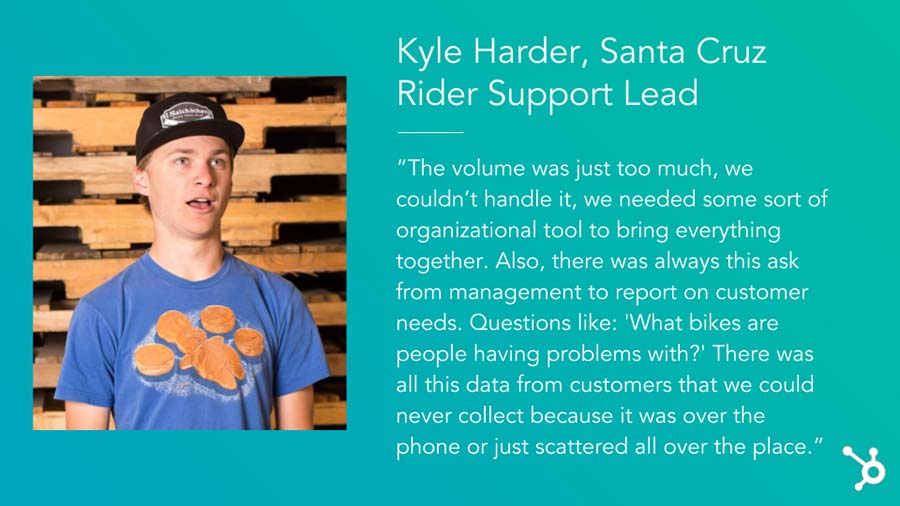
Instead of hiring more representatives, Santa Cruz Bicycles decided to invest in technology, starting with the introduction of a CRM.
Using HubSpot software to record customer interactions and create support tickets, the Customer Service team was able to mark open support cases and ensure that each ticket received a timely response.
And that kept the Santa Cruz support team organized, while creating a more pleasant customer experience in the process.
As the company continued to grow, the support team needed a more refined tool for its daily workflow.
Therefore, the organization adopted Service Hub, to centralize customer service operations.
This meant that all requests for assistance were channeled into a shared inbox where team members could collaborate.
This made it easier for the team to act on urgent or sensitive issues, improving the likelihood of customer retention.
2. Inspire with a Mission.
The TOMS case
Sometimes a brand inspires loyalty not through tactics and systems, but through what it stands for.
If you have ever watched Simon Sinek’s TED talk “Start with Why,” you probably already know a thing or two about the importance of having a mission.
TOMS has built its entire business model around the intention to make the world a better place. As Fast Company contributor Jessica Weiss put it :
“TOMS has integrated old-style for-profit entrepreneurship with new and bleeding-edge philanthropy.”
The way they do this is in their “One for One” policy. For every pair of shoes purchased, they give one pair to people in need, donating more than 60 million pairs of new shoes so far.
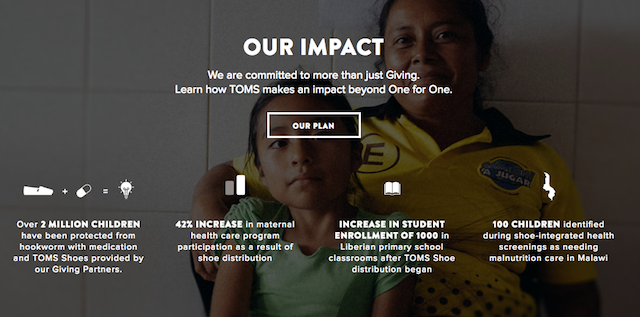
As consumers, we focus on the altruistic and environmental effects that our purchasing habits have beyond consumption.
Doing good is becoming increasingly important for each of us.
That doesn’t mean you should build your marketing around an altruistic message just to do it.
The lesson is to find something that interests people, and position your Company around it.
3. Providing customers with convenience
The Starbucks case
Coffee giant Starbucks has always been innovative with its marketing, especially in the customer acquisition department.
In the beginning, Starbucks founders Zev Siegl, Jerry Baldwin and Gordon Bowker focused on the sounds and smells inside their stores to provide a pleasant customer experience.
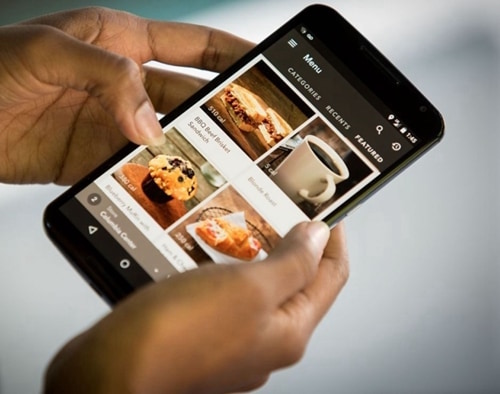
But to grow, they had to become innovative. One of their most innovative moves for customer loyalty is the Mobile Order & Pay feature within their App.
With the new feature, customers can order coffee before even arriving at the store.
How do customers feel about the upgrade?
In short: they loved it.
“Just this morning I parked at my son’s school, placed my order in the parking lot, brought it in, then went to Starbucks and got my drink. Mobile Order & Pay can save me 10 minutes of my morning routine. I told my boss that is why I am now on time for work.”
Mother Danielle Lesikar explained .
The advice we can take from this example is this:
Make your products and services as accessible as possible.
Identify your customers’ desires and behaviors, and create tools and systems that empower them. Whether it’s an App, or something else.
4. Take advantage of personalization
The Tesco case
This supermarket giant has a strong presence in the UK, with more than 2,000 stores nationwide.
For big brands like this, appearing authentic and human can be a challenge.
Online shopping and self-service scanners are convenient, but people still like to talk to other people.
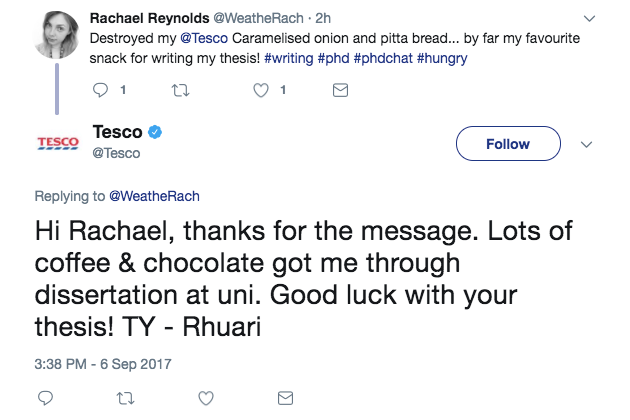
Customer service is still needed, and the Tesco team chose to use X (formerly Twitter) to provide this service with a more human touch.
By adding personality to their interactions, they demonstrate empathy and concern for the client’s issues. Like the example below:
To begin with an approach like this, identify the people in your audience and communicate with them on their preferred channels.
Whether it’s Twitter, email, or Snapchat doesn’t matter. As long as we use the preferred channel of our buyer persona of choice.
From here you should encourage your customers to talk directly to you through that channel. Make it part of your messaging, and remind them during and after the buying experience.
And always add personality to each message.
No one likes a prepackaged answer, so make sure that whatever you are communicating sounds like it is coming from a human being.
5. Talk to your customers
The case of R&G Technologies
We have looked at several B2C examples, but what about the B2B world?
R&G Technologies is an Australian IT support company that has developed strong long-term relationships with its clients.
They solidify these relationships with quick response times, and offer their customers the opportunity to voice their opinions, both good and bad.
In fact, customers are free to compliment the Company, but also to point out what they are doing wrong.
And this enables R&G Technologies to identify dissatisfied customers before “tempers flare.”
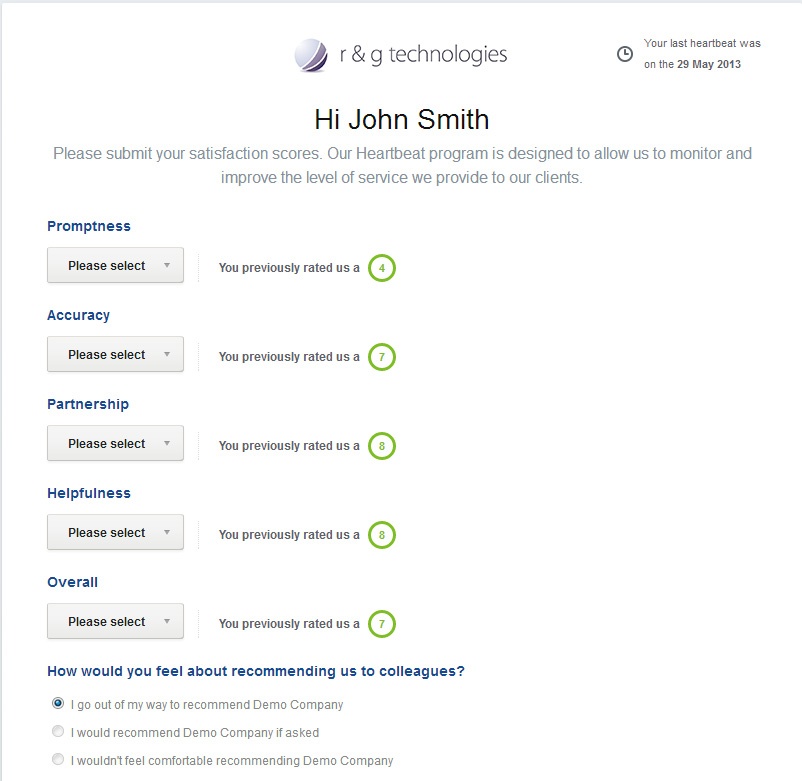
R&G focuses strongly on asking the right questions in order to get information about any issues, and act in time.
And they obviously use this information to make better business decisions, and retain customers.
6. Use gamification and referral programs
The MeUndies case
Presented as the world’s most comfortable underwear, MeUndies promotes loyalty through the “gift” element.
In fact, their program, involves encouraging customers to refer the service to their friend, at the time of purchase.
And it is worth it!
Because for each friend that is introduced, the customer receives a $20 voucher, and the friend receives a 20% discount on the first purchase.
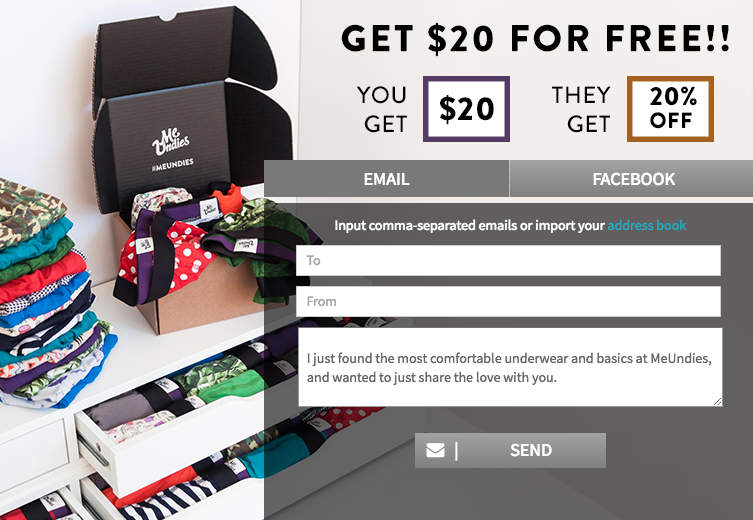
This system also includes a rather “playful” part.
In fact, it prompts customers to interact with friends, to “ask each other for a hand” in order to receive a discount, or a shopping voucher.
In other words, MeUndies has found a way to increase lead generation through its customers.
That they will have increasing trust in the Brand, which rewards them for taking an action that is very simple to them, but strategic, and fundamental, to the Company.
When done well, these systems can be really effective in implementing retention strategies.
And thanks to Hubspot, even this kind of process can be analyzed, managed and improved, according to one’s needs and requirements.
7. Create a division between you and your competitors
The Apple case
Do you want your customers to see you as the obvious choice, compared to your competitors?
Take note of Apple’s strategy, demonstrated by their “Mac vs. PC” advertising campaign.
The campaign featured John Hodgman as the inept PC and Justin Long as the awesome Mac.
The two joked about what made the Mac a better choice than a PC in a really funny way.
The “Mac vs. PC” campaign was very ironic, and it generated a lot of controversy.
Not only that.
It also divided the market, and distinguished Apple from its competitors, identifying the kind of consumers who should buy Apple products, and who should not.
Staying true to what represents us as a brand, shows integrity, and makes it easier to attract customers who might become our most loyal advocates.
The lesson we can learn from the Apple campaign, is not to be afraid to be too bold, in our marketing strategy.
8. Use subscriptions to reinforce the experience
The Amazon case
It is unusual for a commodity-based organization to implement a subscription service in its business model.
Which is exactly what Amazon has created in the form of Prime.
The subscription was originally created to offer customers faster delivery.
It generated much controversy, but quickly became popular among users of the platform.
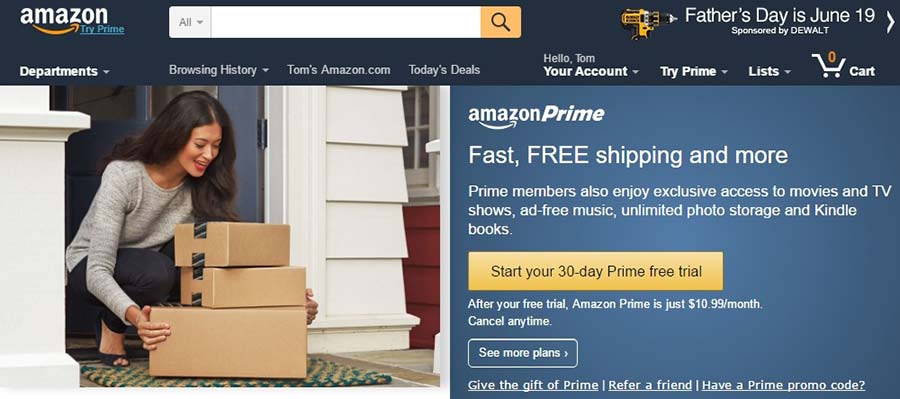
Since its launch, they have added other benefits, such as access to Amazon’s Instant Video platform.
It is a move that looks expensive, but it is actually a strategic play.
Amazon is estimated to lose $1-2 billion in revenue each year, but this is easily offset by increased purchases.
How can you use subscriptions to achieve growth goals and increase customer loyalty?
Of course, it is not necessary to charge a subscription fee to retain customers.
Providing benefits in the form of content(content marketing) and exclusive events is another way to leverage this approach without spending a lot of money.
9. Use experiences to elicit positive feelings
The Coca-Cola Case
Experiential marketing has long been used by brands as a way to elicit positive feelings.
Coca-Cola organized a 70-day campaign around the 2012 Summer Olympics, and part of that was its “Coca-Cola Beat Generator” app.
This experience combined music, sports and the Coca-Cola brand.
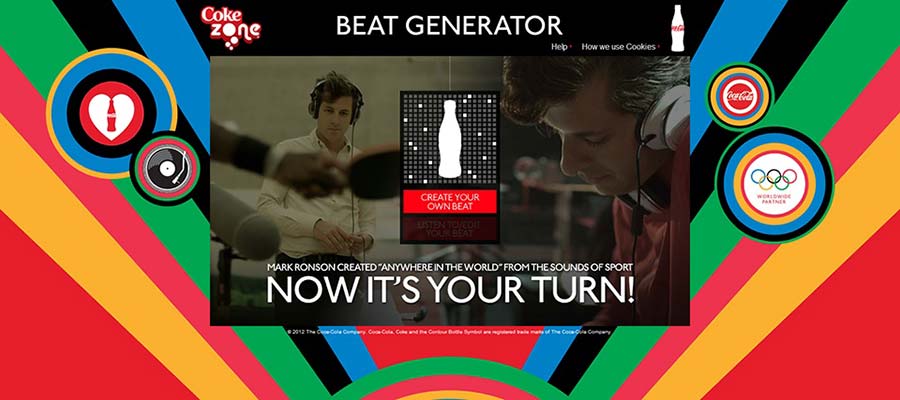
Source: Figment Productions
They showed this during their roadshow around the Olympics, using samples and sounds from the games themselves.
Gli utenti possono quindi portare con sé la registrazione MP3 e condividerla tramite i social media.
The results?
16,500 visits to the web version and 1.78 million impressions on Facebook!
Although Coca-Cola produces beverages, they devised a way to tap into the positive hype around an event by providing delicious experiences for customers that went beyond the point of sale.
So the advice we give is this:
Look for alternative ways to create positive feelings in the form of new experiences. Outside of your products, services and business proposals.
10. Capitalize on Social Proof
The Codecademy case
Sometimes, the greatest form of publicity is not your own.
In fact, customers are more likely to trust the opinions of family, friends, and other consumers than the advertisements of a Brand.
People trust people.
And this is where Social Proof comes in.
Using the power of customer testimonials and stories, Codeacademy uses Social Proof to show potential customers the value of its products, with stories told directly from the mouths of those who have trusted the Company.
More than 60 percent of customers trust online reviews, and seeing that many other brands and people like you are using a product makes you want to do it too.
And this feeling harks back to FOMO (Fear Of Missing Out), which, not surprisingly, is part of the most powerful marketing and retention strategies.
Use customer testimonials and information to attract new customers, and convince existing customers to stay and be Ambassadors of your products.
Highlight loyal customers and their stories on your website or social media. This way you will make them happy, with a super positive return for your business.
11. Educate your customers
The HubSpot Academy Case
Just because your customer has made a purchase does not mean you should stop interacting with them.
Your customers have many options available to them, including your competitors. And you could lose them at any moment!
The philosophy ofAttract, Conclude and Delight is at the heart of Inbound Marketing. And it is no coincidence that Hubspot is the ultimate Inbound software.
Education is one of the most valuable things you can offer your customers (or even just visitors to your site).
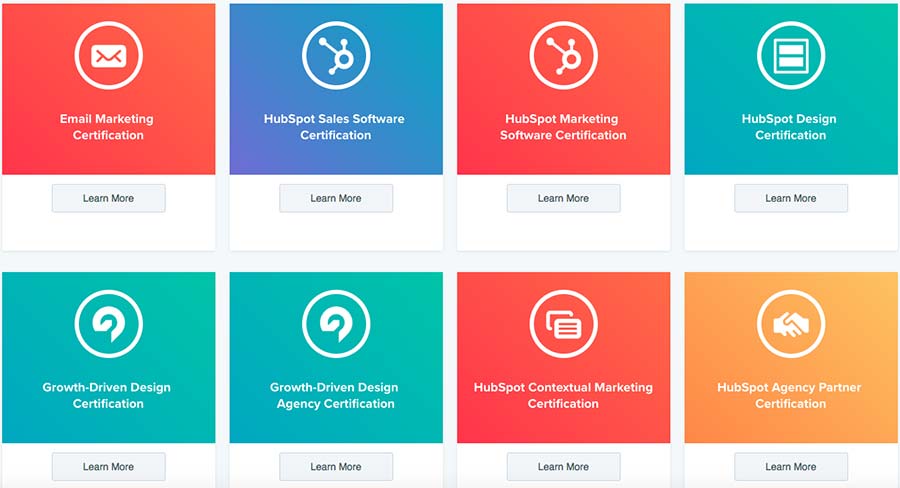
HubSpot Academy offers free marketing, sales and customer service training videos and certifications that anyone can use to learn and grow their skills.
However, some content is only available to HubSpot customers and partners.
These unique and exclusive offerings help make the HubSpot community more engaged and interested in keeping up with their educational offerings.
12. Surprise and joy
The Chewy Case
Chewy, a pet e-commerce company, knows that its customers love their pets as if they were their children or siblings.
And he also knows that they can buy pet food and supplies from a variety of companies, including Amazon, at prices similar to their own.
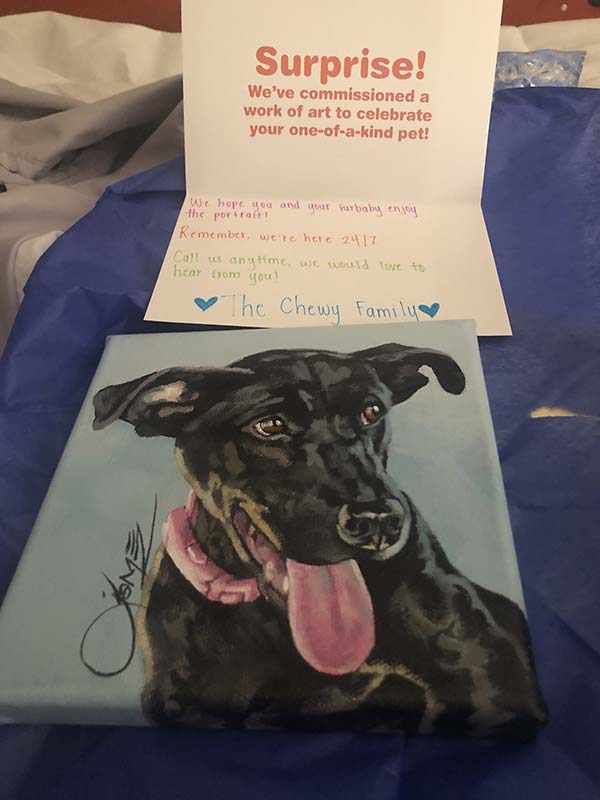
So he uses “the surprise effect,” to delight his customers with gifts and cards for their pets.
These surprises do not have to be big or expensive, but they are memorable for their clients, showing their passion and love for their furry friends.
The example below, is a painting Chewy commissioned for a client’s pet: other ideas could be handwritten thank-you letters, or free samples of new products.
13. Thank your customers
The Zappos case
Spending time thanking customers, outside of an email campaign or purchase, goes a long way toward building a reliable and memorable Brand image.
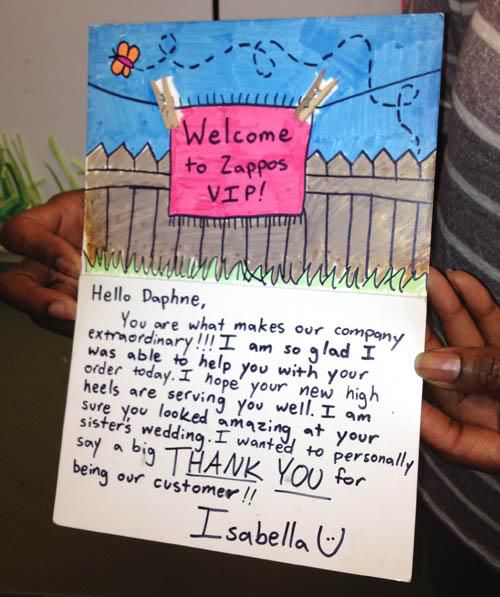
The e-commerce clothing and shoe store Zappos, is known for its excellent customer service. Including its efforts to show customers how much it cares about them by thanking them and sending special giveaways.
In fact, Zappos also has an office-wide count of how many gifts and surprises were sent to customers during the previous month. To make sure the whole team is doing their part to show customers how much they are appreciated by the Company.
Saying thank you is a simple but highly effective customer retention technique that distinguishes faceless Web sites from beloved brands. And of course with a more than positive return.
14. Apologize when you make mistakes
The HubSpot case
As much as you can try to avoid them, mistakes always happen. We are human beings, although we are often helped by technology.
Whether the error is a data breach, an outage, a billing error or something else, an error can jeopardize your relationship with your customers, depending on how it is handled.
Research conducted by HubSpot found that in the event of a mistake, 96 percent of respondents would continue to buy from a company they bought from regularly if it apologized and corrected the situation.
And that means you need to develop a plan to avoid mistakes, and a plan to fix them promptly. Then apologize honestly, and move forward to keep your customers happy and satisfied.
HubSpot had such an experience during INBOUND 2018, when a system outage negatively impacted some customers.
Hubspot worked quickly to correct the error, to figure out how it had happened, and to prevent it from happening again.
In addition, the Customer Service team apologized to customers, privately and publicly on the blog. It explained in detail what had happened, and how they would avoid a similar mistake in the future.
Make your own customer retention strategy!
We have provided you with some concrete and successful examples of some retention strategies implemented by Companies that have tried their hand atInbound Marketing.
Now you have the elements you need to implement your own strategy, taking cues from those who have already done so, and increased their business.
Don’t hesitate to contact us if you have any doubts!
We will provide you with all the information you need on how to retain your customers and make your strategy perform as well as possible.
Did you find this article interesting? You can explore further by reading these articles.
- Inbound Marketing, the strategy that respects the customer
- Content Marketing: increase your company’s visibility
- Customer Loyalty. The Customer at the Center
- A personal reflection on the new Dove Deodorant Spot.
- Want to improve the customer experience? Make like Kinder
- Homer Simpson-style marketing lesson: what (not) to do absolutely
- Emotional Marketing: when the brand puts its heart into it