


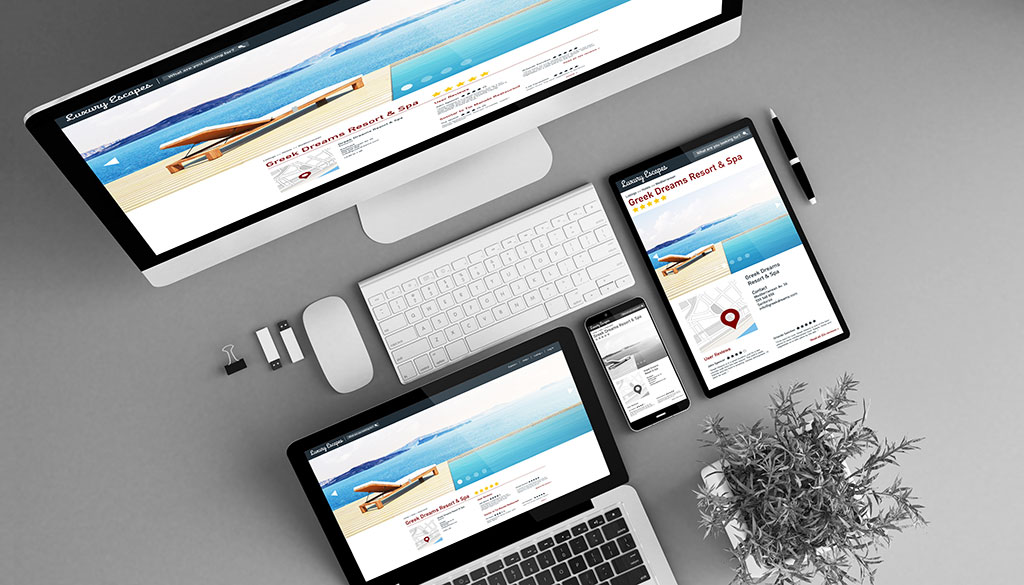
Unlike traditional web pages, a landing page (landing page) has a very specific focus and a single goal: to increase visitor conversions into potential customers or clients.
The main purpose of a landing page is:
- Capturing the visitor’s attention
- Provide targeted information about a specific product or service
- Encourage the visitor to take a specific action (conversion)
Let’s look in detail at what a landing page is, what it is used for, and how it can be effectively exploited.
Key elements of a successful landing page
To increase conversion rates with a landing page (landing pages), you can implement the following strategies:
- Create a targeted message tailored to your specific audience, highlighting pain points (needs) and offering a clear solution. Include a clear and engaging headline that immediately grabs the visitor’s attention and communicates the main value of the offer.
- Create an explanatory subtitle that provides additional details and keeps the reader’s interest.
- Optimize call-to-action (CTA).
- It must be visible and persuasive, strategically placed on the page.
- It should be clear, direct and invite the desired action such as: call us, email us, fill out the form, contact us via WhatsApp
- Use strong action verbs such as “Download,” “Register,” “Start.”
- Create a sense of urgency with phrases such as “Limited time offer.”
- Make the CTA button stand out with contrasting colors
- Offer a valuable lead magnet, such as an ebook, webinar or free trial, in exchange for contact information.
- Use a clean, intuitive design with a simple, organized layout that guides the user toward conversion. Eliminate navigation menus and other non-essential elements to keep the focus on the desired action.
- Highlight the benefits to the user. They should be clear and concise and should highlight how, the product or service, solves a specific problem for the user.
- Use engaging visual elements such as images or videos to capture attention in the first 20 seconds.
- Implement social evidence such as testimonials, reviews, or logos from known customers to increase credibility and build trust.
- Optimize the contact form:
- Minimize required fields
- Uses auto-completion to facilitate compilation
- Clearly explains the value the user will receive in return
- Structure the page following the AIDA method: Attention, Interest, Desire, Action.
- Run A/B tests on key elements such as headlines, CTAs, and design to continuously optimize performance.
- Don’t overlook the technical aspect: your mobile landing page must be quick to download and optimized for viewing on any device to avoid user abandonment.
- Monitors and analyzes results to identify areas for improvement
An effective landing page combines these elements consistently to guide the visitor to the desired action, thereby maximizing conversions.
Differences between landing pages and traditional web page
Using a landing page offers several advantages over a traditional web page:
- Increased focus: Landing pages are designed with one specific goal in mind, eliminating distractions and guiding visitors to a targeted action.
- Higher conversion rates: Due to their optimized structure and targeted message, landing pages convert more traffic than generic web pages.
- Customized messages: They allow content to be tailored to specific audience segments, increasing the relevance and effectiveness of the message.
- Better measurement of results: With a single focus, it is easier to track and analyze page and campaign performance.
- Qualified lead generation: By offering valuable content in exchange for contact information, landing pages are effective tools for lead generation.
- Reduced bounce rate: Targeted, distraction-free design keeps visitors more engaged, reducing the likelihood that they will abandon the page.
- Facilitated testing and optimization: Landing pages enable rapid A/B testing and optimization to continuously improve performance.
- Marketing campaign support: They are ideal for promoting specific offers, events or products, maximizing the effectiveness of advertising campaigns.
In summary, landing pages offer a more targeted and measurable approach than traditional web pages, being particularly effective for specific marketing and conversion goals.
Product landing page or lead generation?
There are two different types of landing pages: those that aim to acquire a contact and those that aim to sell a product.
Now let’s look at the main differences between lead generation landing pages and click-through landing pages.
Landing Page Comparison Table for Lead Generation and Click-Through
| Type | Lead Generation | Click-Through |
|---|---|---|
| Target | Collect contact information of visitors. | Lead the user to a next action, such as a purchase. |
| Key elements | Data acquisition module. | Featured call-to-action (CTA) button. |
| Content | Offering value in exchange for data (e.g., ebooks, webinars, demos). | Detailed information about the product or service, helpful in stimulating action. |
| Conversion process | Conversion is done directly on the page by filling out the form. | The user is directed to another page where he or she completes the desired action (checkout, etc.). |
| Use | B2B strategies, products/services with longer sales cycle. | E-commerce, direct sales, immediate promotional campaigns. |
| Complexity | Longer and more detailed, they require more informational involvement. | More concise and simple, focused on a single action to be accomplished quickly. |
What tools can you use to create your landing pages?
There are several online tools that facilitate the creation of landing pages, including:
- Unbounce: A platform dedicated to creating and optimizing landing pages.
- Leadpages: Offers predefined templates and tools for generating leads.
- Instapage: Famous for its advanced customization and analytics features.
- WordPress with specific plugins: Such as Elementor or Thrive Architect, which allow the creation of landing pages directly within your WordPress site.
Why are landing pages so important?
Creating a perfect landing page is an indispensable part ofinbound marketing and, especially, ADV and lead generationcampaigns.
It is the easiest way to succeed in channeling traffic to your website and to keep no more visitors from slipping through your fingers. Also, keeping track of landing page data will help you understand the intentions of your leads.