


The accessibility of public administration websites is now a fundamental requirement for ensuring equitable, inclusive and efficient services to all citizens.
In an ever-evolving digital environment, compliance with accessibility standards not only complies with current regulations but also paves the way for a PA capable of truly dialoguing with every person, without technological or sensory barriers.
What is accessibility for PA?
Digital accessibility is the ability of a website, application or digital service to be easily and fully used by anyone, including people with visual, hearing, motor or cognitive disabilities.
In PA, this translates into the obligation to design, develop and maintain digital garrisons that meet precise technical requirements and ensure equal opportunities for access to online public services.
Main normative references
The Italian regulatory framework on accessibility is based on:
- Stanca Law (Law Jan. 9, 2004, No. 4): a reference point on which obligations, sanctions and technical parameters for public administrations are based.
- Legislative Decree 106/2018: transposition into Italy of EU Directive 2016/2102 on the accessibility of PA websites and apps.
- AgID Guidelines: specify the criteria, technical parameters and requirements for verification, declaration and periodic monitoring.
- W3C’s WCAG (Web Content Accessibility Guidelines): these are the international reference standard also incorporated into Italian regulations.
To whom do these regulations apply?
All websites, portals, digital counters, mobile apps and online services created, managed or commissioned by central and local government must ensure full accessibility.
The obligation also involves public service concessionaires, investee companies, health care companies, public schools and private vendors who implement software or digital solutions on behalf of the PA.
Obligations and responsibilities of PAs
Each public agency is responsible for:
- Ensure continuous accessibility for every digital service.
- Adapt sites, platforms and apps to regulatory and technological updates.
- Publish and periodically update the “Accessibility Statement” for each individual site or app, attesting to the actual status of compliance.
- Establish and maintain active feedback and reporting channels, responding to user requests in a timely manner.
Technical parameters to be met
To define an “accessible” PA site, strict requirements must be met:
Reference standard
- WCAG 2.1 level AA: is the minimum required standard; it provides guidelines articulated around four basic principles: Perceivable, Usable, Understandable and Robust.
- UNI CEI EN 301549: Specific European technical standard for accessibility requirements applied to the public sector.
WCAG principles and practical requirements
The technical parameters of WCAG 2.1 AA include:
- Keyboard navigability: every function must be usable without a mouse.
- Compatibility with screen readers and assistive technologies.
- Complete alternative texts for images, graphics, and multimedia content.
- Optimal color contrast for visually impaired people.
- Proper semantic hierarchies (titles, lists, tables, distinct buttons).
- Accessible forms with clear labels and instructions.
- Adequate focus management during navigation.
- Understandable error messages and input operation supports.
- Accessibility also for dynamic content (video, audio, PDF, interactive materials).
Tools and methods of verification
PAs must subject sites to periodic inspections according to two types of tests:
- Technical verification: manual (or automated) verification of compliance with WCAG 2.1 AA and UNI EN 301549 standards, with documented audit.
- Subjective verification: tests conducted by people with real disabilities to assess the actual usability of the service in practical scenarios.
Testing involves both automated tools (scanners, online checkers) and analysis with real user evaluation groups, highlighting with detailed reports critical areas and defining corrective activities to be implemented.
Control frequency and monitoring
Accessibility monitoring should be done on a regular basis (at least every 4-6 months suggested), but always at significant new feature releases or site/application redesigns.
AgID also conducts sample monitoring based on PA statements, publishing the results and recommendations for improvement annually.
Statement of Accessibility PA websites: content and publication
The Accessibility Statement is a mandatory public document where the PA certifies, for each site/app:
- The actual status of compliance (full, partial, noncompliant).
- The areas and features accessible, any limitations or exceptions justified.
- The date and results of the last technical and subjective tests conducted.
- Contact channels and the feedback mechanism, with defined response times.
- Ways to activate the Digital Ombudsman if the agency fails to respond within 30 days.
Failure to publish the Accessibility Statement, failure to respond to users, and failure to comply with public administration site accessibility guidelines lead to precise managerial, disciplinary, and, in the most serious cases, administrative sanctions.
Penalties for noncompliance
Article 9 of the Stanca Law establishes penalties for managers responsible for noncompliance. Among the consequences:
- Disciplinary reprimands and censure.
- Inability to renew or revoke the appointment in case of repeated noncompliance.
- Nullity of contracts entered into by the PA with suppliers who do not guarantee accessibility.
Technology solutions and support tools
To facilitate PAs in achieving and maintaining compliance, there are:
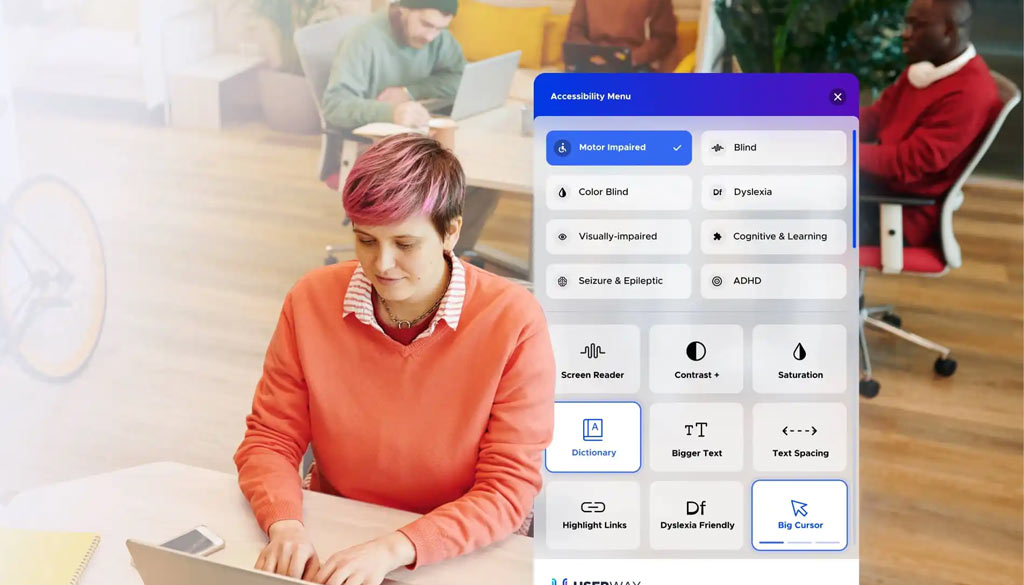
- Accessibility widgets: integrable tools that allow instant adaptation of the user experience tailored to different disabilities.
- Scanners and checkers: automatic analysis tools that detect problems and suggest priority resolutions, generating detailed reports.
- Specialized counseling and training: essential for dealing with complex cases or updating the skills of in-house staff with practical and theoretical modules.
Benefits of taking an integrated approach to accessibility
In addition to meeting legal requirements, investment in accessibility brings numerous benefits:
- Social inclusion: PA opens up to all citizens, enhancing the sense of public service.
- Administrative efficiency: reduction of support requests, clarifications and reports due to more intuitive platforms.
- Positive image and authority: accessible PA is perceived as modern, innovative and oriented to the common good.
- Increased use of digital services: removal of barriers increases the number of actual users of services, including through compatibility with mobile and assistive technologies.
- Reduced risk of penalties: a constant cycle of audit, maintenance and transparency protects the institution from legal challenges and penalties.
How to implement accessibility in PA digital projects
- Initial analysis of site/app status against WCAG 2.1 AA standards.
- Staff training: developers, content managers and stakeholders need to be updated on technical and legislative best practices.
- Accessible design “by design”: accessibility principles should be integrated as early as the concept, design and development stages.
- Use of advanced technology tools: widgets, scanners, AI solutions that simplify accessibility management.
- Periodic testing (technical and subjective), with related documentation and transparent publication of outcomes.
- Continuous updating and maintenance, with responsiveness to user feedback.
- Collaboration with specialized consultants, in case of complex or innovative sites.
- Drafting and publishing the Accessibility Statement that is always up-to-date and readily available.
Digital accessibility in public administration sites is not a bureaucratic burden but a strategic investment, a prerequisite for a modern, inclusive and truly digital PA.
Through strict adherence to technical parameters (WCAG 2.1 AA), constant monitoring, ongoing training, and the use of technological solutions, administrations can not only avoid penalties but also become protagonists of a new digital citizenship, tailored to each user.
Usability of public administration websites
Making government websites accessible is not only about fulfilling a regulatory obligation, but also represents real added value in terms of usability.
The adoption of accessibility criteria, in fact, imposes design choices that simplify navigation, make content clear and well-organized, facilitate the filling out of forms, and reduce errors in digital interactions.
Clear structures, appropriate color contrasts, well-formatted text, and easily intuitable paths promote a better user experience not only for people with disabilities, but for the entire audience, including less experienced users or those with outdated devices.
Implementing accessibility therefore means optimizing “public administration website usability,” making processes more efficient and increasing citizen satisfaction, who will find online services simple, intuitive and accessible under all circumstances.
Factory Communication is Solution Partner of USERWAY the world’s No. 1 technology for Digital Accessibility.