

Web Site Accessibility: An Ethical Imperative and aBusiness Opportunity.
The Web is a place of connection and opportunity for everyone. However, many people with disabilities face barriers when trying to access online content.
It is critical that websites are designed and developed with accessibility in mind to ensure an inclusive experience for all users.
Regulatory Compliance: Compliance with EU Directive 2019/882 (European Accessibility Act) is not only a legal requirement (Website Accessibility Act).
It also represents an opportunity for companies to demonstrate their commitment to accessibility and ensure a sustainable presence in the European market.
Factory Communication is a USERWAY Partner, the world’s most installed digital accessibility widget.
Gartner recognized UserWay as one of the leading technology providers in the area of artificial intelligence-based accessibility in its recent Accessibility Market Guide.
When we talk about website accessibility and usability, we refer to the creation of content and the design of websites that are easily usable by all users, including those with disabilities.
This not only improves the user experience for a wider audience but can also significantly increase the visibility and ranking (organic placement on the SERP) of your site in search engines.
Web site accessibility is not just a legal requirement (Stanca Law), but an opportunity to make your e-commerce site more inclusive and perform better.
Blindness and low vision. Estimates indicate 43 million blind and visually impaired people in the world. They use assistive technologies which require the website to be properly formatted.
Epilepsy. 50 million people have epilepsy, and Web site animations can trigger seizures.
Dyslexia. 10% of the world’s population is dyslexic, and some fonts can create problems in reading and understanding text.
Deafness. 1.5 billion people in the world are hearing impaired and therefore need alternative ways to enjoy content.
Motor difficulties. More than 15 percent of the population has physical and coordination problems that make it complicated to use a mouse. They prefer-or must-use the keyboard to navigate the site.
Color blindness. Interpreting links and other color-based content can be difficult for these users. Estimates put it at about 350 million people worldwide.
Temporary disabilities. Over the course of a lifetime, people may experience temporary situations of disability; in fact, statistics indicate there are millions of injuries per year.
Other age-related situations. For example, more than 46% of people over 60 years old live with one or more disabilities.
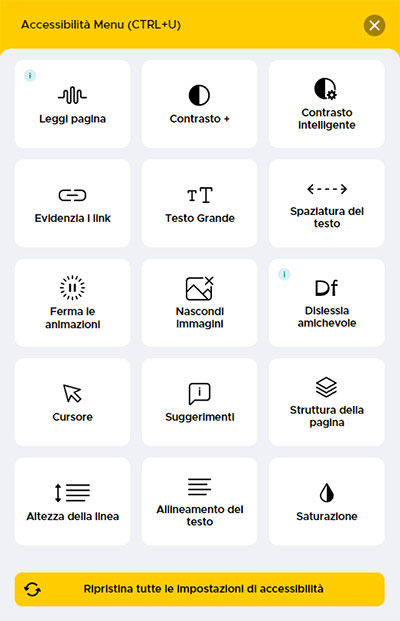
Web accessibility focuses on ensuring that your website is usable by everyone, regardless of physical, sensory or cognitive abilities.
This includes the implementation of features such as keyboard navigation, alternative text for images, and the use of appropriate colors and contrasts.
Why is web accessibility important, especially for mobile devices?
An accessible website is usable by anyone, regardless of their capabilities or technologies used.
This includes people with visual, hearing, motor or cognitive disabilities who use assistive technologies such as screen readers or magnification software.
Web accessibility is not only a legal obligation, but an ethical and social requirement to provide usable information without discrimination.
Refusing to make one’s website accessible means excluding a significant portion of potential users, limiting one’s user base and growth opportunities.
Having an accessible website means increasing SEO performance and search engine rankings.
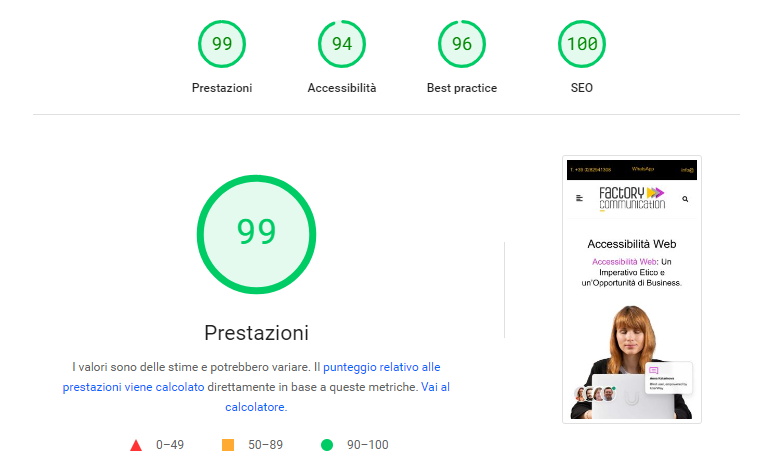
Run a test of your site with Google Page Speed.
In this image you see the analysis performed on the “Web Accessibility” page of our site.
Below are the main benefits you can gain by making your website or eCommerce accessible to everyone.
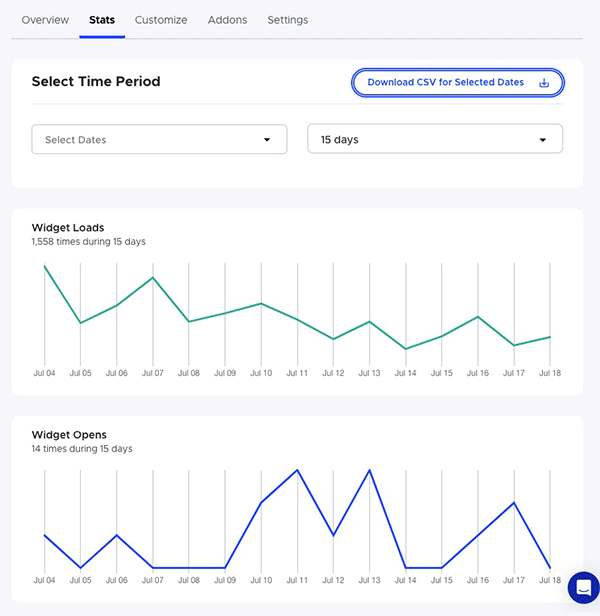
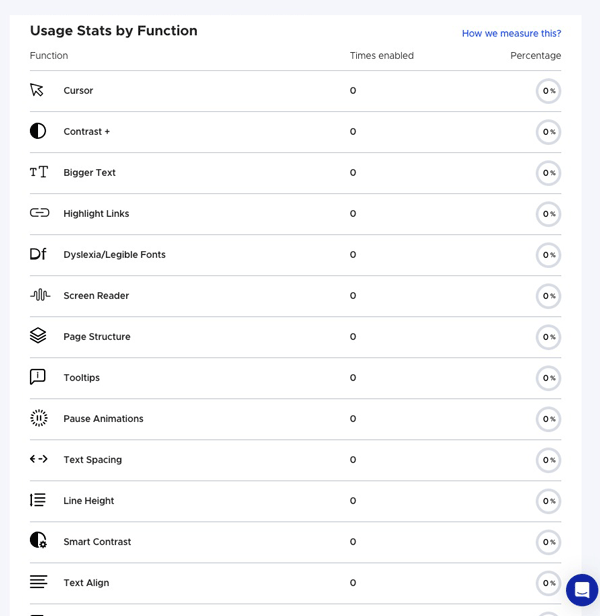
In the images below is the interface of the UserWay Add On inherent in the display of service usage statics.
Statistics can also be exported to a .CSV file.
Digital accessibility should not be neglected by any organization, public or private. All the more so by those who believe and invest in sustainability.
Inclusion:
An accessible site offers all users, including those with disabilities, the opportunity to participate fully in online society.
Respect:
Respecting the needs and abilities of all users is a demonstration of social responsibility and respect for diversity.
Business Opportunities:
Offering an inclusive user experience can lead to increased visitation and business opportunities by catering to a broader and more diverse audience.
What is the accessibility statement for websites?
The Accessibility Statement for Websites is a mandatory document that publicly attests to a site’s level of compliance with the Websites Accessibility Act, as required by European and Italian legislation.
This document, easily accessible from the website home page, details the usability and accessibility structure of a website, indicating which sections and services are fully accessible and whether there are any limitations or content excluded from compliance.
The statement ensures transparency to the user and, in particular, protects the accessibility Web sites of blind people and people with other disabilities by specifying the solutions adopted for navigation using screen readers and assistive technologies.
Listed within the statement are the procedures followed during the design phase, testing methods, references to international guidelines, and contact channels for reporting any barriers, thus promoting the usability and accessibility of a website for all.
Drafting and regularly updating the accessibility statement is not only a regulatory requirement, but also represents an element of transparency and accountability to customers and users, strengthening corporate reputation and facilitating digital inclusion.