


Tourism is one of the most dynamic and resilient economic sectors to change.
Despite the crises, it continues to grow, digitize, and shift value to those who can strategically preside over digital.
Creating a tourism portal today means more than simply building a website-it means positioning yourself as an online reference point for a destination, experience or segment of travelers, with a sustainable and scalable business model.
In this comprehensive guide we show you why the timing is right, what portal templates exist, how to technically build on WordPress, and how to monetize.
If you are considering investing in a tourism web portal, you will find everything you need to make an informed decision here.
Tourism in Italy: numbers that speak for themselves
Before understanding how to create a tourism portal, it is worth looking at the numbers of the industry. Data from recent years confirm that Italian tourism is not only resilient-it is booming.
Data from the recent past (2019-2024)
- 433 million tourist arrivals in Italy in 2023, according to ISTAT data, up 8 percent from 2022 and a substantial return to pre-pandemic levels.
- The direct contribution of tourism to Italian GDP exceeds 13 percent, placing Italy among the top 5 countries in the world in terms of tourism receipts (source: Bank of Italy/UNWTO).
- More than 70 percent of international travelers visiting Italy begin their trip planning online, through portals, guides and search engines (source: Google Travel Insights).
- Experiential tourism–excursions, food and wine, slow tourism–has experienced an average annual growth of +15% over the past 5 years, with peaks in rural areas and historic villages.
- Direct bookings through thematic portals (not generalist OTAs such as Booking.com) have grown +22% in the past 3 years, signaling a growing demand for specialized and destination guides.
The forecast for 2025-2028
Industry projections indicate further acceleration, with structural changes favoring specialized digital portals:
- The global online travel portal market will reach $1.1 trillion by 2028, with a CAGR (compound annual growth rate) of +9.2 percent (source: Statista / Allied Market Research).
- In Italy, it is expected that by 2027 at least 1 in 2 trips will be planned exclusively through digital channels, making online presence no longer optional but structural for any tour operator.
- The experiential tourism and slow travel segment will grow to account for 30 percent of total Italian tourism bookings by 2026, opening up huge spaces for niche thematic portals.
💡 What it means for those willing to invest.
Digital is no longer a support channel for tourism: it is the modern traveler’s first touchpoint. Those who preside over a destination or tourism niche online with an authoritative portal position themselves as a valuable intermediary between supply and demand, with direct and indirect monetization potential.
What is a tourism portal and why is it different from a simple website
A tourism portal is not a showcase site or a travel blog.
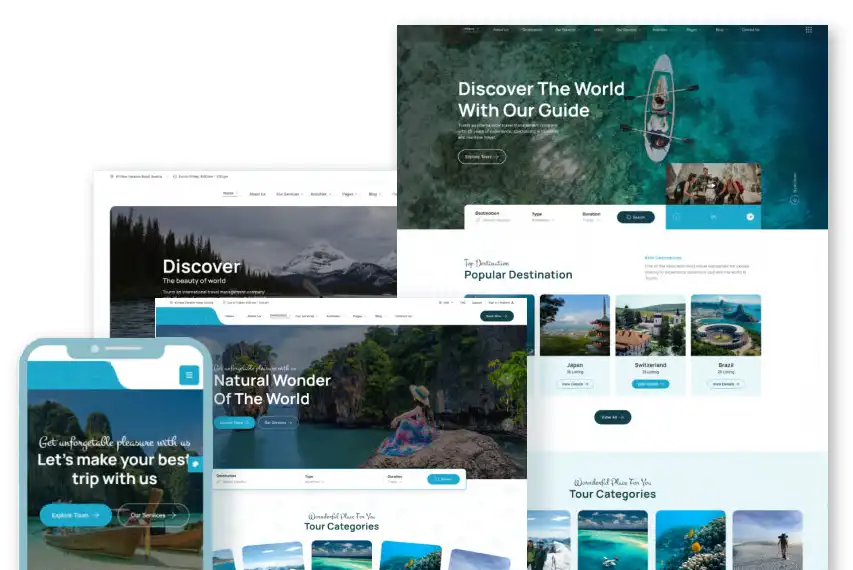
It is a structured digital platform that aggregates, organizes, and distributes information about a destination, theme, or type of tourism experience, with the goal of becoming the online reference point for a specific audience.
A comprehensive tourism portal typically includes:
- A structured directory of places, attractions, accommodations, restaurants and activities
- In-depth editorial guides integrated with directory entries
- A calendar of events linked to places
- Advanced search and filtering tools (by area, category, budget, season)
- Reviews and user-generated content
- Integration with reservation or affiliate systems
The difference from a blog is structural: the blog produces episodic content, the portal builds a permanent information architecture that grows and strengthens over time, both in terms of SEO and user-perceived value.
Tourism portal models: which one is right for you?
There is no single tourism portal model. The choice depends on your target audience, the geography you want to cover, and the business model you intend to build. Here are the main ones:
1. Tourism destination portal
It covers a specific geographical area (a region, a province, an area) with everything there is to see, do, eat, and where to sleep.
It is the most ambitious model but also the one with the greatest potential for organic traffic and local monetization.
2. Thematic portal/experiential tourism portal
Specializes in one type of experience: food and wine tourism, slow tourism, cycling tourism, spa tourism, historic villages.
It has less competition than generic geographic portals and intercepts a very qualified audience with high purchase intention.
3. Portal for travel agencies and operators
It aggregates the offerings of tour operators, travel agencies, and local guides on a common platform.
The business model is based on commissions, subscriptions or listing fees for registered operators.
4. Tour guide portal
A platform that connects travelers and certified local guides, with detailed profiles, reviews and integrated booking system.
It is the closest model to the marketplace and requires a more structured user management system.
How to technically build a tourism web portal on WordPress
WordPress is the most suitable platform for building medium-sized tourism portals.
It offers flexibility, a mature plugin ecosystem, and low development and maintenance costs compared to custom solutions.
The recommended technology stack is as follows:
| Component | Recommended tool | Why |
| Directory and tabs | Directorist (Pro) | Multi-directory, custom fields, native monetization, mobile app |
| Blog / content | Native WordPress | Seamless Integration, SEO, Gutenberg |
| Event Management | The Events Calendar Pro | Compatible with Directorist, frontend submission |
| Reservations | WooCommerce + addon | Paid listing, integrated checkout |
| Interactive maps | Google Maps API | Integrated into Directorist, advanced geolocation |
| SEO | Rank Math or Yoast Premium | Automated schema markup, local SEO |
| Performance | WP Rocket + CDN | Fundamental with many tabs and maps |
The core of the portal is the directory: each place, facility or experience has a dedicated tab, optimized for local SEO, with photo gallery, map, reviews and booking links.
The directory integrates with the blog (editorial articles) and event calendar, creating a content ecosystem that feeds and reinforces each other.
Monetization models for a tourism portal
A well-structured tourism portal can generate revenue from diverse and complementary sources. Combining multiple models ensures stability and reduces dependence on a single channel.
Here you will find as many as 5 different monetization models and opportunities based on the financial goals you want to achieve and the work effort you are willing to put in.
1. Premium listings and featured tabs
Hotels, restaurants, agritourisms and tour operators can purchase a premium card with an expanded photo gallery, site link, verified badge and priority placement in results.
It is the most immediate model to activate and communicate to local operators.
2. Operator subscriptions
A monthly or annual plan that includes self-management of multiple boards, statistics on views, access to promotion tools.
It is particularly suitable for tourism consortia, DMOs (Destination Management Organization) and hotel chains.
3. Affiliation and commissions
Integration with affiliate programs from platforms such as Booking.com, GetYourGuide, Viator or Airbnb Experiences.
Each reservation generated through the portal produces a commission. It is a passive model once configured.
4. Sponsored content and banners
Once a critical mass of traffic is reached, the portal can host sponsored articles, guest posts, banner ads and advertorials produced in collaboration with tourism boards, consortia or area brands.
5. Value-added services for operators
Professional board photography, optimized copywriting, social media management, geo-targeted Google Ads campaigns.
The portal becomes a hub of digital services for tourism SMEs in the area.
SEO for tourism portals: how to dominate Google in your niche
SEO is the organic growth engine of any tourism portal.
Unlike institutional sites, a portal has a structure naturally conducive to ranking: hundreds of pages, each optimized for a specific local keyword.
The main SEO levers to work on:
- Site architecture: a clear hierarchy (Homepage → Category → Tab) helps Google understand the structure and distributes page authority efficiently.
- On-page local SEO: each tab must have a title tag with geographic keyword, a unique description of at least 300 words, and structured LocalBusiness or TouristAttraction data.
- Content cluster: each category in the directory must be supported by editorial blog articles that elaborate on the topic (e.g., ‘The 10 Best Villages of the Val d’Orcia’ links to the entries for each village in the directory).
- Google Business Profile: for physical locations, it is critical to encourage registered operators to optimize their Google profile, which increases the credibility of the boards.
- Speed and Core Web Vitals: a portal with many maps and images must be optimized for performance, otherwise it will be penalized in ranking.
- Local link building: collaborations with tourist boards, institutions and local media to obtain authoritative backlinks.
The 5 mistakes to avoid when creating a tourism portal
1. Starting too wide
Wanting to cover all of Italy from the start is a losing strategy against established competitors. Better to dominate a narrow geographic or thematic niche, then expand.
2. Neglecting the quality of content
Hastily created tabs with generic text and poor photos do not rank on Google and do not convert visitors. Each tab is a landing page.
3. Not having a clear business model
A portal without a defined monetization plan becomes a cost with no return. Before you build, define how you will generate the first revenue.
4. Ignoring the speed of the site
Interactive maps, galleries and search filters weigh down the site. A slow portal loses positions on Google and frustrates users. Performance is a technical priority, not optional.
5. Do not involve local stakeholders
The real competitive advantage of a local portal is quality information. Building relationships with local hotels, restaurateurs, guides and museums ensures up-to-date content, credibility and monetization opportunities.
Conclusion: the tourism portal is a real business opportunity
The numbers in Italian tourism speak for themselves: the industry is growing, demand for online information is steadily increasing, and a digital presence has become a prerequisite for any tourism promotion strategy.
Creating a tourism portal today means intercepting this demand before someone else does.
The good news is that technology is no longer an obstacle.
With WordPress, Directorist and a well-configured stack, it is possible to build a professional, scalable and monetizable portal in reasonable time and with affordable investment, provided you have a clear strategy from the start.
At Factory Communication we support entrepreneurs and organizations that want to invest in digital tourism: from business model definition to technical implementation, from SEO strategy to team training.
If you are thinking of creating a tourism portal, contact us for a free consultation and find out what we can build together.
Business in the tourism industry, related articles
- Google destinations: the Google solution for tourism
- Local SEO: comprehensive guide for Local Businesses and Activities
- Google PhotoSphere: get your Company off the ground.
- How to manage reviews: tools you need to know
- Creating a social network with WordPress: your online community
- Google Discover: what’s new from Big G