


Dear Entrepreneurs, In today’s highly competitive and rapidly changing business landscape, CRM Marketing emerges as a tool that is not only useful, but indispensable for long-term success.
If you have one or more of these goals:
- Increase customers and sales
- Manage the sales network
- Improve customer support
- Improve efficiency and Business processes.
You have come to the right place!
In an era when customers expect personalized experiences and meaningful relationships with brands, customer relationship management proves to be the compass that guides companies toward sustainable growth and unprecedented customer loyalty.
But what exactly is CRM Marketing and why should you care about it?
Let’s dive into this fascinating world and discover together how it can radically transform your approach to business.

CRM marketing what is it? What is its deeper meaning
CRM Marketing, which stands for Customer Relationship Management Marketing, is more than just software or an isolated strategy.
It is a holistic approach that integrates customer relationship management with marketing activities, creating an ecosystem in which every customer interaction is meaningful, targeted, and value-driven.
On a practical level, a CRM Marketing system enables the intelligent collection, analysis, and use of customer data to create personalized and highly effective marketing strategies.
But its significance goes far beyond mere contact management or automation of digital marketing campaigns.
CRM Marketing embodies a customer-centered business philosophy.
It represents a paradigm shift: from mass marketing to personalized marketing, from one-way communication to continuous dialogue, from transactional selling to building lasting relationships.
In essence, it transforms your marketing from a business monologue to a dynamic, two-way conversation with your customers.
By implementing a CRM Marketing strategy, you are essentially telling your customers,“We know you, we value you, and we are here to meet your needs in a unique and personalized way.”

Digital Marketing, CRM and and Marketing Automation
In the age of digital marketing, where consumers interact with brands through a multitude of online channels, CRM becomes even more crucial.
The integration of CRM and Marketing Automation creates a powerful synergy that can revolutionize the way you interact with your customers and manage your marketing campaigns.
Every online interaction can be tracked, analyzed, and used to improve the user experience.
While CRM deals with managing and analyzing customer information, Marketing Automation focuses on automated and optimized execution of marketing and sales activities.
Here’s how CRM enhances your digital marketing:
Omnichannel tracking and advanced segmentation
CRM allows you to track customer interactions across all digital channels-website, email, social media, mobile app-creating a unified and comprehensive customer profile.
Using data from CRM analytics, you can personalize the experience on your website or app.
CRM analytics enables detailed segmentation based on multiple criteria (demographic, behavioral, purchase), which Marketing Automation can use to send highly personalized messages to each segment.
For example, show recommended products based on purchase history or tailor content based on customer interests.
Smart Marketing and Retargeting Campaigns
CRM collects detailed data on customer behavior, which Marketing Automation can use to trigger highly targeted campaigns.
For example, if a customer has viewed a specific product on your website several times, you can automatically send an email with a special offer for that product.
The data can power your retargeting campaigns, allowing you to show highly relevant ads based on the customer’s past behavior and preferences.
You can create automated nurturing paths that adapt in real time to lead behavior.
If a lead shows special interest in a certain type of content, the system can automatically send more information on that topic.
Targeted social media marketing
By integrating CRM with your Social Media Marketing Strategy, you can create customized audiences for your advertising campaigns, significantly increasing their effectiveness.
By combining operational CRM data with Marketing Automation capabilities, you can create a smooth and personalized customer journey, from first interaction through post-sale.
Email marketing and marketing automation
CRM being integrated with the email marketing service provides critical data analytics to create highly segmented and personalized email campaigns, increasing open and click-through rates.
By analyzing which types of content resonate best with different customer segments, you can optimize your content marketing strategy.
Marketing Automation can send messages at the optimal time based on CRM data on customer habits, significantly increasing open and conversion rates.
Digital customer service
Analytics CRM can feed chatbots and online support systems, providing personalized and efficient customer service through digital channels.
Automating repetitive tasks frees your team to focus on strategic, high-value-added activities.
Advanced analysis
By combining CRM data with digital analytics, you can gain deep insights into customer behavior and the effectiveness of your digital strategies.
You can track and analyze the effectiveness of your digital marketing campaigns in real time, allowing you to make quick adjustments to maximize results.
With accurate data on every interaction and campaign, you can accurately calculate the return on investment of your marketing and sales activities.
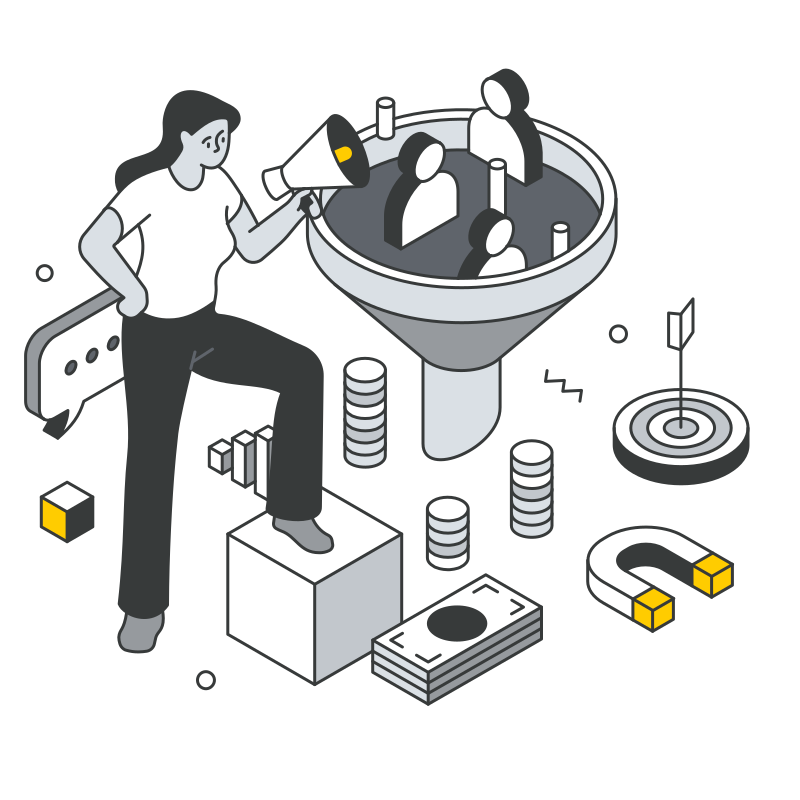
Relationship Marketing and CRM: Building lasting bonds in the age of loyalty
Relationship marketing focuses on building long-term relationships with customers, and CRM is the perfect tool to implement and enhance this strategy.
In an era when acquiring new customers is increasingly expensive, the ability to maintain and cultivate lasting relationships with existing customers becomes crucial to business success.
This is how CRM supports and amplifies relationship marketing:
In-depth understanding of the client
CRM collects and organizes a wide range of data about each customer or potential customer, from purchase history to communication channel preferences, from customer service interactions to feedback provided.
This 360-degree view allows you to truly understand who your customers are and what they want.
Personalized communications
With a detailed understanding of each customer, you can create highly personalized communications that resonate on an individual level.
Whether email, social media posts, or direct communications, every interaction can be tailored to strengthen the connection with the brand.
Identifying and rewarding loyal customers
CRM allows you to easily identify your most valuable customers and implement targeted loyalty programs.
You can track loyalty points, offer personalized rewards and recognize important milestones in the customer relationship.
Anticipation of needs
By analyzing historical data and behavior patterns, CRM can help you predict future customer needs.
This allows you to be proactive in offering solutions, demonstrating to customers that you are attentive to their evolving needs.
Customer lifecycle management
CRM helps you map and manage the entire customer lifecycle, from first interaction to purchase, from post-sale to retention.
You can create targeted strategies for each stage, maximizing customer lifetime value.
Feedback and continuous improvement
CRM facilitates the collection and analysis of customer feedback, enabling you to continuously improve your products, services and processes based on the real needs of your customers.
With all information centralized in the CRM, each team member can access the complete customer history, ensuring consistent and personalized interactions regardless of the point of contact.
Reactivation of inactive customers
CRM can identify customers who are becoming less active, allowing you to implement targeted reactivation strategies before it is too late.
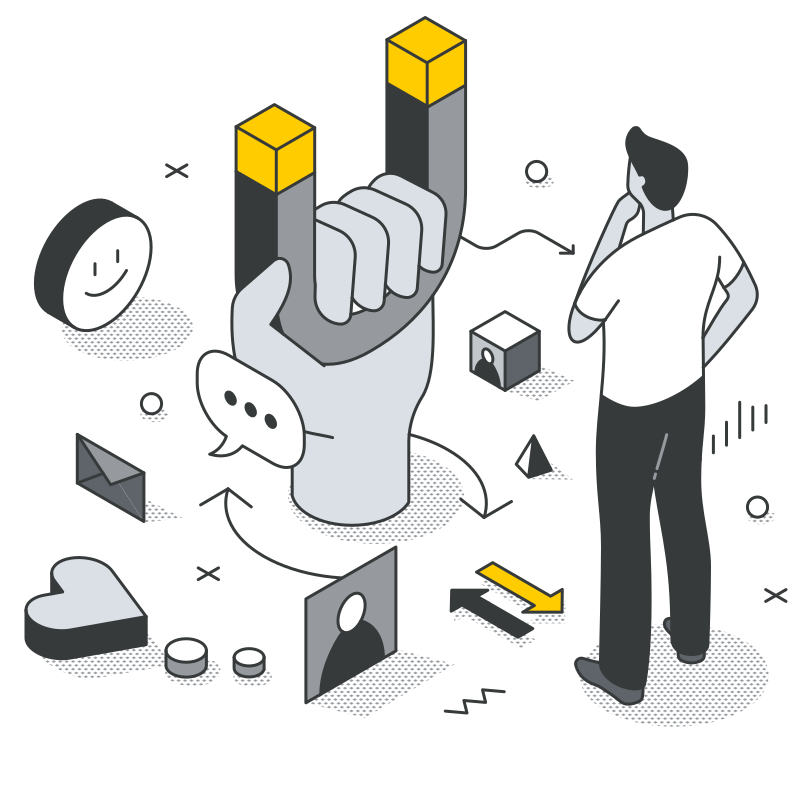
CRM and Email Marketing: A powerful combination for high conversions
The integration of CRM and email marketing creates a powerful synergy that can lead to extraordinary results in terms of customer engagement, conversions and retention.
Email remains one of the most effective marketing channels, and when powered by the rich and detailed data of a CRM, it becomes an even more powerful tool.
Here’s how CRM enhances your email marketing:
Advanced segmentation
CRM allows you to segment your audience in great detail, based on a wide range of criteria such as buying behavior, past interactions, product preferences, demographic data and more.
This segmentation allows highly targeted and relevant emails to be sent.
Content customization and automation
With CRM data, you can personalize not only the recipient’s name, but the entire content of the email.
You can include recommended products based on purchase history, content based on demonstrated interests, or special offers linked to recent customer behavior.
CRM can trigger automated emails based on specific customer or potential customer behaviors.
For example, a follow-up email after a purchase, a reminder for an abandoned shopping cart, or a series of welcome emails for new subscribers.
By analyzing data on your customers’ email opening habits, you can optimize the timing of sending to maximize open and click-through rates.
Advanced A/B testing
With detailed CRM data, you can conduct much more sophisticated A/B testing, testing not only elements such as email subject line or call-to-action, but also different types of content for different customer segments.
CRM allows you to track not only open and click-through rates, but also how emails influence buying behavior and customer lifetime value.
Re-engagement of inactive customers
You can easily identify customers who have not opened your emails for a while and create targeted re-engagement campaigns.
Emails can be seamlessly integrated into the broader customer journey, with messages that fit the specific stage the customer is at in their relationship with your brand.
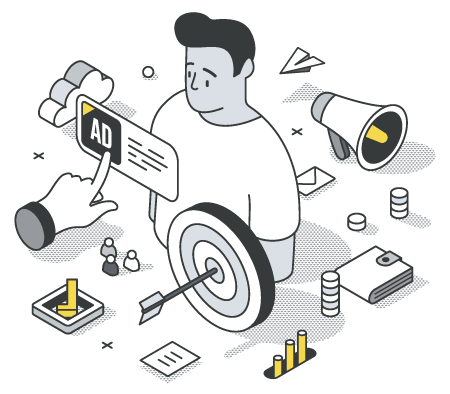
Marketing and CRM: hard data that speaks for itself
Implementing a CRM system can have a significant and measurable impact on your sales.
Numerous studies and market research have demonstrated the tangible benefits of CRM in terms of increasing sales and improving operational efficiency.
Here are some hard facts that illustrate the impact of CRM on sales performance:
29% average increase in sales
Companies that implement a CRM see an average 29 percent increase in sales.
This increase is due to CRM’s ability to identify and qualify leads more effectively, manage the sales pipeline more efficiently, and personalize the sales approach for each customer and prospect.
34% increase in sales productivity
CRM automates many administrative tasks and provides vendors with crucial information in real time, allowing them to focus on high-value-added activities.
This translates into an average increase of 34 percent in sales team productivity.
23% reduction in the sales cycle
CRM helps to quickly identify the most promising opportunities and manage the sales process more efficiently, leading to an average 23 percent reduction in the length of the sales cycle.
26% increase in lead conversion rate
With the ability to track and nurture leads more effectively, companies using a CRM see an average 26 percent increase in the conversion rate of leads into actual customers.
41% increase in average order value
Personalization and up-selling facilitated by CRM lead to a significant increase in average order value, with an average increase of 41 percent.
27% improvement in customer satisfaction
CRM enables more personalized and efficient service delivery, resulting in an average 27 percent increase in customer satisfaction.
Reduction of sales costs by 35 percent
Automation and optimization of sales processes lead to an average 35 percent reduction in costs associated with sales activities.
20% increase in cross-selling and up-selling opportunities
CRM provides valuable insights into customer preferences, enabling easier identification of cross-selling and up-selling opportunities, with an average increase of 20 percent in these activities.
CRM Marketing: conclusion
These data clearly demonstrate how implementing a CRM can have a substantial and measurable impact on a company’s sales performance.
From improving operational efficiency to increasing revenues and enhancing customer satisfaction, CRM proves to be an indispensable tool for companies aiming to scale their sales and build lasting relationships with their customers.
It is important to note that these results are not automatic, but require proper CRM implementation and a well-defined strategy.
However, when used effectively, CRM can truly transform your marketing and sales operations, leading to sustainable business growth.