


The world’s most widely used search engine is constantly being updated, in this article we analyze the 2024 Google updates and how they are impacting the organic ranking of sites on search pages.
Google’s algorithm updates are crucial to maintaining the quality of search results and significantly affect the ranking of websites.
As a first step, let’s analyze the Google update 2024
These updates reflect Google’s commitment to improving the user experience and promoting high-quality content.
If you are a website or eCommerce owner, I recommend that you ask your SEO consultant to stay constantly updated on these changes.
This gives you the opportunity to adjust your content strategies and align with Google’s guidelines. I am afraid this is a critical step in order not to compromise your ranking on the SERP (Search Engine Results Page).
If you want to stay informed about the new ones in the Google Core, I recommend monitoring the related Google Search Central Blog page.
Google core update 2024 October
We report the most important updates for October that focus mainly on product classification.
Support for “Certification” markup for merchant cards has been added in the structured data documentation for products.
In the documentation on product markup and structured data generation with JavaScript, 2 best practices for optimizing Shopping results have been added.
Basically, Google recommends putting the “Product” markup in the initial HTML code.
Google core update 2024 September
Like other 2024 updates, one of those published in September is also dedicated to spam-related rules. In this case we advise you to read the official Google documentation because it gives some concrete examples.
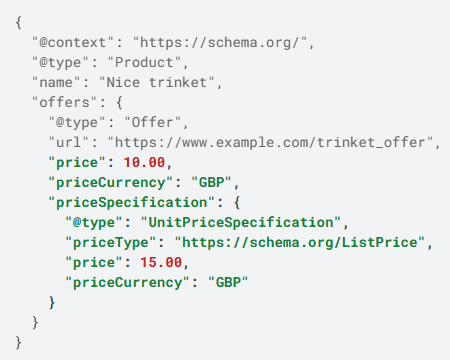
One very useful feature is the addition of the “priceType” property to allow merchants to more easily specify discounted prices.
Google core update 2024 August
August 2024 core update focuses on improving the quality of Google’s search results, prioritizing useful and original content over content created just to get good search engine results.
These recommendations are based on a wide range of data from Google Search systems, such as indexing, crawling, and publishing.
Although this data was already accessible through Search Console, we are now making it more usable through direct suggestions.
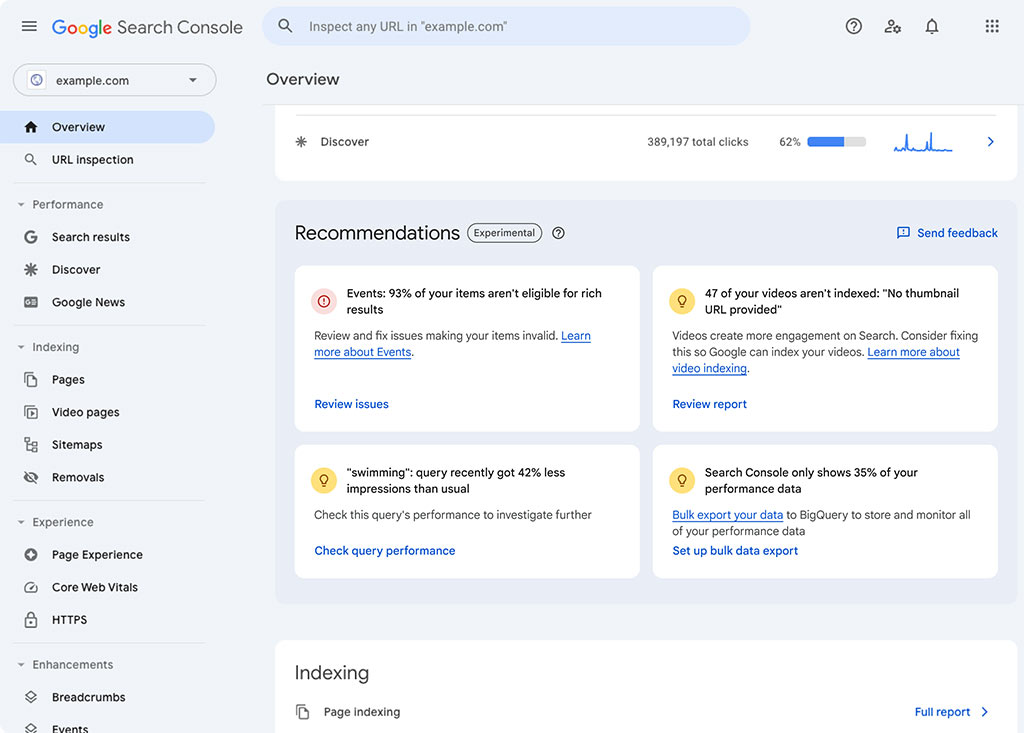
These tips can help prioritize search optimization activities, such as implementing structured data to make it easier for Google to understand your content, adding sitemaps, and identifying growing queries and pages.
The recommendations will appear on the Search Console Overview page.
This feature is still in an experimental phase and, initially, will not be available to all sites; it will be gradually expanded in the coming months. It is important to note that, even after full launch, recommendations will be provided only if they are relevant to your website.
Google core update 2024 July
The update focuses on configuring shipping and returns directly in Search Console.
The update involves a change in the Markup inherent in the management of returns. It can now be used globally, for the entire company and no longer needs to be used on a per-product basis.
Google core update 2024 June
Google implemented a spam update in June 2024 aimed at improving spam detection systems, such as SpamBrain, to identify and neutralize spam content and manipulative practices.
Google core update March 2024
The March 2024 update was one of the most complex, with the goal of reducing low-quality content, including AI-generated content, and improving the value assessment of websites.
This update introduced new policies against abuse of large-scale generated content and abuse of expired domains.

How do the recent Google Core Updates affect website ranking?
Google’s August 2024 core update has had a significant impact on websites, affecting the way content is ranked in search results.
Here is how this update affects websites.
Focus and promotion of Useful Content
Google has always stated that one of the most important elements of being properly indexed is determined by the quality of the content we publish as reported by the guidelines named Google EEAT.
Emphasis on Quality: The update emphasizes the importance of high-quality, well-researched and relevant content. Google has shifted the focus from quantity to quality, rewarding content that best meets users’ needs.
The update aims to promote content that users find truly useful, reducing the visibility of content created only to rank well in search engines.
This means that sites that produce original content of value to users could see an improvement in their ranking.
Impact on Small Publishers and to Independent Sites.
Google said this update intends to give greater visibility to small publishers and independent sites that create useful and original content.
This can present an opportunity for smaller sites to compete with larger ones in search results.
Changes in visibility: Fluctuations in ranking
As with many core updates, there have been fluctuations in website rankings.
Some sites that had been negatively affected by previous updates, such as the March 2024 update, showed signs of improvement, while others saw a decline.
Improved User Experience
The update also emphasized the importance of a good user experience, including site loading speed, ease of navigation, and mobile compatibility.
I have always maintained that these elements are crucial. It is useless to invest resources on the creation of a website if it is slow in opening.
In this regard, I recommend that you immediately run a performance test of your site or eCommerce using the free pagespeed tool
Another key element is determined by the user experience: what is the point of publishing 100 articles or 1,000 products if users cannot find what they are looking for?
How can I tell if my site has been positively or negatively affected by the core update.
To figure out whether your site has been positively or negatively affected by a Google update, you can follow these steps:
Performance Monitoring
Analyze Organic Traffic: Use tools such as Google Analytics and Google Search Console to monitor your site’s organic traffic.
With Google Analytics you can quickly check traffic trends. A trend is increasing may indicate a positive impact, while a decrease may suggest a negative effect. Traffic sources should not be counted in this case: Social, Referral, Direct and ADV.
Check Keyword Ranking with Google Search Console: Check if there have been any significant changes in your site’s top keyword rankings.
At Factory Communication, in addition to Analytics and Search Console, we also use SEMrush to monitor changes in ranking.
SEO Audit
If you notice a decrease in traffic or ranking, perform an SEO audit to identify any technical or content issues that may have contributed to a negative impact.
This can include checking for duplicate content, page load times, and site structure. I encourage you to read the section of the Audit SEO site that explains in detail that this aspect.
Monitoring and Audit are two key elements to understand how your site’s ranking is evolving and what adjustments you need to make to your SEO Strategy.
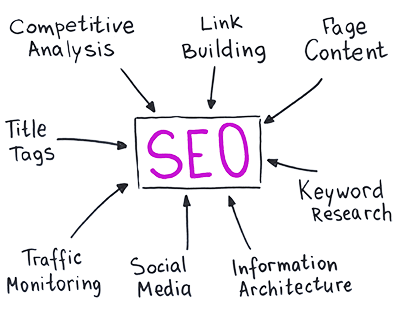
What SEO techniques can penalize your site?
The SEO techniques that are most at risk of being penalized by Google are those that fall into the Black Hat SEO category, which violate the search engine’s guidelines.
Here are some of the most common and risky practices:
Keyword Stuffing
It consists of inserting an excessive number of keywords into a web page in an attempt to manipulate search engine rankings.
Google considers this practice as spam and can lead to penalties, reducing the visibility of the site.
You can learn more about this topic by reading this article: Keyword Stuffing: why not to do it!
Purchase of Back Link
One of the elements that helps a site’s search engine ranking is determined by the number of backlinks. That is, links placed in third-party content that point to your website.
This strategy is called link building. A common and ill-advised practice is to purchase backlinks from low-quality or irrelevant sites to artificially enhance theauthority of one’s domain and related site.
Warning: Google penalizes sites that participate in link schemes, as it considers such practices manipulative and unnatural.
Hidden Links and Hidden Texts
Using hidden links or text (e.g., with the same color as the background) to manipulate search engines without being visible to users.
These practices are considered deceptive and can lead to severe penalties from Google.
Duplicate Content
Creating identical or very similar content on multiple pages of the site, or copied from other sites, in an attempt to improve rankings.
Caution Google penalizes sites with duplicate content, as it does not offer added value to users.
If you outsource the writing of your content to SEO copy outside your company, perform an originality check before publishing. There are several tools online; we use SEMRush.
Link Farm
Creating or participating in networks of sites that link together to artificially increase the authority of a site.
as you can imagine, Google penalizes sites involved in link farms because it considers such practices manipulative and unethical.
Cloaking
Showing different content to search engines than what is shown to users to manipulate ranking. There are several techniques to send different content to Google, such as image description.
This practice is heavily penalized by Google, as it violates the principle of transparency in content.
Google Algorithm Update: conclusions
The techniques I have outlined can lead to penalties ranging from downgrades in search results to complete removal of the site from Google’s index.
I believe it is critical to adopt ethical SEO practices and adhere to Google’s guidelines to avoid such penalties and ensure sustainable growth of your website.
If you would like to learn more about these topics, or would like a customized SEO Consultation, book a Free Meeting on my calendar.
Google Core Update: FAQ
Here you will find a list of FAQs we have selected for you:
Google’s Core Updates are significant updates to the search engine’s core algorithm. These updates do not aim to specifically change one aspect of ranking, but rather to improve the overall quality of search results. The main goal is to ensure that Google presents relevant and authoritative content to users, thereby improving the relevance and usefulness of search results.
Documentation on Google Core Updates can be found through various official and unofficial channels. Google often announces its core updates through the official Google Search Central blog and through its social channels. In addition, many sites specializing in SEO, such as Search Engine Journal and Moz, offer detailed analyses and guides on Core Updates.
Core Updates can have a significant impact on the ranking of websites. During the implementation of a Core Update, fluctuations in ranking may occur, with some sites seeing an improvement in ranking and organic traffic, while others may experience a decrease. These updates are not designed to penalize specific sites, but to improve the relevance and quality of search results. Therefore, it is important to focus on creating high-quality content andoptimizing the user experience to maintain or improve rankings.
To understand the impact of Google’s core updates, you can monitor your website metrics with tools such as Google Search Console, Google Analytics, SEMRush.
Are you interested in staying up-to-date on the different services offered by Google? Also read these articles
- Google destinations: the Google solution for tourism
- Google Domains: a guide for Entrepreneurs and Marketers
- Google PhotoSphere: get your Company off the ground.
- What impact can Google Multisearch have on your Business?
- Google Data Gif Maker creates animated graphics
- Google SGE: if you have a site you need to know what it is!
- Google Discover: what’s new from Big G
- Google EEAT (E-E-A-T) What they are and why they are critical for SEO