



In this article we look at how to use the Blog to achieve the right organic ranking for your website.
In an increasingly interconnected digital world, having a blog on your website or e-commerce is not just a choice, but a strategic necessity for any company aiming to improve its online visibility and business.
A corporate blog is not simply a place to publish content.
It is a powerful platform that, if used correctly, can bring significant benefits in terms of organic search engine rankings, interaction with customers and potential leads, and consolidation of brand authority.
Organic search engine positioning of your website
Organic positioning what it is
Organic ranking, also known as natural SEO, is the position a website occupies within the non-paid search results, thus those that appear after advertisements.
Simply put, it is the strategy you implement to get your website to appear among the top results when users search on keywords relevant to your business.
How does organic positioning work?
Search engines, such as Google, use complex algorithms to determine the order in which to show search results. These algorithms evaluate several factors, including:
- Content Relevance: the content of your website must be relevant to the keywords that users search for.
- Quality of content: your content should be well-written, informative and useful to users.
- Website authority: your website must be considered authoritative and trustworthy in its field.
- User experience: your website must be easy to navigate and use on all devices.
- Backlinks: the number and quality of backlinks pointing to your website are an important signal to search engines.
Now let’s see together 6 good reasons to make a blog to generate organic SEO ranking of your website.
1) Benefits of a Blog on the Internet or E-commerce Site.
A well-maintained and regularly updated blog can turn into an extremely effective marketing tool.
It provides an opportunity to expose the company’s values, share in-depth knowledge about the products or services offered and, most importantly, generate content that attracts interested visitors.
This content, optimized for relevant keywords, can significantly improve the site’s visibility in search results by attracting qualified traffic.
2) Benefits from the Point of View of Organic Positioning.
- Updated Content: Search engines, such as Google, reward websites that offer fresh, relevant content.
A blog allows the site to be regularly updated with new articles, keeping it “alive” in the eyes of search engines and improving rankings. - Keywords: Through blog articles, you can strategically incorporate various keywords related to your industry, increasing your chances of being found online for a wider range of search queries.
- Backlinking: Quality content tends to be shared and cited by other sites, generating backlinks.
These external links are critical in buildingdomain authority, a key factor in search engine rankings. - Domain Authority or Domain Authority: Providing detailed and valuable information through the company blog helps establish the company as an authoritative voice in its industry, strengthening the trust of both users and search engines.
3) Additional Benefits: Interactions and Contacts
In addition to increasing traffic, a blog opens the door to two-way communication with customers and potential customers.
Through comments and sharing on social media, you can gather feedback, address doubts or concerns, and interact directly with your audience, improving the customer-business relationship and increasing loyalty.
4) Creating a Community and Information Content of Value.
Blogs provide an opportunity to create a community around your brand, engaging users with content that addresses their needs and interests.
This not only increases engagement, but also turns users into true brand ambassadors.
5) Marketing Strategy Support
A blog full of useful and relevant information encourages users to share content on the Web and social channels, amplifying the reach of the message and supporting other digital marketing initiatives.
6) Positioning the Company as an Industry Leader
Providing in-depth analysis, industry trends, case studies and best practices through the blog can position the company as a thought leader, a factor that can significantly influence potential customers’ purchasing decisions.
Organic search engine positioning: what to do
Digital marketing is a rather broad container, containing a whole range of actions and platforms that can be used to achieve a specific business goal.
To avoid spending time, money and energy unnecessarily, you must have a strategic vision.
Upstream, you need to be clear about two elements:
- your goals
- the target audience you are addressing.
As we always tell you on the Factory blog, you can leverage the Buyer Persona methodology to define a typical potential customer to target.
Only when you know what you want to achieve and who you want to talk to can you also identify platforms, tone of voice, budget to spend, etc.
For example, it may be useful to include social media marketing, email marketing or, more broadly, content marketing, which includes blogging, in your strategy. Or, you can use ppc and sponsored campaigns on social.
In this landscape, an SEO-optimized blog can be an especially smart choice for meeting potential customers who are almost certainly interested in what you have to say. If you read on, we’ll tell you why.
What is the purpose of creating an SEO blog
Blog SEO allows you to intercept searches performed by users on search engines, through keywords (which correspond to the most frequent queries for a given topic).
If your SEO strategy works, your articles may appear on the first page of search results.
As you experience as a Google user, you are more likely to click on the first few articles in the SERP and avoid scrolling too far down or browsing the results pages.
So by taking care of SEO you can get better rankings and bring in more organic traffic (not paid) to your website. Also, because these users have performed a search that your content answers, they are more likely to be interested in your industry.
On what does the success of a blog depend?
There are so many ranking factors. On the one hand, the success of your blog depends on SEO, because it allows you to intercept searches.
On the other hand, however, you need to produce valuable content that is truly useful to users.
If you offer useful insights, answers to questions, solutions to problems, and you are authoritative in your field, you turn into a reference.
Trusting relationships between brands and potential customers are extremely important in sales processes. To nurture them, you can integrate your blog strategy into a broader content marketing and inbound marketing strategy.
For example, include white papers or free downloadable PRO content in your blog post, but request permission to send newsletters in return. Thus start a path of lead generation and prospecting by pampering the prospect with more useful content in line with his or her expectations.
In addition, you can also share the most interesting articles and insights on social media, creating synergy among all the platforms involved in your digital marketing strategy.
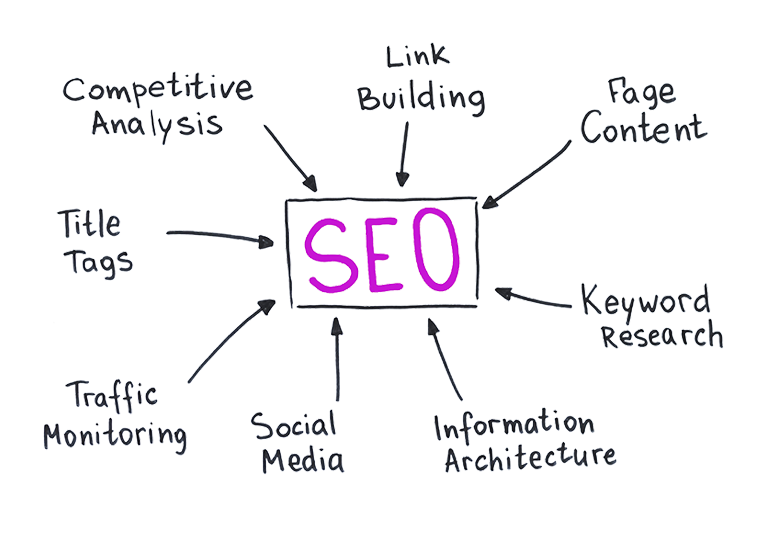
If you want to make sure your website is in the top positions of search engines also consider implementing a link building strategy.
In addition, you must always check that your web pages are properly usable by mobile devices.

Organic search engine indexing: how to write an SEO article
SEO writing has its own peculiarities. We have already given the recipe for writing an SEO article in a previous article on the Factory blog, which you can read here.
Briefly, we recover the most important tips:
- Use keywords to intercept user searches on the search engine. You can use tools such as SemRush, SeoZoom or AnswerThePublic to detect them;
- Use titles and subtitles (heading tags) in a hierarchical manner to create reading order and to facilitate analysis by search engine bots;
- also takes care of the meta description and SEO title, which will form the snippet and that is the preview of the page among the search results;
- insert internal links to other pages on your blog or site and, if you can do digital PR, try to get links from other reputable and authoritative domains.
Remember that not all users are at the same stage of the decision-making process. Some have just met you, some are evaluating your products, and some are comparing you with competitors.
Write articles dedicated to each of these target audiences, using buyer persona methodology to understand what may persuade them to buy or what may scare them away.
All articles must be useful or entertaining. The Web is flooded with content that no one reads: quality content is the ground on which you play the game with your SEO competitors.
Organic positioning on Google. Do you need it or not?
Integrating a blog into one’s website or e-commerce is a winning strategy that goes beyond simply ranking on the top organic search engine results.
This is a strategic decision that can positively influence brand perception, strengthen the relationship with the public, and contribute to the long-term success of the company in the digital landscape.
SEO blogging is a really functional tool, which if well used gives a good ROI. But like all digital marketing tools, you should only include it in your marketing mix if it is in line with your strategy.
Therefore, it is important to create a tailored marketing strategy that must take into account:
- Of your market positioning
- of your target
- Of your goals (realistic and measurable)
- of your budget
- of in-house expertise and the possibility of contracting a marketing agency.
Factory Communication is an agency specializing in the creation of customized marketing and communication strategies geared toward achieving client goals. In addition to planning, it offers operational services including those related to SEO search engine optimization strategy.
Use the Web to attract new users and turn them into potential customers with a digital marketing strategy tailored to your business.