


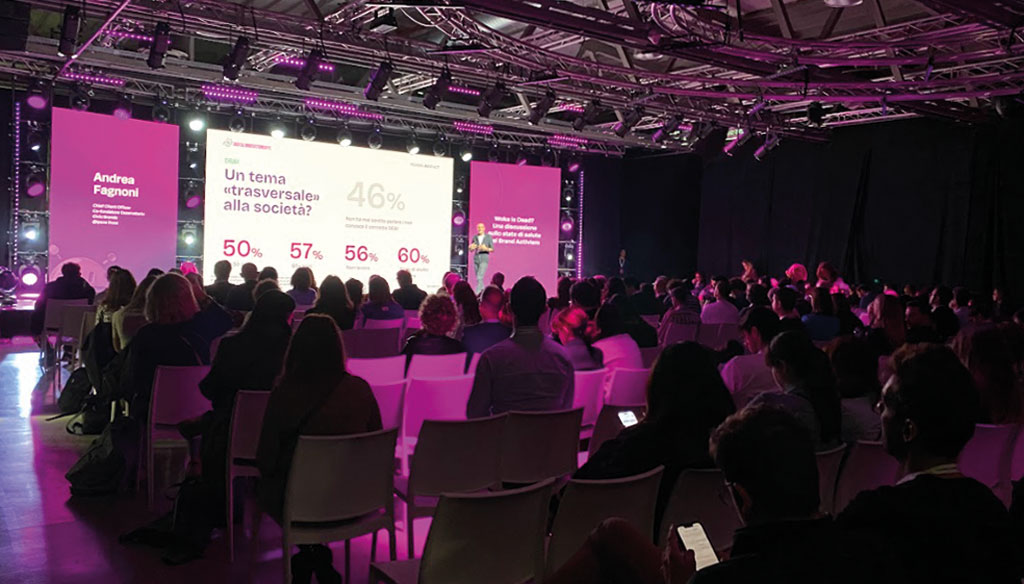
“Innovation has never been so close to people, but never so complex to govern.”
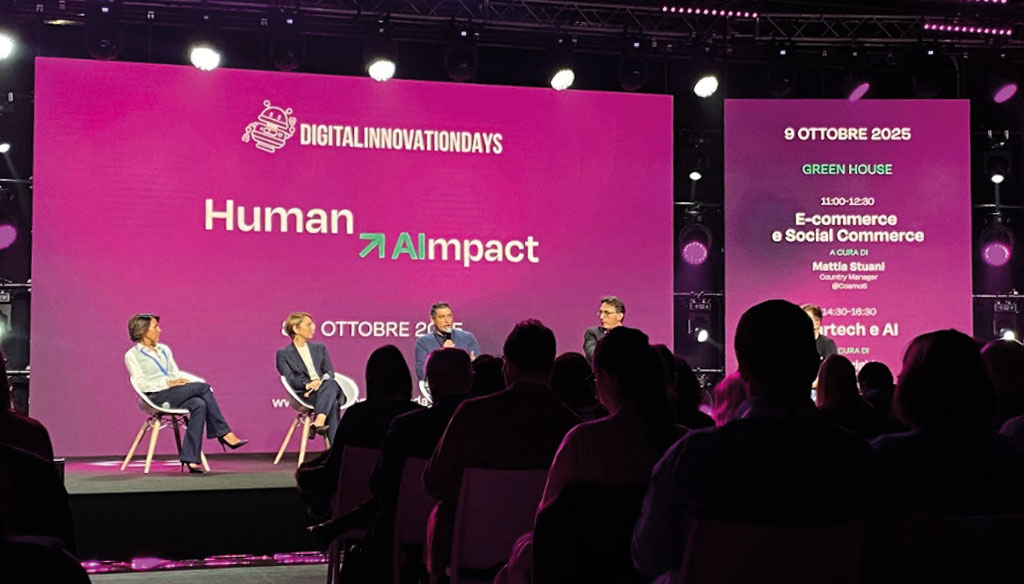
This sentence, uttered during the opening session of Digital Innovation Days 2025, perfectly summed up the spirit of the event.
Two intense days in Milan, including exciting keynotes, hands-on workshops and strategic networking, left me with one certainty: Artificial Intelligence is no longer a futuristic technology, but the concrete tool that is redefining the way we live, buy and communicate.
Here is a reflective summary of what I learned, turned into a story that I hope will inspire those who, like me, believe in the potential of AI to build a more humane and inclusive future.
LLM and SLM: Two Souls of Artificial Intelligence.
One of the first clarifications to emerge concerns the distinction between Large Language Models (LLM) and Small Language Models (SLM). We often tend to confuse them, but their applications in business are radically different.
LLMs, like GPT or Gemini, are giants trained on endless textual data. Their strength is versatility: they can generate complex content, support articulate conversations and even reason in novel contexts. In the e-commerce world, we find them working for:
- Create custom product descriptions (e.g., “Looking for a bag for work? Here are three stylish and functional models for your day”).
- Automatically translate content for global markets while maintaining the brand’s tone of voice.
- Optimize SEO campaigns with text that anticipates user searches.
However, LLMs have an Achilles’ heel: they require immense computational resources and often lack control over sensitive data. That’s where SLMs come in.
Smaller, lighter, specialized models designed for specific tasks within a company.
Imagine an internal assistant that analyzes customer reviews in real time to identify recurring critical issues, or a tool that automatically adjusts product sheets based on the buyer’s profile.
SLMs, due to their efficiency, can be integrated directly into enterprise platforms without security risks.
The key lesson? You don’t always need an AI “behemoth.” Sometimes, a focused, fast and reliable model is the winning choice.
From Linear E-commerce to Multimodal Experience: AI as an Engine
Until a few years ago, online shopping followed a rigid path: search → click → buy. Today, thanks to AI, the experience has become fluid, intuitive and deeply personalized.
During the workshop “AI and the Evolution of UX in E-commerce,” it emerged how search is shifting from text to voice and visual. Just say, “Show me lightweight running shoes for a marathon runner” or take a picture of a pair of sneakers to see real-time suggestions.
This is made possible by tools such as Twini.ai, presented at the event, which adapts feeds and product sheets based on the context of the search or the user’s customer journey.
The result? A +22% in conversion rate and a -15% in cost per lead (CPL), as reported by a case study on a sportswear brand.
But it is not just a matter of technology: it is a change in perspective. AI doesn’t just respond to requests; it interprets intentions.
If a user searches for “gift for wife’s birthday,” the system not only suggests related products, but also suggests ideas based on demographics, past preferences, and even seasonality.
The Google Revolution: From SEO to GEO
One of the most anticipated sessions involved the announcement of the new “AI Mode” in Google search. From now on, the results will no longer be a list of links, but responses generated by Gemini-like models that can synthesize information from multiple sources.
This marks the end of traditional SEO and the dawn of Generative Engine Optimization (GEO).
What does this mean for brands?
- Content must be clear, useful and multichannel: guides, short videos, verified reviews become essential.
- Brand authority is crucial-Google will reward those who build trust through quality content.
- Keywords are no longer enough: a holistic approach is needed, where consistency and value go beyond simple technical optimization.
A prime example? A natural cosmetics brand that posts YouTube Shorts videos with tutorials on how to read ingredient labels.
This content, also captured on TikTok and Instagram Reels, not only improves visibility on Google, but also positions the brand as a trusted advisor in the industry.
AI and Creativity: The Loop Case
One of the most exciting moments was the case study of Loop, a furniture retailer that launched a tool still for internal use but soon to be released to revolutionize Christmas shopping.
The user uploads a photo of their home, and the AI generates previews with different Christmas decorations. Result? A +35%in the number of items per cart and a 20% reduction in CPL.
But the real value is not just in the numbers: it is in AI’s ability to blend personalization and storytelling. You are no longer selling a Christmas tree, but the excitement of seeing your home transformed.
This is the future: AI does not replace human imagination, but amplifies it.
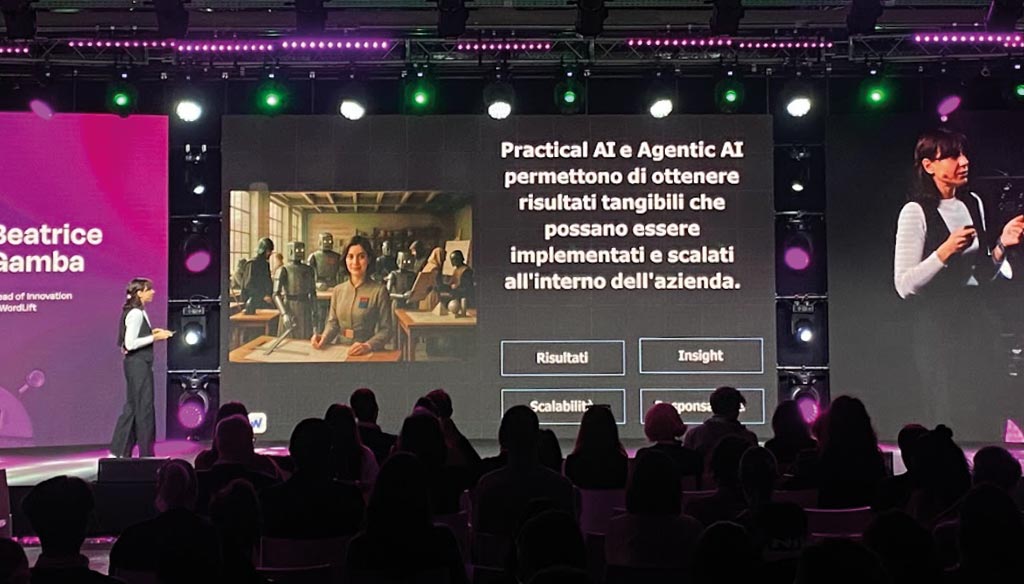
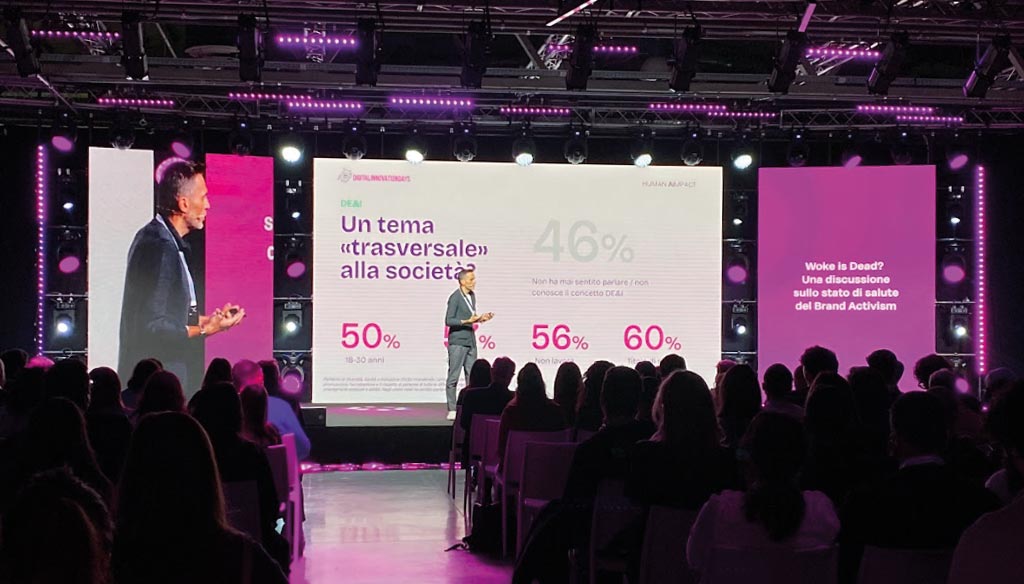
Social Commerce: From Clicks to Communities
Social commerce has shifted from a brand awareness tool to a direct sales channel. Platforms such as TikTok Shop and Instagram Checkout have made social networks true marketplaces. However, to be successful, three ingredients are needed:
- Content First: Creativity must embody brand values. A video about a hair product should be about self-confidence, not just ingredients.
- Specialized Creators: Generic influencers are not enough. You need vertical experts (e.g., nutritionists for a supplement brand) who build credibility.
- Live Shopping: Live feeds, especially in Asia, show 30% higher conversion rates than static posts.
The distinction between the three types of B2B influencers is interesting:
- Expert First: The consultant who explains how software improves productivity.
- Business First: The CEO sharing business case studies.
- Content First: The creative who makes a product go viral through engaging stories.
AI x Creator: Why the Future is a Collaboration
One of the most heated debates concerned the role of AI in the Creator Economy. According to the data presented, the influencer market in Italy reached 400 million in 2024 (+3-2% compared to 2023), with +10% in views.
But the real driver is trust: users follow creators who convey authenticity, vertical expertise, and infotainment (content that combines information and entertainment).
Here AI does not replace, but enhances. Tools such as TikTok Symphony make it possible to generate video from an image or web page, but the final touch-the tone, the spontaneity, the storytelling-remains human.
An example? A fitness creator uses AI to analyze trends and suggest formats, but he decides how to reinterpret them with his personality.
Why is AI not enough on its own? Because he cannot replicate:
- Imagination: The ability to see new connections that cannot be deduced from data.
- Empathy: Understanding the hidden emotions behind a critical comment.
- Imperfection: That “flaw” that makes a content authentic (e.g., an off-script joke during a live performance).
Virtual influencers are proof of this: while generating millions of views, their sentiment remains ambivalent. People seek real connections, not artificial perfection.
Conclusion: AI is a Co-Pilot, Not the Pilot
At the end of these two days, a reflection accompanies me: innovation is never technological, but human. AI is a very powerful tool, but its value is measured by how it amplifies people’s capabilities.
For brands, the challenge is clear:
- Using SLMs for safe and efficient internal processes.
- Leverage LLMs to create memorable experiences without ever distorting brand identity.
- Involve authentic creators, empowered by AI, not replaced by it.
Digital Innovation Days 2025 was not about machines, but about opportunities for people. And perhaps, that is the real innovation: remembering that, even in the age of AI, the heart of business remains human.
“The goal is not to create artificial content, but to make creative work more fluid and scalable.”
This sentence, hastily jotted down in my notebook, has become my compass. And I hope, yours as well