



In this article we look at why a proper Brand Experience is critical to a company’s growth.
Brand Experience what it is
Brand Experience defines how your brand interfaces with users and potential customers. It proves to be critical in companies’ branding strategies (but also in personal branding).
The points at which users come into contact with the brand can be many. We mention a few: physical store, social media, articles, landing pages, offline and online advertising, packaging, website, etc.
The point of contact in marketing jargon is called the touchpoint.
User Experience and Brand Identity are elements that coexist and are critical because as they enhance Brand Awareness by leads and potential customers (target audience).
For example, in online touchpoints such as landing pages and websites, you could work on user experience (UX) as early as the design phase (UX design).
In fact, users prefer to find smooth, intuitive paths and meaningful call-to-actions. In addition, it is always good to make the purchase of products and services as smooth as possible by working on the customer experience.
Online Brand Experience Strategy: why is it critical?
Brand experience has an increasingly bulky place in marketing and communication strategies.
The feeling between the user and the brand when they meet in physical and digital environments depends on it.
We would say especially in digital ones, given the importance of the web and apps in the new purchasing processes.
If you’ve never heard of brand experience (or if you thought it wasn’t important in your digital marketing strategy), it’s time to change your mind.
Why are we convinced? The data tell us:
- Per the Multichannelality Observatory, from PoliMi’s School of Management and NielsenIQ, in 2021 46.1 million Italians had at least one digital contact with a brand before purchasing a good or service: 88 percent of those over 14 in Italy;
- Also in the past year, online commerce generated 39 billion euros in traffic in the country, up 21 percent from 2020. E-commerce is growing, and retail is rapidly adapting to new online shopping trends.
You quickly realize that digital is a challenging terrain for so many companies.
Competition is tight. Forward-looking companies are trying to find new customers and retain existing ones by focusing precisely on the digital brand experience.
Brand Experience meaning and value
The brand experience is the experience a user (potential customer) has when he or she comes into contact with a brand.
The contact can be in physical stores, or in virtual touchpoints.
Keep in mind that a successful strategy includes multiple channels-the physical ones have not lost their importance and effectiveness.
Rather, the sticking point is another: between virtual and real there is no longer such a narrow line of demarcation.
Thus, the real key to a successful strategy is multichannel integration.
Returning to the brand experience, the feelings the user has when he or she comes into contact with the brand can change the relationship between the person and the company.

It’s not just about increasing sales or launching a new product. If you build a positive brand experience you can win and retain customers more easily.
The long-term goal is to build a stable relationship.
Start with the concept that a brand is not simply the sum of a company name and logo.
Through those symbols, in fact, the brand represents itself and its community of people. The brand expresses relationships.
Sounds, images, text, but also games, contests, challenges, community, vision and values-the goal is to create an engaging brand experience.
We mean, engaging to the point where people can feel part of the brand and its community and enrich it. This happens especially when the brand and people share values and vision.
If digital has become an agon for companies, what can make a difference? Not only the rational element, but also the emotional one.
Today, more than ever, it is critical for companies to be a brand to acquire customers.
For this reason, brand experience marketing is fundamental in the Business and Commercial strategies of all Companies.
Maybe you should rethink your brand strategy.
Unfortunately, too few companies still build their marketing and communication strategy with Prospects in mind.
If you too have been using this approach, perhaps you should rethink your marketing strategy and integrate it with a brand strategy.
Given these premises, we tell you that your brand strategy must also focus on those who are not yet customers but may become customers.
Think about your typical people: tastes, interests, fears, expectations, and how your product can meet their needs.
The goal? To create a positive brand experience that elicits a good memory in the user. This is the first step in building an emotional relationship between the brand and people.
Having their attention is the only possible strategy to be remembered at the time of purchase, among so many competitors.
Brand Experience Agency: 4 elements for you!
To put the brand experience in its rightful position within your digital marketing strategy, consider some of the mechanisms of the relationship between people and the brand.
1. The user’s perception of the brand
It is formed through audio, video, images, colors, words and especially interactions. Interactivity is an important vehicle for memory: it recalls past actions and is easier to remember in the future. If users have had a positive perception of the brand and have exchanged pleasant interactions, they are more likely to consider its products when purchasing;
2. Users are players, not spectators
Why not engage them? We suggest that you create a sense of user participation in the life of the brand by, for example, asking for advice, proposing polls, games, etc.
3. The brand experience is better if it is personalized
Personalization is possible only with the collection of the user’s personal data, marketing consent, and respect for privacy. Who wouldn’t love to receive personalized products, services, messages, benefits?
4. You can’t please everyone
Brand strategy must be designed for the right niche of people whose opinion matters. They can express this opinion with likes, reactions, reviews. All communication and marketing must be aimed at this small group, which recognizes itself in your brand’s community.
Brand Experience Examples: Starbucks and the secret menu
Surely you are familiar with Starbucks, the world’s most iconic and successful coffee chain. Its mission is an ode to the brand experience:
Our Mission: to inspire and nurture the human spirit–one person, one cup, and one neighborhood at a time.
(Our mission: to inspire and nurture the human spirit-one person, one cup and one neighborhood at a time).
historical CEO Howard Schultz, was credited with capturing the atmosphere of Italian cafes and bringing them to the US. Starbucks establishments soon transformed from dining spots to places to share, to relax, to feel unique.
The success of Starbucks has been planetary. Anyone knows what kind of experience they can expect upon entering a coffee or frappuccino joint.
The brand experience experienced in the chain’s bars was so impactful that it generated belonging.
Today there is a global community that in turn has fueled a myth: the Starbucks secret menu.
It is, in truth, a collection of custom flavor combinations for coffees, lattes, frappuccinos, and milkshakes, tested by customers and baristas.
They are not part of the chain’s official menu, but they are in such high demand that they have been collected in a blog that makes it clear that these custom flavors are made by fans for fans.
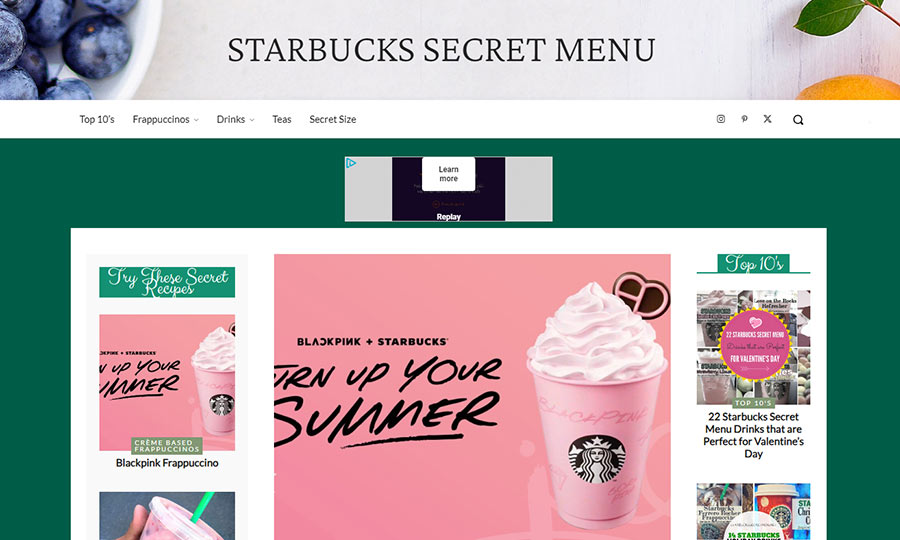
The web is full of magazine and newspaper articles recommending this or that secret menu recipe and how to order. Starbucks has fed its fans, who now reciprocate.
The fruitful relationship between Starbucks and its community is also confirmed by the people (People) section of the coffee chain’s official blog.
Sense of belonging, commitment to the community, support in difficulties, inclusion: these are the corporate values, which are condensed into the word “neighborhood.”
The underlying assumption of the physical and virtual brand experience is that each Starbucks is the small neighborhood establishment where each person is welcomed in his or her individuality.
On this assumption rests one of the most successful marketing strategies in history.
Are you interested in learning more about Marketing Strategies?
Read these articles: