




In this article we look at how Customer Relationship Management can grow the business of Companies and how it can become the fundamental tool for Customer Relationship Management.
If you don’t know what your customers want, what their problems are, what they have asked of your Company, how do you give the right answer?
The future of marketing lies in database marketing, which makes it possible to know enough about each customer to make appropriate and timely offers that are customized and tailored. Philip Kotler.
If you liked this quote, I invite you to check out the section of our website dedicated to marketing, communication and business quotes.
“I have always been fanatical about numbers and statistics. This has always helped me in my profession. Being an Entrepreneur and a Marketing Manager of different Companies in different Markets with different Targets means relating with data every day.
If you want to make a real and measurable Communication and Marketing plan, you necessarily have to be able to track every step. Understand the values involved and then determine whether what you have accomplished has achieved your goals.”
CRM and Big Data. Data is the most valuable asset we have
We are intimately familiar with the business fabric of our territory and know that it is “hungry” for lean, fast solutions that require low economic investment and minimal impact on business organization and workflow.
Often times no major investment is needed to manage data. On average, the average Italian SME has a relatively small number of employees, managing a relatively small amount of data and/or information.
Even today, I am not surprised when I am told that they make invoices with programs such as Word or Excel.
This means that the Company is not yet equipped with a management program let alone have a CRM (Customer Relationship Management) or a program for data management, statistics etc..
With a minimum of setup and long-term vision, Google Contacts (part of Gmail), for example, could be used as a CRM.
This information we cannot rely on our feelings and/or memories but must be mathematical, clear, precise, safe and reliable data.
We have over 20 years of experience in data collection, cataloging, management and analysis. If you have millions of Customers, our experience is probably not enough.
But if you have hundreds or thousands of Customers and want to understand how to improve business, customer experience and customer retention etc… then we are the Agency for you.
Why use a Customer Relationship Management
Using a CRM is not just about keeping track of the information, activities, quotes, contracts made for a Client.
But if well and regularly used, it enables you to make extremely accurate predictions about the medium- and long-term future of the Company.
Analyze your strengths and weaknesses so you can take action to adjust your course before you run out onto the rocks or worse yet against an iceberg.
“The Titanic unfortunately teaches that it’s not how big you are, but what you’re going up against that matters.”
From the very beginning, and that is when I started managing Clients and Contacts, I felt the need to track information.
First with an Excel, then with Outlook, then with a Database.
After that, with a pool of developers, we made our own CRM (customer relationship management), it was called XSolution.
Initially handled the master file, then all kinds of reports: phone calls, quotes, invoices, newsletters etc.
The problem was keeping the platform alive and up-to-date, because at the same time realities such as ZOHO and SALESFORCE appeared on the market that were really powerful and structured.
So it became apparent that it no longer made sense to run a platform independently, but it was certainly more profitable to use one in the cloud.
Aside from this time machine trip, I have always been a sucker for data in its structured and organized form.
The first time I tried to use Microsoft ACCESS I said, wow here we can handle anything and everything.
And so over time I did.
What benefits can we gain by using a CRM?
A registry for me is: Lead when you haven’t profiled it; Prospect when you’ve given a quote; Customer when you’ve finally brought it home.
And it is clear that this is the base of the base. Then I like to know what contact they come from.
That way I can know the revenue generated over the years from each source. But even this info needs to be structured.
And that’s how you find out that 30 percent of your turnover was generated by Mr. XXXXX who 5 years earlier had you do a 500-euro job but talked about you to another company that had you do a 5,000-euro job that in turn talked to N other companies.
This shows that you can get great results even from small customers, and it is therefore essential to maintain excellent relationships with your Contacts and Customers.
But not only that. In tracing the sources for me it is not acceptable: I saw you on the internet!
I want to know. On a blog: which one ?; On a social: which one ? On a site: which one ? etc…. Only then can you really measure the performance of the Communication activities you implement.
Then I want to know what inquiries we have received, quotes, reliability of a Client regarding payments….. etc…
Only if you know who you are dealing with can you decide how to do so. And so it is essential to have an accurate picture of your Contacts and Customers that is not based on the feelings of the salesperson or on fragmentary information, but is structured and analytical generated from clear and verifiable sources of information.
Sales strategy: why use customer relationship management
The areas of application are many, but we can list some of the major benefits that the use of these software brings to a company:
- Tracks every interaction between a lead / prospect / customer with the company;
- Improves sales performance by assisting sales strategy;
- increases the ROI of marketing campaigns
- allows data on each customer to be shared with the entire company.
If you are not yet using a CRM to increase sales, manage new customers, prospects, and leads, you are probably running into at least one of the problems we describe below.
Lose hits in prospect management
Your business has grown and you can no longer keep track from memory, or with an Excel spreadsheet, of all leads and prospects, all bids and tenders.
By necessity, you lose strokes and forget to perform some fundamental activity in prospect management such as contacting them back after a quote, being present.
This latitude, may push the prospect into the arms of a competitor. Using a CRM, you would receive notifications about deadlines and commitments to the client, in order of priority with respect to the most urgent tasks.
Departments in your company do not communicate data about the customer to each other
Your prospects or customers relate to multiple business departments: administration, sales, marketing and logistics, etc.
What if information is not appropriately shared among all those who have an interaction with the customer?
That information is lost and the customer experience suffers. Not only that, it also affects the performance of the various sales, marketing, and customer care departments, making work messy and inefficient.
Through a customer relationship management platform, on the other hand, all information about each customer can be noted down and shared with the various departments involved;
If the salesperson quits, it’s trouble
What would happen if your salesperson quit, or changed areas or products?
Without a CRM and therefore without a shared and recorded base of information about the relationship with each prospect and customer, it is difficult to pass the baton without losing sales opportunities.
There is also another psychological aspect on which the use of the CRM system can can act positively: it provides an objective starting point for evaluating the performance of salespeople, who then have more confidence in being able to justify their actions to management. This creates a more relaxed and collaborative work climate.
It’s also trouble if you change your interlocutor or bring new partners into the negotiation
What if it is your contact person who changes, in case of B2B customers? It applies especially when the sales cycle is long (in some areas we are talking years!) and there may be staff turnover. What if new partners are brought into the negotiation?
Even in these cases, it is absolutely necessary to have recorded and shared data in order to keep the thread of the conversation going at all times and not suffer abrupt breaks in sales processes.
You’ve lost track of the ROI of marketing campaigns
The last aspect that always relates to sales strategy is marketing.
Without a CRM, you could find yourself sending email marketing campaigns or content that is not personalized, the same for everyone, even for customers who are at widely separated stages of the funnel.
You would spend time, money and energy in an unconstructive way, and monitoring results and marketing KPIs would be almost useless.
A CRM, on the other hand, gives you the opportunity to segment your campaign audiences based on where the lead/prospect is coming from, previous interactions, interests, and what stage of the buyer’s journey they are at.
In other words, almost every company needs a customer relationship management platform today to run the business effectively.
What information can we save in the CRM?
We will now look together at why it is important for a company’s business to save and segment data.
The information I have included in this article is only a small part of the information that is collected by thousands of companies around the world.
There are different kinds of information such as biographical information that you can find in this article, behavioral information of a user, information related to his online activities (what sites he visits, what social networks he uses, time spent online)etc…
Billions of pieces of information are collected and catalogued every day without us being aware of it.
Happy reading.
Customer Relationship Management: What is a Master Data?
At the foundation of a CRM we find the Master Data.
By master data I mean all the information about a person or a company.
This is as simple as it is complex because the management of the Registry changes depending on the role a person has at that time.
Let me explain further.
I’ll try to give an example. You will find many words highlighted in “bold.” They indicate the new information that as we go along, we can save in our CRM. In purple I have included the purely B2B fields.
Sample registry: the Rossi Family
“Mr. Rossi” can be saved in our CRM in different ways according to his or her role.
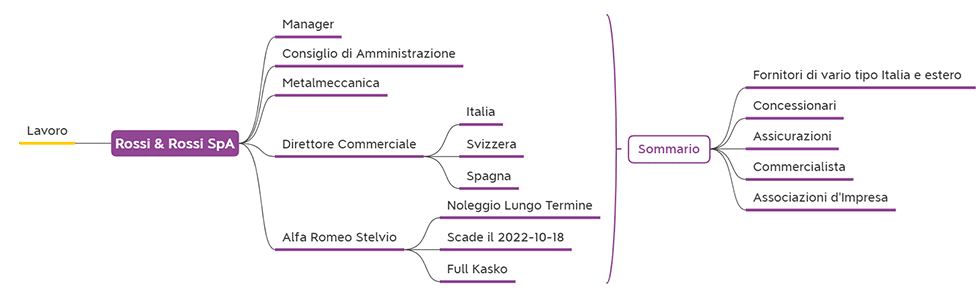
Let’s start with the simplest case “Mr. Rossi” is named Mario, a college graduate, 48 years old, and a manager in ametalworking company.
He has just bought a washing machine in a supermarket, one of those sales that is called B2C (Business to Consumer) Strategies.
The Company has saved all contact information, products purchased,email for newsletter subscription etc.
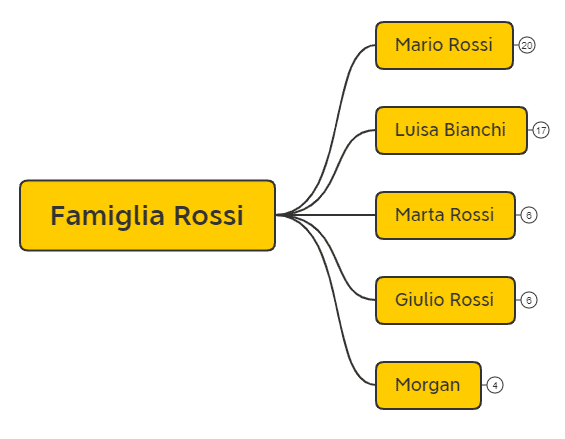
Dr. Mario Rossi is a family man.
His wife Luisa Bianchi is 44 years old and works part time in theSales Office of the “Belle Sempre” cosmetics company.
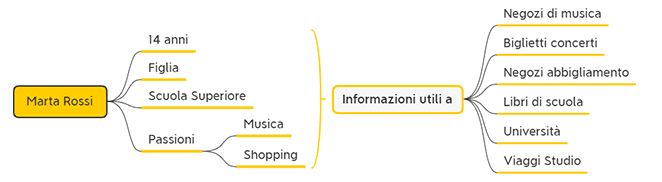
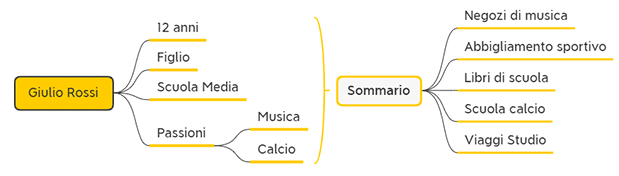
Mario and Luisa have 2 beautiful children: 14-year-old Marta Rossi and 12-year-old Giulio Rossi.
In time we can also save the information of schools completed by the children etc.
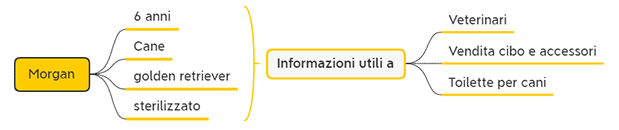
The Rossi Family has a beautiful 6-year-old spayed golden retriever named Morgan.
The Rossi family has a current account with Banca Popolare di Sondrio and a life insurance policy with “Generali.”
The beautiful apartment they own (they are paying off the mortgage) in which they live is insured with “Royal Mutual Insurance.”
They recently changed both cars.
Mario purchased through theRossi & Rossi Company an Alfa Romeo Stelvio with a Long Term Rental while Luisa preferred a used Fiat 500 since she paid for it in cash and forinsurance she used the “Facile.it” portal by taking out the policy with Linear.
Dr. Mario Rossi is not only the Sales Director of Rossi & Rossi SpA, but also serves on the Board of Directors.
He is in charge of the development of the Sales Network in Italy, Switzerland and Spain.
This information is classified as B2B Strategies, that is, Business to Business. Yet Mario Rossi earlier we classified it as B2C.
We can go on forever, collecting and classifying all kinds of information.
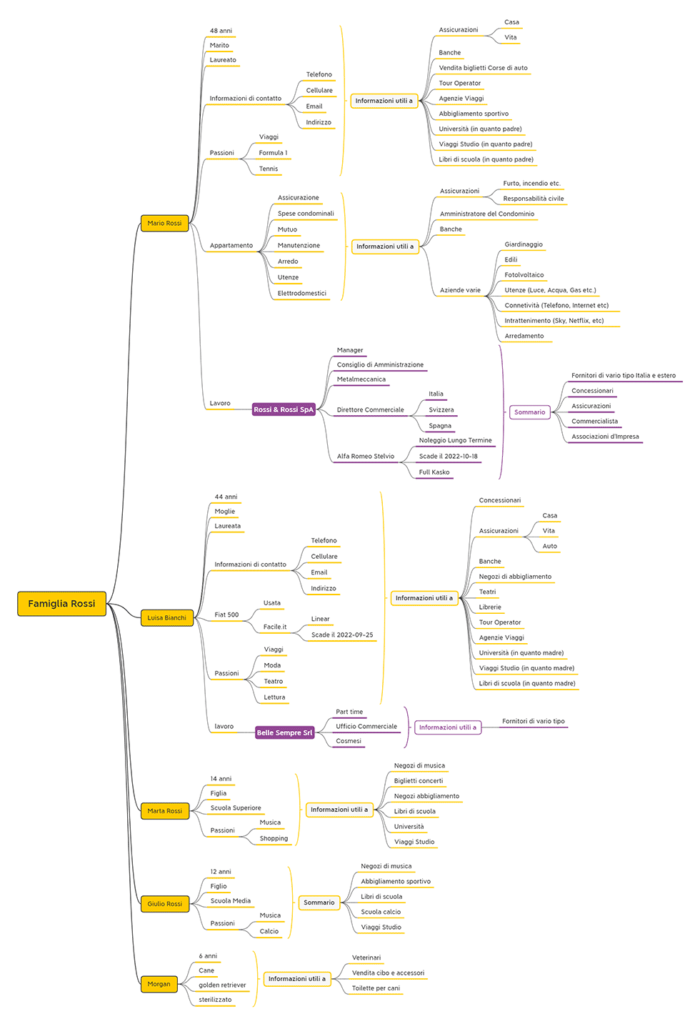
Now let’s try to collect and visualize all this information and figure out who it might be useful to.
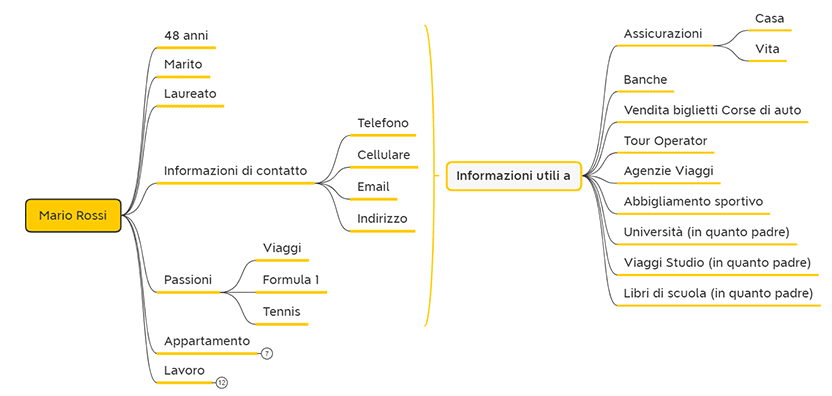
Let us analyze, together, the biography of Dr. Mario Rossi.
In this list we list key personal information.
As you can imagine the list can become endless depending on the information we want to collect.
In this chart I have also included companies/businesses that might be interested in this data.
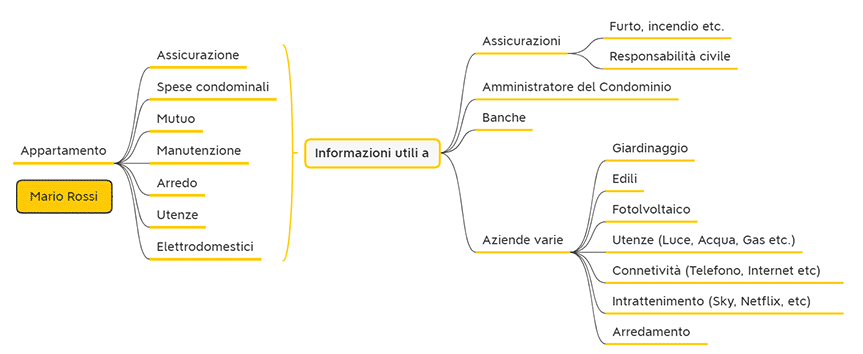
Now let us analyze the data derived from real estate ownership.
In the following graph we find data on Dr. Mario Rossi’s role in the company.
Biographical analysis of Luisa Bianchi, Dr. Rossi’s wife.
Again, let’s look at personal information first.
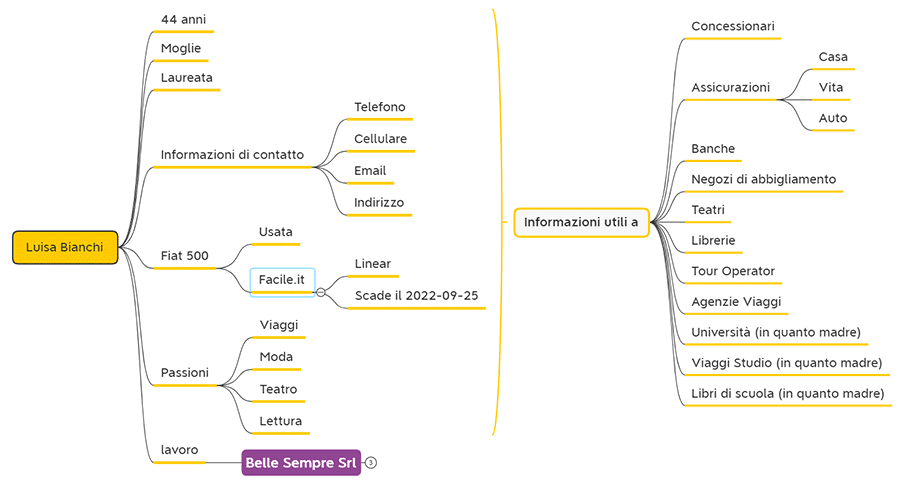
Then on to the working ones.

Biographical analysis of the children Marta and Giulio
In this case we have only the personal information.
Anagraphic analysis of the highly loyal Cane Morgan
And here is the information about this beautiful dog.
And now we see the flowchart of the full family.
I believe this brief analysis has shown how complex master data management can be and why it is critical to use customer relationship management.
The entire Rossi family
To conclude, we want to give you the example of the Hubspot CRM, which Factory also uses and offers to customers as a Hubspot partner.
Hubspot CRM to achieve your sales and marketing strategy goals

HubSpot is one of the best CRM (Customer Relationship Management) available on the Market.
I am a data geek and agree with those who say that mathematics is the basis of everyday life.
Our lives are governed by mathematics.
Even more so if, like yours truly, you work all day long, implementing Marketing and Communication Strategies.
A good strategy must take multiple factors into consideration. It must be measurable and quickly modifiable over time.
We can say that to carry out an effective Marketing and Communication Strategy, it is essential to have data.
For this reason, CRMs must be the basis of the strategy and Business generation of every Company or Profession.
I often say that “without data, it’s like traveling on the highway in reverse, without lights and blindfolded.”
Just try to imagine the result, not pleasant is it?
In my life I have tried, analyzed and used many CRMs and HubSpot, to date, turns out to be the most powerful, versatile and easy to use and implement in the Company.
HubSpot is a useful tool for both marketing strategy and sales because it allows you to track all customer information, profiling, sales and funnel progress in a personalized manner.
All this information can be shared among company members.
Like any collaborative CRM, it allows you to view the volume of traffic to the Web site, the source from which users come, the conversion rate, and average cart or contract amounts.
One interesting aspect is that of dynamic lists that change based on user behavior and their evolutions in the buyer’s journey.
It also works well for B2B sales because of the Prospect tool, which lets you know which companies have visited the website, starting with the IP address.
It can be particularly suitable for a B2B sales strategy because this way salespeople can immediately recontact a potential prospect.
The plus of HubSpot is that it integrates sales strategy with marketing strategy, such as cross-referencing data to generate very customized campaigns: dem, content marketing, inbound marketing.
Planning together the actions of the sales department and those of the marketing department to attract new customers can be a key to achieving the business goals of all companies.
Factory Communication is a HubSpot reseller and Solutions Partner Certified.
Are you interested in a free demonstration of HubSpot, or a course or technical assistance?