



In this article we look at as many as 15 ways to find new customers online through your Web Marketing strategies.
You probably typed one of these keywords into Google:
- sites to find customers
- find customers on the internet
- find customers online
Regardless of how you got to this article, take 5 minutes because we will now look together at as many as 15 activities that you can…. or better…. need to accomplish to increase the number of your potential customers through online strategies.
Let’s start by saying that conversion rate is the percentage of users who take a certain action on your website.
We specify that this conversion may not be directly the purchase.
In fact, the path a user takes until he or she is converted into a paying customer (the buyer’s journey) has several stages, and purchase is only the final one.
Then, not on all websites economic transactions are made.
Converting customers may mean simply prompting them to contact the company for advice.
Acquiring new Customers online: which actions convert?
Here are some examples:
- Newsletter subscription
- The submission of a contact form
- The download of a coupon
- The information request via chat
- The download of an e-book
- The purchase of a good or service
However, for all companies, there remains one ultimate goal: to increase sales and increase revenue.
You want to find new customers online! What keeps a website from converting?
Often a mix of small flawed elements create an unsmooth experience.
The user may feel disoriented when faced with too many options.
Or simply, the seller has not won your trust.
When we want to find customers online often times weaknesses are hidden:
- In the design of the page;
- In text copy;
- In content that does not meet users’ needs;
- In the technical characteristics of the site.
If you find yourself in this impasse, you may be wondering how to increase your site’s conversion rate.
We have put down a 15-point checklist with all the tactics you can use to convert more customers and increase sales.

How to find customers online and boost sales on your site: our checklist
Let us now go into the details.
Before going through each item on our checklist, here is the overview:
- Are the forms streamlined?
- Have you moved the right levers: social proof, scarcity and urgency?
- Have you observed how users behave on your site?
- Have you implemented live chat support?
- Are you proposing valuable content for your buyer personas?
- Have you experimented with multiple solutions with A/B Tests?
- What happened to carts abandoned by users?
- Are you clearly communicating your value proposition on both the website and Social Networks?
- Does the page show who you are and what you sell?
- Are CTAs strong and clear?
- Have you eliminated everything that is unnecessary and confusing?
- Are you giving users good reasons to trust you?
- Are the pages performing well?
- Is the site optimized for mobile browsing?
- Is the final purchasing process smooth?
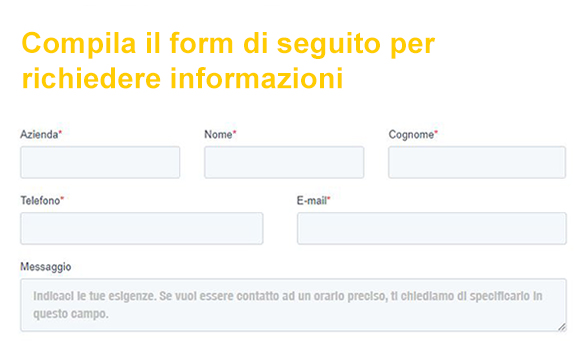
1. Registration forms
Before a purchase or newsletter subscription, there is always a form to fill out. Personal data, addresses, preferences, marketing consent.
The form is in fact essential, but part of your job is to make users’ lives easier. Put only the strictly necessary fields in the form.
Make sure it is easy and quick to fill out to prevent the user from getting discouraged and abandoning the shopping cart.
2. Social proof, scarcity and urgency
There are three levers used by copywriters to increase the conversion rate of websites, dem campaigns or landing pages. They are social proof, scarcity and urgency.
Social proof is to show that someone else has already chosen and liked your product.
You can use data, reviews, quotation marks. Scarcity and urgency are activated by expressions such as, “only one piece left,” or “for this week only.” Old tricks, still valid.
Use these strategic levers well, but without telling lies to users.
3. Attracting new Customers: analysis of user behavior
You can learn about the behavior of users browsing your site through tools such as Google Analytics. It gives you the information to make strategic decisions and increase your conversion rate.
If you do not have Google Analytics installed, you can use another free online tool such as Hubspot Website Grader. By entering your email and domain, Hubspot’s Grader analyzes your site and scores it for performance, SEO optimization, mobile optimization, blog usage, etc.
4. Live chat support
Why don’t you provide users with live and immediate assistance?
An initial skimming can be done byartificial intelligence, through chat-bots. Only the most difficult problems to solve will come to the human operator.

5. Seeking new customers: the Buyer Personas.
Sometimes the problem is that you are not giving the right content to your buyer personas. Identify who your ideal audience is and what they need.
Then prepare content that is of value to those people.
They will probably also want to reach you or know where you are: locate your content.
6. A/B Tests.
The font, a word, an image, the call to action. Details can make all the difference in increasing conversion rates and acquiring new customers. A/B testing helps you identify the winning combination.
7. DEM campaigns for abandoned shopping carts.
You may have received marketing emails reminding you that you left a shopping cart at that online store. This strategy can pay off, especially if you include benefits.
For example? A coupon, perhaps timed.

8. Attracting new customers: the Value Proposition
All of the copywriter’s work revolves around one pivot: communicating the brand’s value proposition.
You need to know your buyer personas well and tell them clearly how you (and only you) can solve that problem of theirs or meet that expectation of theirs.
9. Online presence: the videos, images and multimedia
A multimedia website has a better impact. Especially if you use images and videos to showcase your product or talk about your service. If they can see with their own eyes what they are about to buy, users feel reassured.
10. The Call to Action.
Calls to action are the final nudges to action. You usually find them in the end buttons of a page. They are expressions such as: sign up for the newsletter, download the whitepaper, book now, get your discount code.
Less is more: one call to action per content is better.

11. The essentials
Always because less is more, leave only the essentials on your website. Delete the words that are too many, the images you don’t need, the superfluous CTAs. Map out a linear, understandable and transparent path for your users. It will help you increase your conversion rate and boost sales.
12. Trust
They cannot buy from you blindly. People need to trust you. A well-maintained website, an up-to-date blog, working links, verified reviews-all this builds trust and facilitates user conversion.
13. New customers on the Internet: page performance
You’ve fixed almost everything, you feel like the content and site are perfect, but sales aren’t taking off. Have you checked page performance? Neil Patel says 40 percent of users abandon a page if it takes more than two seconds to load.
14. Business card: browsing from mobile
Almost everyone today is surfing from mobile. So do you, so do we. From smartphones, we sign up for newsletters and webinars, book vacations, shop in e-commerce.
If you have not optimized your site for mobile browsing, it will be difficult to increase sales.

15. The ease of purchase
What if they themselves lose customers at the very best? Buying is the final stage of the Buyer’s Journey and must be downhill.
There are obstacles that can still hold users back and prevent them from converting: difficult forms that do not accept certain characters; few payment methods; loading errors…
Eliminate them.
How to find new customers online: FAQ
The most effective channels to acquire new customers online include:
– Search engine optimization (SEO) to improve website visibility
– Social media marketing to reach target audiences
– Paid advertising (e.g., Google Ads, Facebook Ads)
– Email marketing to cultivate leads and convert them into customers
– Content marketing to attract potential customers with valuable content
To identify your target audience online:
– Analyze demographic and behavioral data of your current customers
– Use social media analytics tools to understand who interacts with your content
– Conduct online surveys and market research
– Create detailed buyer personas based on data and insights
– Study your competitors’ audiences
The most effective content marketing strategies include:
– Create informative blog posts and useful guides for your target audience
– Produce educational videos and tutorials
– Offer free webinars on topics relevant to your industry
– Publish case studies and customer testimonials
– Share infographics and visual content on social media
You can measure effectiveness by:
– Monitoring website traffic and traffic sources
– Analyzing the conversion rate of leads into customers
– Tracking the cost of acquisition per customer
– Measuring the ROI of advertising campaigns
– Analyzing social media engagement and brand mentions
Common mistakes to avoid:
– Neglecting mobile optimization
– Not clearly defining target audiences
– Ignoring data analytics to drive decisions
– Focusing only on acquisition and not retention
– Using an overly aggressive or invasive approach to online sales
Do you have a website and want to find out how to increase conversions?
Read these articles:
- Finding clients for accountant: comprehensive strategy
- How to find customers for your business: 15 strategies for Entrepreneurs
- HubSpot Meetings: How to get your clients to book online meetings directly on your website
- How to realize the SEO of images for Google
- How to improve the mobile SEO of the website
- Improving the User Experience of the Site
- Prospecting: how to find new potential customers
- Reach New or Existing Customers on Facebook