



In this article we look at why remarketing campaigns can be a great tool for boosting your eCommerce sales.
This method, is very useful if we want to keep our presence alive in the mental availability of our target audience.
Generally, websites have a very low conversion rate, during users’ first visits (2% of traffic).
With Remarketing Campaigns we can greatly increase conversion.
Remarketing meaning
How many times have you happened to search for a product or service on the Internet, and later found an ad on the Web about that very product, or that Company?
Here this is called Remarketing and consists of special online advertising.
This is displayed by users who have performed certain actions previously on the Internet, but without having completed the purchase procedure, or conversion.
How does it work?
Have you ever heard of Cookies? Cookies are used to track our actions on the web, through a simple Javascript code.
In fact, by inserting one of these codes in our website, every time we get a visit, the Cookie will release a code to the search engine (imperceptible by the user, and not affecting the functioning of our website or browsing devices).
Thus, this code will allow us to track user behavior on the Web.
And as a result, it will allow us to create particular campaigns, and make sure that these are seen only by those who have visited our site before.
This persistent visibility encourages users to return to complete their initial actions.
Basically, Remarketing allows you to greatly increase your eCommerce sales.
The importance of Remarketing
Display remarketing advertising plays a crucial role in digital marketing by increasing the likelihood of conversions.
It bridges the gap between initial interest and final action, ensuring that your brand remains at the forefront of potential customers’ minds.
This continuous engagement is essential in today’s competitive marketplace. Consumers are inundated with choices and distractions and, many times, perform multiple searches for the same product.
When to Implement a Remarketing Strategy
Implementing a remarketing strategy requires precise timing.
It is most effective when users show a clear interest in your products but do not convert.
Key moments includecart abandonment, viewing product pages without a purchase, or interacting with specific content.
By identifying these indicators, you can target users who are most likely to convert when they return.
It can be effective to implement it in an Inbound Marketing strategy.
Key Indicators
The success of this strategy is based on the recognition of various indicators such as high bounce rates from critical pages, frequent but short visits, and interactions without conversions.
These signals highlight the need for remarketing interventions to regain the attention of potential customers and guide them toward completing their actions.

Channels
There are many channels available to us marketers. In the case of social networks, for example, we can create a campaign and make it visible only to those who are already familiar with your Brand. This allows you to optimize your budget and focus your strategy on a small number of contacts, improving conversion.
Google Ads remarketing campaign
Google Ads is a powerful tool in that it leverages the broad reach of Google’s network.
Through display and search ads, you can reconnect with users who have previously visited your site, tailoring messages to their specific behaviors and interests.
Remarketing on Facebook Ads
Facebook’s large user base makes it an ideal platform for this strategy.
Using the Facebook Pixel, you can track user activity on your site and create customized advertising campaigns.
These campaigns will display your ads via Facebook and Instagram to precisely those users who have visited your site. They improve visibility, interactions and engagement.
Email remarketing involves sending personalized follow-up emails to users who have interacted with your site but have not converted.
This method is highly effective in nurturing leads and encouraging repeat visits by offering incentives or highlighting relevant products.
If you want to develop this strategy, I recommend implementing a marketing automation solution.
Other Social Media Platforms
Other social platforms such as LinkedIn, Twitter and Pinterest offer remarketing opportunities, with the same logic as Facebook.
Benefits of Remarketing
Increased Conversion Rates
This strategy significantly increases conversion rates by targeting users who have already expressed interest in your products.
By reminding them of their initial interest and providing additional incentives, remarketing campaigns can drive these users to complete their purchases.
Improving Brand Recall
Consistent exposure to your brand through remarketing helps build brand recall.
Users are more likely to remember your brand and choose it over competitors when they are ready to make a purchase because of repeated visibility.
Greater Customer Involvement
Fosters better customer engagement by providing content and personalized offers based on users’ previous interactions.
This personalized approach makes users feel valued, increasing their likelihood of return and conversion.
Strengths and Weaknesses of Remarketing
Strengths
Strengths lie in its ability to precisely target users, increasing the likelihood of conversions.
It is cost-effective compared to traditional advertising and provides measurable results, making it an invaluable tool for digital marketers.
Weaknesses
Overexposure can damage your image as users become annoyed by seeing the same ads repeatedly.
In addition, privacy concerns and ad-blocking technologies may limit the effectiveness of remarketing display advertisements.
It may not be suitable in scenarios where users have a negative perception of your brand or if the product life cycle is short.
In these cases, efforts may not produce significant results and could potentially waste resources.
The main disadvantages include the risk of appearing intrusive, which can alienate potential clients.
It also requires careful management to avoid wasting advertising budgets on users who are unlikely to convert.
Best Practices for Remarketing
To maximize its effectiveness , it uses dynamic ads that show products viewed by users.
Segment your audience to tailor ads to their specific behaviors and preferences.
Update your advertising creative regularly to keep it fresh and engaging.
Check out your eCommerce
Before you start with your new campaign perform a Content and Technical Audit of your eCommerce. Check the:
- Navigation and the user experience
- Speed of opening pages
- Product availability: must be reachable with one click
- Image quality
- Effectiveness of texts
If your e-commerce is slow, or requires too many steps to find the right information, it will probably discourage users from making a purchase.
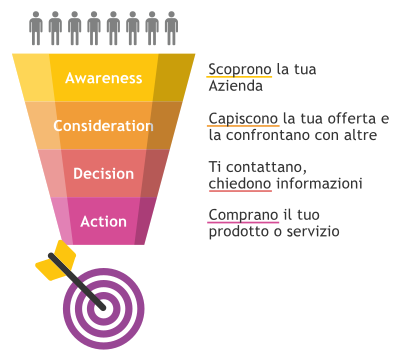
Create the Right Sales Funnel
If you want to increase the effectiveness of your campaign, create a sales funnel that includes multiple touch points with your potential customer.
Don’t think exclusively about advertisements. Focus on what you can do that is useful for your user. For example, make available technical guides, presentation and explanation
You have to win your user’s trust, the more information you give, the more likely they will decide to trust your Company.
Measuring Success
To evaluate the success of your remarketing campaigns monitor key metrics such as:
- Click-through rates (CTR)
- Conversion rates
- Return on advertising expenditure (ROAS) .
It uses A/B testing to optimize ad performance and makes data-driven changes to improve results.
Remarketing Campaigns: Conclusion
Remarketing can be a powerful tool at your disposal that can significantly increase conversion rates and customer engagement.
If you take into account its strengths and weaknesses and implement best practices, you can effectively leverage it to achieve your business goals.
N.B. When you have made the sale, do not betray the trust and expectations of your new customer.
Offer high after-sales support, both technical and commercial.
A satisfied customer becomes an Ambassador of your Company. They speak positively about you and your products to their acquaintances. It generates positive word of mouth, enabling you to increase sales and confirm the quality and value of your Brand in the market.
Remarketing: FAQs
Here you will find a list of FAQs we have selected for you:
Remarketing usually refers to reactivating customers through email campaigns, while retargeting involves using ads to target users based on their online behavior.
Remarketing improves conversion rates by continuously engaging users who have already shown interest in your products, reminding them to complete the purchase.
Yes, remarketing is cost-effective because it targets users who are already familiar with your brand, often resulting in higher conversion rates and lower ad expenditures than traditional advertising.
Google Ads, Facebook Ads and email marketing platforms such as Mailchimp are popular tools for effective remarketing campaigns.
Remarketing campaigns should be updated regularly to avoid ad fatigue and keep content fresh and relevant to the target audience.
Common mistakes include overexposure to the same ads, lack of personalization and failure to segment audiences. These can lead to lower effectiveness and wasted ad spending.
Google ADV campaign implementation: related articles
What are the elements that we need to take into consideration when carrying out lead generation activities? Read these articles