



Finding new customers is the most important challenge for any entrepreneur who wants to grow his or her business, increase revenue and ensure business sustainability over time.
However, it is crucial to clarify one thing right away: there is no magic formula or universal recipe that applies to everyone.
The strategies you will find in this article represent a comprehensive overview of current best practices on how to find customers for your business to increase sales of your products and services.
Don’t worry they should not all be applied indiscriminately.
Each enterprise must build its strategy in a customized way, carefully considering:
- One’s market positioning
- The target industry and its dynamics
- The products and services offered
- The marketing budget at hand
Only a thorough analysis and a reasoned selection of the actions best suited to one’s reality will lead to concrete and lasting results.
In this article, I will guide you through 15 operational strategies, explaining for each one the practical actions you can put in place and the benefits your business can achieve.
The goal is to provide you with a comprehensive guide to help you find new customers.
A guide that allows you to choose and integrate the most effective activities for your business, consistent with your Budget.
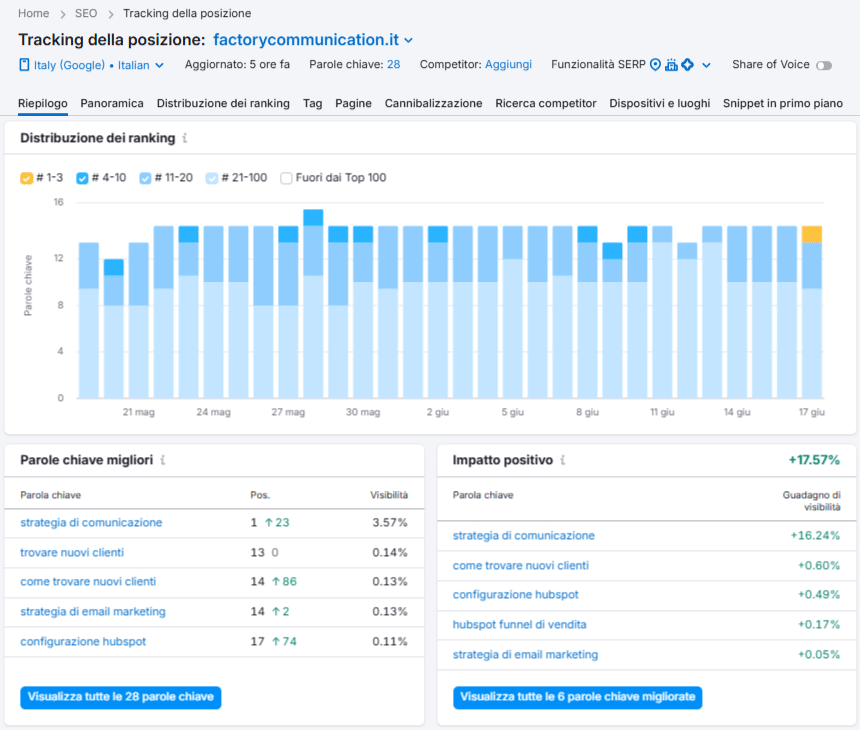
1. Perform a market and SEO analysis to understand where your online competitors are positioned
Before investing time and resources, it is essential to know the competitive environment in which you operate.
Amarket and SEO analysis allows you to identify who your main online competitors are, what strategies they employ, which channels they are strongest on, and which keywords they are presiding over.
This step is critical to avoid mistakes already made by others, identify opportunities and threats, and define a winning positioning strategy.
Practical actions you can take:
- Use tools such as SEMrush, Ahrefs or SimilarWeb to analyze competitor traffic.
- Identify the main keywords manned by your competitors.
- Analyze the content that generates the most traffic on competitor sites.
- Study the social presence and ADV campaigns of major industry players.
- Evaluates the structure of competing websites and the link building strategies employed.
Benefits to your business:
- Prevention of strategic surprises and anticipation of competitors’ moves.
- Identification of emerging trends and new market opportunities.
- Better allocation of marketing resources.
- Ability to differentiate and innovate from competitors.
- Optimization of investments in areas of high return potential.
2. Define your ideal customer
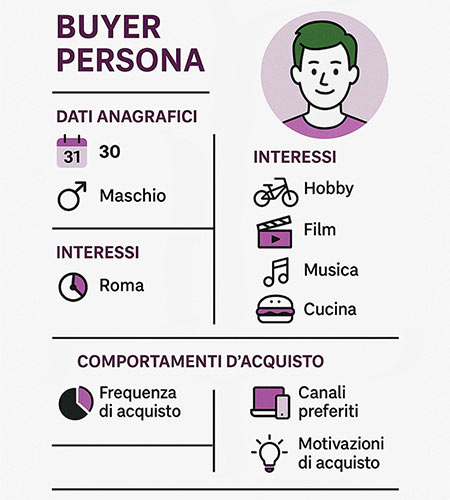
Knowing how to find customers for your business means first understanding who the customers are that you really want to attract.
Defining buyer personas is a key step: only by fully understanding the characteristics, needs and behaviors of your target audience can you build effective offers and messages.
Practical actions you can take:
- Collect data on your current customers through surveys, interviews, and sales data analysis.
- Segments the market based on demographic, geographic, psychographic, and behavioral variables.
- Create detailed profiles of your buyer personas (age, profession, interests, goals, problems to be solved).
- Analyze the buying habits and preferred channels of your target audience.
- Assess which customers generate the most value and are most likely to be retained.
Benefits to your business:
- Focusing supply on the real needs of ideal customers.
- Increased effectiveness of marketing campaigns and commercial actions.
- Increased margin through customers willing to pay for the value offered.
- Improved loyalty and positive word of mouth.
- Ability to identify new potential customers similar to those already acquired.
3. Define your company’s strengths, products and services
Knowing and communicating your strengths is essential to differentiating yourself from the competition.
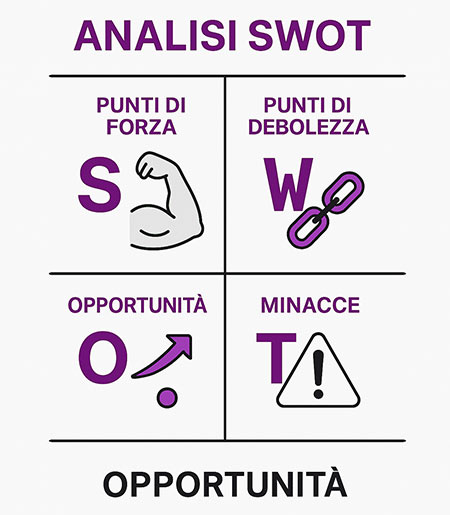
SWOT (Strengths, Weaknesses, Opportunities, Threats) analysis helps you identify positive internal factors that provide a competitive advantage: resources, skills, technologies, brands, product or service quality.
Practical actions you can take:
- Conduct an internal SWOT analysis with your team.
- Identify what you do better than your competitors.
- Ask customers for feedback to understand what they value most about your offering.
- Values distinctive resources: proprietary technologies, patents, know-how, qualified team.
- Identifies weaknesses and plans improvement actions.
Benefits to your business:
- Strengthening competitive positioning.
- More effective communication of added value to customers.
- Increased ability to attract target customers.
- Increased reputation and brand awareness.
- Better use of internal resources and expertise.
4. Implement an integrated, multichannel marketing strategy
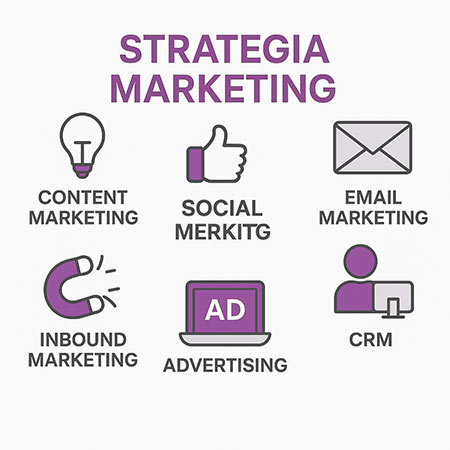
Today, to know how to find customers for your business, it is essential to take an integrated, multichannel approach.
Content marketing, social media, inbound and email marketing must work in synergy to maximize visibility and message consistency.
Integrated marketing makes it possible to reach the customer at different touchpoints and increase the likelihood of conversion.
Practical actions you can take:
- Define marketing goals and KPIs to be monitored.
- Create an editorial plan that integrates blog, social, newsletter and ADV campaigns.
- Develop consistent and customized content for each channel.
- Use marketing automation tools to manage multichannel campaigns.
- Constantly monitors results and optimizes activities based on the data collected.
Benefits to your business:
- Increased coverage and visibility at the target audience.
- Consistency of message across all channels.
- Increased contact and conversion opportunities.
- Better management of the marketing budget.
- Ability to quickly adapt strategy to market changes.
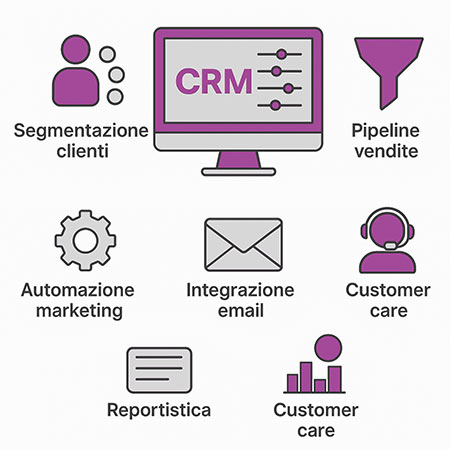
5. Integrate a CRM for user profiling and inbound marketing activities
A modern CRM (customer relationship management) is the beating heart of a customer acquisition strategy.
It allows you to collect, organize and analyze your users’ data, segmenting audiences and customizing inbound marketing, social media and newsletter activities.
This approach improves the quality of leads and the ability to turn them into real customers.
Practical actions you can take:
- Choose a CRM that fits the size and needs of your company.
- Import and organize customer and lead data.
- Segment the database by relevant criteria (industry, geographic area, purchasing behavior).
- Automate follow-up and nurturing activities through customized workflows.
- Integrate CRM with other marketing tools (email, social, analytics).
Benefits to your business:
- Improved knowledge and profiling of customers.
- Personalization of campaigns and communications.
- Increased lead conversion rate.
- Optimization of business and marketing activities.
- Increased customer loyalty and satisfaction.
6. Implement an SEO strategy based on a keyword tree.
SEO is not improvisation.
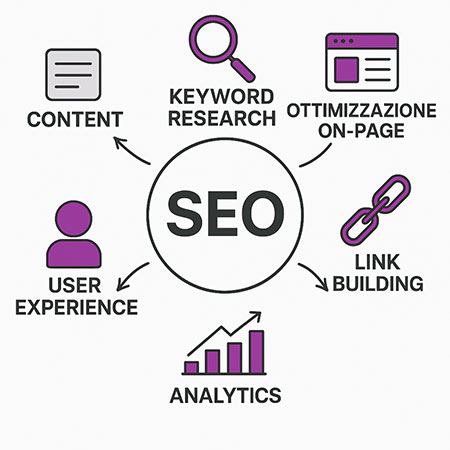
To implement the right Search Engine Optimization strategy, you need to analyze your competitors’ SEO positioning and build a keyword tree, which is a hierarchical structure of keywords that reflects your desired positioning and takes into account your competitors’ strategies.
This allows you to plan targeted content, optimize site pages and improve search engine rankings, increasing visibility and customer acquisition opportunities.
Practical actions you can take:
- Analyze the main keywords in your industry and those used by competitors.
- Build a keyword tree that includes main, related and long tail keywords.
- Optimize site pages based on strategic keywords.
- Create targeted content to preside over the most relevant keywords.
- Monitor SEO positioning and update strategy periodically.
Benefits to your business:
- Improved organic search engine rankings.
- Increased qualified traffic to the site.
- Increased customer contact and acquisition opportunities.
- Reduced acquisition costs compared with paid channels.
- Increased authority and online reputation.
7. Develop a content marketing and inbound marketing strategy.
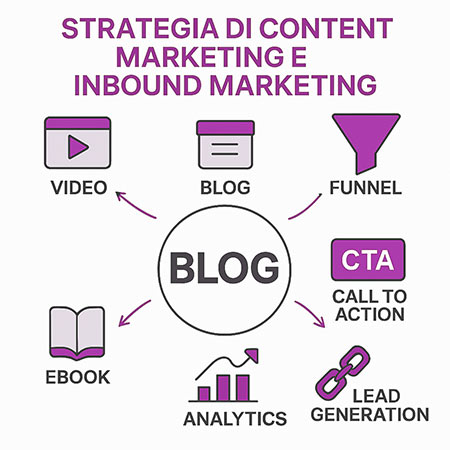
Content marketing is the most powerful lever for attracting qualified customers without forcing.
Create and distribute valuable content (articles, guides, videos, podcasts) that addresses the needs and questions of your target audience.
Inbound marketing turns traffic into leads through funnels and targeted calls to action, taking the user from first contact to purchase.
Practical actions you can take:
- Create a corporate blog with articles that solve concrete problems of your customers.
- Produce video tutorials, webinars and podcasts on relevant topics.
- Offer downloadable content (e-books, white papers, checklists) in exchange for contact information.
- Design conversion funnels with optimized landing pages.
- Use effective call-to-actions to guide the user toward conversion.
Benefits to your business:
- Attracting qualified leads in a natural way.
- Increased brand authority and online reputation.
- Market education and objection reduction at the sales stage.
- Improved SEO ranking through fresh and relevant content.
- Increased customer loyalty through valuable content.
8. Plan for an online link building and PR strategy.
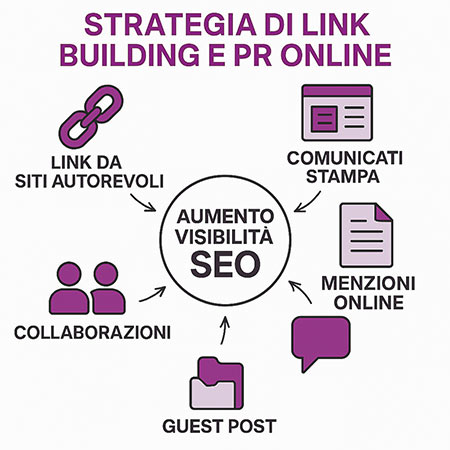
To improve visibility, brand awareness, and SEO ranking, it is crucial to obtain quality links from authoritative sites and activate digital PR campaigns.
Link building strengthens a site’s authority in the eyes of Google, while online PR increases reputation and the number of qualified leads.
Practical actions you can take:
- Identify authoritative sites and blogs in your field to propose guest posts or collaborations.
- Participate in online and offline events to get mentions and citations.
- Submit press releases to industry publications and news portals.
- Collaborate with influencers and opinion leaders to amplify visibility.
- Monitor the backlinks you receive and assess the quality of the sites that link to you.
Benefits to your business:
- Improved SEO ranking through quality links.
- Increased visibility and brand awareness.
- Acquisition of new contacts and qualified leads.
- Strengthening online reputation.
- Greater authority perceived by the market.
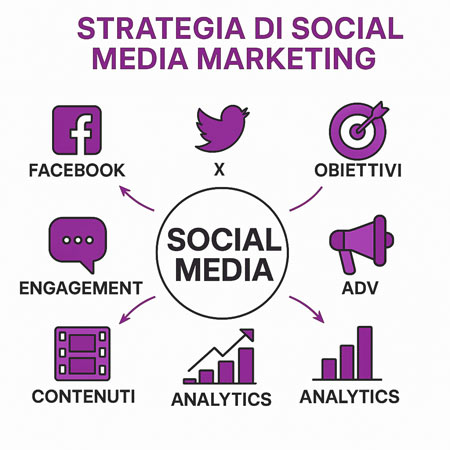
9. Implement a social media marketing strategy
To implement an effective social media marketing strategy, choose the most appropriate social channels based on the products and services you offer and your company’s positioning.
Each platform has a different audience and dynamics: LinkedIn for B2B, Instagram and Facebook for B2C, TikTok for a young target audience.
Publish consistent content, interact with the community, and take advantage of sponsored campaigns to expand your target audience and acquire new customers.
Practical actions you can take:
- Analyze which social networks are most used by your target audience.
- Define an editorial plan with original and engaging content.
- Use different formats: posts, videos, stories, direct, polls.
- Actively interact with followers, customers, and potential customers.
- Activate ADV campaigns to increase reach and generate leads.
Benefits to your business:
- Increased visibility and brand awareness.
- Increased engagement and interaction with the public.
- Generation of new contacts and sales opportunities.
- Ability to monitor campaign results in real time.
- Strengthening community and brand loyalty.
10. Leverage influencer marketing for niche markets.
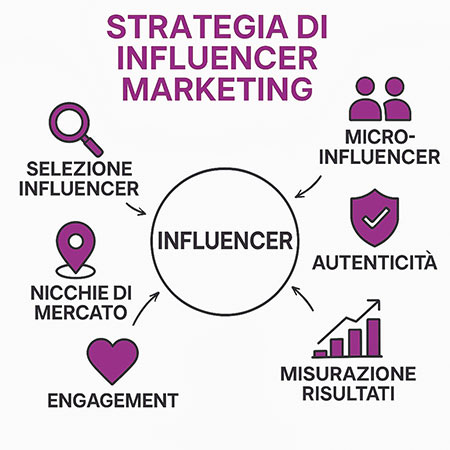
If your products target specific niches, consider influencer marketing campaigns with micro and small influencers.
These partnerships can enhance your online presence, generate trust and authenticity, reaching audience segments that are difficult to access with traditional channels and improving brand perception.
Practical actions you can take:
- Identify influencers relevant to your niche market.
- Assesses the engagement rate and quality of the influencer community.
- Propose collaborations for reviews, unboxing, tutorials or giveaways.
- Monitor results in terms of reach, engagement and leads generated.
- Build long-term relationships with influencers who share your brand values.
Benefits to your business:
- Access to vertical and highly profiled communities.
- Increased brand trust and credibility.
- Generation of authentic and viral content.
- Increased visibility at new market segments.
- Opportunity to test new products or services with a selected audience.
11. Carry out online ADV campaigns
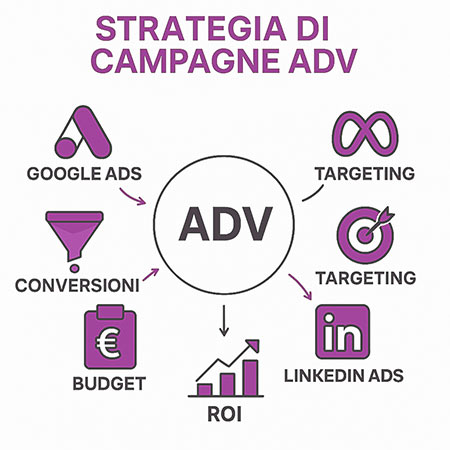
Le campagne di advertising (Google Ads, Meta Ads, LinkedIn Ads) sono essenziali per intercettare utenti in target e generare lead in tempi rapidi.
Set clear goals, segment audiences, and constantly monitor results to optimize the budget and maximize the return on investment.
Practical actions you can take:
- Choose the advertising platforms best suited to your target audience.
- Set SMART (Specific, Measurable, Achievable, Realistic, Timed) goals.
- Segment the audience by interests, behaviors, geographic area, age, etc.
- Create persuasive ads with clear call-to-actions.
- Monitor performance and optimize campaigns based on the data collected.
Benefits to your business:
- Rapid generation of leads and qualified contacts.
- Ability to quickly test new offerings or products.
- Total control over budget and campaign performance.
- Increased brand awareness and online visibility.
- Ability to measure ROI accurately and timely.
12. Integrate a nurturing and email marketing strategy.
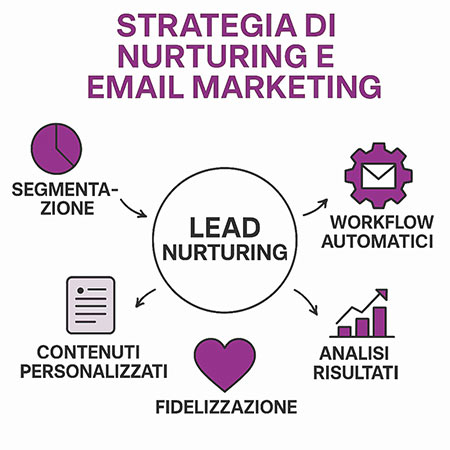
Nurturing is the process of turning leads into customers through personalized communications and valuable content.
Email marketing, if well segmented and automated, builds trust and loyalty, leading contacts to choose your company when they need it.
Practical actions you can take:
- Segment the contact list based on interests, behaviors and funnel stage.
- Create automated email workflows to walk the lead toward a purchase.
- Send periodic newsletters with useful content, offers and news.
- Customize messages according to users’ preferences and actions.
- Analyze open, click and conversion rates to optimize campaigns.
Benefits to your business:
- Increased trust and relationship with potential customers.
- Increased likelihood of turning leads into actual customers.
- Customer retention over time.
- Ability to promote new products or services in a targeted way.
- Reduced acquisition cost compared with other channels.
13. Territorial marketing activities for the sales network
If you have a sales network in the territory, plan specific marketing activities: events, open days, local partnerships, sponsorships and dedicated lead generation campaigns.
These actions increase local visibility and generate qualified leads for your salespeople.
Practical actions you can take:
- Organize corporate events, open days or workshops in the area.
- Participates in trade fairs, events and industry meetings.
- Activates partnerships with local entities (associations, institutions, other companies).
- Develop geolocated lead generation campaigns.
- Leverage local press and regional media to increase visibility.
Benefits to your business:
- Increased visibility and reputation at the local level.
- Generation of qualified leads for the sales network.
- Strengthening relationships with the local area and local communities.
- Opportunity to test new offerings in specific markets.
- Increased effectiveness of business actions through direct contact.
14. Marketing and ADV strategies for export
If your company exports products abroad, develop marketing strategies and ADV campaigns specific to each market, tailoring messages, channels and keywords to local characteristics.
Implement a multilingual SEO strategy to effectively preside over international SERPs.
Practical actions you can take:
- Analyze the most promising foreign markets through market research and SEO data.
- Adapt the site and content to the languages and cultures of target markets.
- Develop country-specific ADV campaigns (Google, Meta, LinkedIn, etc.).
- Collaborate with local partners for PR and link building activities.
- Monitors performance and optimizes strategies based on the results obtained.
Benefits to your business:
- Access to new markets and opportunities for international growth.
- Improved SEO ranking in SERPs of target countries.
- Increased sales and brand awareness abroad.
- Ability to diversify commercial risk.
- Strengthening global competitiveness.
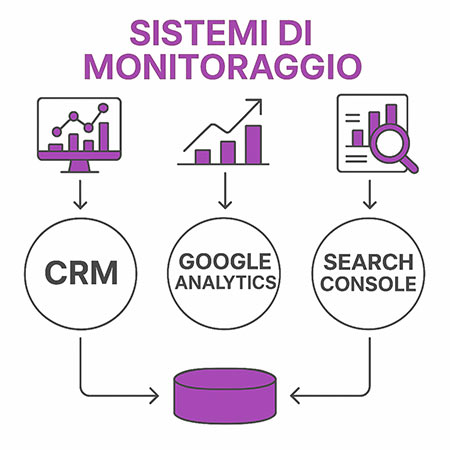
15. Implements monitoring systems linked to CRM, Google Analytics and Search Console.
Monitoring is the foundation of any growth strategy. Integrate CRM data with Google Analytics and Google Search Console to track every stage of the funnel, evaluate campaign performance, and make data-driven decisions.
Only in this way can you constantly optimize activities and respond in a timely manner to market changes.
Practical actions you can take:
- Connects enterprise CRM to Google Analytics and Search Console.
- Set up custom dashboards to monitor Marketing KPIs and goals.
- Analyze traffic, conversion and user behavior data.
- Create periodic reports to evaluate the effectiveness of the strategies employed.
- Use the data collected to optimize marketing campaigns and activities.
Benefits to your business:
- Greater control and transparency over business performance.
- Ability to make decisions based on actual data and not on impressions.
- Continuous optimization of marketing and business strategies.
- Better budget allocation based on results achieved.
- Increased ROI and business competitiveness.
Conclusion: the right strategy for attracting new customers starts with analysis and personalization
There is no one-size-fits-all recipe on how to find customers for your business.
Each company must choose and integrate the strategies best suited to its characteristics, target market and available budget.
The important thing is to always start with a thorough analysis, set SMART goals, and constantly monitor the results to optimize each investment.
If you want to find out how to find customers for your business effectively and sustainably, rely on marketing and communication professionals.
Factory Communication is by your side to help you build the right strategy for your needs and reach new growth milestones.
Finding customers for your business is a challenge that requires method, vision and adaptability.
Choose the right strategies, customize them and monitor the results-only then will you turn the market into a real opportunity for growth.
How to find customers for your business: Related articles
- How to promote a corporate event with ADVs
- Inbound marketing campaign: how it builds trust and customer loyalty
- Profitable market niches to become a Leader
- PPC campaigns: trends and strategies for you Entrepreneur
- WooCommerce eCommerce development: complete guide for entrepreneurs
- CRM Marketing: The key to entrepreneurial success
- International SEO agency