


Over the past 5 years, I have met several entrepreneurs who have asked our agency to implement a strategy to increase eCommerce sales.
10 years ago, having an e-commerce was an option.
Five years ago, having an online store in addition to the website meant riding a highly profitable wave.
For many companies today , having an e-commerce has become an imperative.
We thought we would create this guide to look in detail at what are the key elements to evaluate, to design and implement your e commerce site.
eCommerce definition
The term e-commerce, literally from English “electronic commerce,” denotes all online transactions of goods and services, between producer and consumer.
In the past, the term was used to define the electronic exchange of business documents, such as invoices, or purchase orders.
To date, the terms eCommerce, E-Commerce, E Commerce, can be used to define all transactions on the Web, which involve the purchase of goods and/or services.
To sell online, is it enough to create an eCommerce site?
Let’s start with an extremely provocative question.
Is it enough to create an eCommerce to sell online? The answer is no.
Creating our own virtual store, is only one of the steps we need to take in order to sell online.
In some respects, I dare say that the actual creation of the electronic store, is one of the last bricks to be laid.

The most important element, is the Strategy we want to, or “must”, adopt, to properly position the store on the web.
You may have noticed that I highlighted the word “we must.” Inasmuch as, the web, is overflowing with e-commerce.
There are online stores for all kinds of products or services. One is spoiled for choice. What to start with then?
What is the most important element we need to take into consideration when designing our strategy, and our eCommerce site? In the points below I will explain everything step by step.
With my E-Commerce, can I sell to everyone?

Theoretically, yes. Actually no! One of the most common mistakes is to believe that, with your e-commerce, you can sell to anyone, anywhere in the world.
If you have been told this, I can assure you it is not true. Unless you have the same Marketing Budget as Coca-Cola.
As I mentioned earlier, there are millions of eCommerce sites on the Web offering billions of products.
To such an extent that portals that compare different offers are gaining popularity.
Introducing Trivago.co.uk, Facile.co.uk, Trovaprezzi.co.uk etc.?
They are portals structured and organized to compare prices and show the one that is most convenient to the end user.
Amazon itself, the world’s largest e-commerce website, allows you to compare prices among different suppliers.
If you are getting discouraged, don’t worry. Now let’s see how to set up the strategy to make your eCommerce site.
Increase e commerce sales: the Strategy in 8 Steps
- Make a Business Plan
- Analyze what the Market requires
- Analyze your Competitors: SEO and Social positioning
- Design the logistics of your E-commerce
- Create your Buyer Personas > who you want to sell to.
- Create the best user experience
- Implement a CRM
- Define which channels and strategies to use to get the word out about your eCommerce site and reach your potential target audience
Before we look in detail at the 10 points, the basis of the strategy to create and launch your e-commerce, I would like to point out that they are sequential points.
Before proceeding to point 2, it is essential to untangle point 1. And so on. Otherwise, we risk creating an inefficient machine that is difficult to run.
Step 1. Make a Business Plan
It is essential to create a Business Plan that forecasts the growth of your eCommerce site in the medium/long term 6 /12/24 months.
Taking into consideration both the costs of development, maintenance and upgrading, and those related to Marketing and Communication strategies.
Let’s start with the main cost items that I need to provide for in the Business Plan, in order to launch my e-commerce into the market.

Here is your first check list:
- Implementation and development of Marketing and Communication strategies, Positioning, Competitor Analysis etc…
- Creation and implementation of SEO Strategy for e-commerce
- Organization and structuring of Logistics
- Structuring the online purchasing process
- Definition of payment system: Bank transfer, Credit cards etc.
- Organization of Customer Care
- Creation of the actual e-commerce
- Implementation of Advertising campaigns on the main social networks: Facebook, Instagram, Google ADS, YouTube etc, to launch your online store on the Market
- Implementation of an Email Marketing and, if possible, Marketing Automation strategy to increase customer and potential customer retention
- Creation and mailing of DEM(direct email marketing) to reach a large potential audience
- Implementation of a Content Marketing Strategy, to increase SEO ranking and deliver valuable content to users
- Design and implementation of a Social Media Strategy
- Implementation of press office activities
What I have reported are the main cost items.
As you can see, there are so many. And the “physical” implementation of e-commerce is just one of them.
You can also use this plan in case you want to make the Business Plan for opening a physical store.
Step 1.1 The Business Plan will evolve over time
You will be forced to update cost items over and over again, based on the information and analysis you will perform, which we will address in the following points. For example, the analysis of Competitors, Market, and the creation of Buyer Personas, are critical in making decisions:
- To whom to sell
- How to sell
- At what price to sell
Analysis of ADV Campaigns and Competitors’ SEO positioning, will lead you to increase the Budget established at the beginning. If competitors have a large budget for ADV Campaigns, you will need to adjust your Budget.
If they have implemented an SEO Strategy that ranks them in the top search engine results, you will need to increase your SEO Strategy.
Step 1.2 Launching an eCommerce site means creating a new company that sells through the Internet
“Cremonese capers, but how much does it cost me to launch my e-commerce on the Marketplace?”
I can answer that it is better safe than sorry. If you have been told that to sell online is enough:
- Creating an Instagram profile, or a Facebook page: I can tell you that this is not true. Or, at least, the success stories can be counted on the fingers of one hand;
- Register a domain and create an e-commerce: not true. There are millions of online stores. Why should Google show yours to users?
- Doing an ADV Campaign to reach the potential target audience: this statement is partially true. Again, unfortunately, there is a but in this case.
No matter what, it is essential to define:
- Who you want to sell to (Buyer Personas)
- How to Sell (Logistics)
- Customer care (how to help customers)
- What content to offer (User Experience)
ADV Campaigns will probably generate lots of visits to your new online commerce site , but you will have few conversions. That is, few sales.
What we have analyzed makes us realize that launching an e-commerce is like creating a new Company.
For this reason, it is essential that the Business Plan to launch our online store, is structured taking into consideration the development in the medium/long term: 6 /12/24 months.
Now that we have structured our Business Plan, we are ready to proceed with the next steps.
Step 2. Increase eCommerce sales: analyze what the Market requires
Are the products and services that you dispense, or that you have decided to sell with your new eCommerce site, in demand in the Market?
In order to secure the right profit margins, it is essential, first of all, to verify that what we want to sell is attractive to our potential customers.
Basically, that there is a potential market. There are several tools to perform the analysis, both free and paid. For example:
- With Google ADS‘ “Keyword Planning Tool,” you can analyze online searches made by users.
- With Google Trends, it is possible to analyze users’ topics of interest.
- With Semrush you can do keyword research, find out the traffic generated, and which competitors are using them.
Analysis can be simple if, with our e-commerce, we want to sell a type of product or service that is already on the market.
Research and analysis are definitely more complicated when we want to launch a new product or service in the market.

On the one hand, launching a new product is a strength.
We have an opportunity to create a new niche market by getting into the consumer’s head first.
That is, we have the opportunity to become the Leaders right away.
On the other hand, we must include in our Marketing and Communication Strategies, intensive outreach activities.
Every purchase we make corresponds to a specific need.
The consumer does not yet know our product, and does not know what need or problem it can solve.
We must, therefore, awaken this new need in the potential customer.
Item 3. Analyze Your Competitors: SEO and Social Positioning
To win in the Marketplace, it is essential to know your competitors.
- What is their business model?
- How do they sell the products?
- What kind of marginality are they able to achieve?
- How are their logistics organized?
- What are their strengths and weaknesses?
- How are they positioned online on the web and social channels?
- What SEO strategy have they adopted?
- Do they carry out Advertising Campaigns?
- Do they have customer care? How does it operate? What kind of assistance does it provide?
- What is the feedback from customers and users?
- Are the reviews and comments positive or not?

These are just some of the questions we need to ask ourselves when conducting our Competitor analysis.
If you have any doubts about this, visit the Online Competitor Analysis page.
Having analyzed the competitors, we are able to define how to structure our Business model.
Step 4. Increase online sales: design the logistics of your eCommerce site.
“Cremonesi, but what questions are you asking me? You worry about getting me to sell, then we’ll deliver the goods!”
This is one of the many responses I received when I asked the question, How did you organize logistics?
It is a key point in the implementation of an E-Commerce Strategy. And I explain why.
Amazon, it does not win because it is the largest e-commerce in the world, but because it has the best logistics.

If you have “Prime,” a good portion of products are delivered for free in one day.
This is Amazon’s great strength. This is why Amazon generates billions of euros in profits every year, in Europe alone.
And always for this reason, every year, more and more Companies, build their own online shop on Amazon.
Step 5. To Increase Sales e commerce decide who you want to sell to.
Can we sell everything to everyone? The answer is very simple: no
There is no Brand in the world that has the entirety of the Market, unless it has created its own niche market.

Not even Coca-cola, one of the most globally known brands, holds 100 percent of the Market share.
It is therefore crucial to decide to whom we want to sell.
This process is called the Construction of the Buyer Persona.
It is one of the strategic themes of my articles, not because it is fixed, but simply because it is one of the factors that make Marketing and Communication Strategies successful.
If you want to increase online sales, you need to create your own Buyer Personas!
The creation of Buyer Personas is based, also, on competitive analysis.
The watchword is to differentiate.
I have analyzed what the market is asking for, I have analyzed the positioning of my Competitors. Now I decide who to sell my products to. Deciding who to sell your products to is a key step. It allows us to:
- Correctly position our e commerce site on the market
- Setting the price of our goods and services
- Designing communication style
- Define the type of after-sales support to be implemented
- Decide which keywords, keywords, to use in our SEO Strategy, to position the eCommerce site on search engines
- Choose which social network to use to reach the target audience
Step 6. Create the best user experience
If we want to open an E Commerce, we start with two basic elements:
- The power is in the hands of the users
- Price is not always the factor that determines sales
The Internet has completely disrupted the buying process and online sales.
Before the advent of the Web, the company with the largest spending budgets won.
Through the mass media, TV, Radio and newspapers, the entrepreneur had the opportunity to reach the entire potential audience.
By adopting a cross-channel strategy, he had the opportunity to convince people to buy his product or service.
The consumer was basically passive.

Mind you, we were not stupid, given my age I was also part of that target audience. We simply did not have the tools to analyze, verify and compare what the Company was saying.
Today the user, before buying a product, reads the technical description, reviews, watches demonstration tutorials etc. He has all the information he needs to understand, really, what he is buying.
Now the second point comes into play: price is not always the factor that determines sales.
If you are designing your e-commerce, mark this point in bold, because it is one of the important elements of your Strategy. If I want to sell, I have to create a user experience, or what marketeers call a User Experience, that is absolutely positive.
Otherwise, if I base my entire strategy solely on price, there will always be someone willing to give a bigger discount than me.
It is therefore crucial:
- Craft our product and service descriptions so that they are clear, complete, and comprehensive
- Integrate technical explanations, video tutorials, user manuals, demonstration videos
- Provide a frequently asked questions (FAQ) section, where users can find answers to all their questions
- Integrate always-on customer support. Customer care can respond via both chat and telephone
- Provide a strategy on major social networks to intercept potentially interested users and provide as much useful information as possible
- If you want to greatly increase the User Experience of users, converting them into customers, it is essential to also integrate a Marketing Automation Strategy.
Based on the information requested by the user, through automation, additional information is sent that responds, precisely, to the user’s actual needs:
The right message, at the right time, to the right person.
This is the cornerstone concept of the Inbound Marketing.
Step 7. Implement a CRM
The term C.R.M. stands for Customer Relationship Management. That is, software that allows you to save, catalog and manage all the information that has passed between the Company and the user.
The greater the potential offered by CRM, the greater the opportunities to turn a user into a customer.
We at Factory Communication are HubSpot Agency Partners.
HubSpot is one of the most powerful CRMs in the world.
If you’ve never heard of HubSpot, that’s not a problem.
You have probably heard of Sales Funnel or Sales Pipeline.
These two terms were developed and disseminated worldwide, just by HubSpot.
With HubSpot, you can capture and catalog so much information about your users.
Suffice it to say that HubSpot integrates with all of a company’s main communication channels:
- Website
- Information request form
- Newsletter subscription form
- Live Chat and Chatbots featured on the site
- E-commerce module
- Facebook Messenger Live Chat and Chatbot
Not only that. If, for example, a user fills out a form on your eCommerce site, or subscribes to your newsletter, HubSpot keeps track of every page and product the user visits on your online store.
With this feature, you can accurately profile the user, and understand what they are really interested in.
With Marketing Automation (HubSpot represents one of the most powerful solutions in the world), we can send the right information based on the specific needs of users.
N.B. if you want to find out how to make the most of your newsletters, to increase sales and turnover I recommend you read this article: Want to increase your users’ loyalty? Send out your newsletters with HubSpot.
Step 8. Define which channels and strategies to use to increase e-commerce site sales
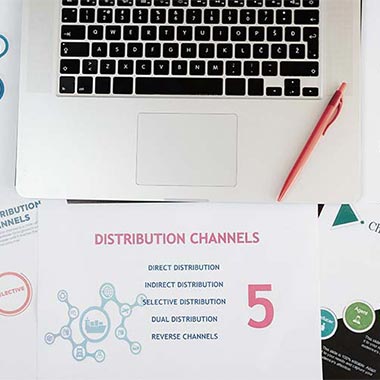
Unfortunately, as we have seen above, it is not enough to publish our own e-commerce to reach our potential customers.
It is essential to plan a Marketing and Communication strategy that takes into account the different factors (Target, Market, Product/Service etc..), to define which channels to use.
Let’s find out, together, which channels to use to reach your potential target audience
8.1 Social Channels
Let’s start with the first recurring question: do I need to have a presence on all social channels? The answer is no.
It depends on two factors: Target Audience and Budget.

The right social channel to use, depends on the goods and services we deliver, and the Buyer Personas we want to reach.
Facebook, Instagram TikTok, LinkedIn etc.. Each of these social networks has very specific targets, and addresses very specific user needs.
8.2 ADV Campaigns
Advertising Campaigns can be carried out through so many channels and in different ways.
As with Social strategy, it depends on the products/services we deliver, the target market, and the target audience we want to reach. I report a brief introduction.
8.2.1 PPC Campaigns with Google ADS
Google ADS is definitely one of the most effective tools to use.
ADS Search Campaigns, basically intercept users who are doing a specific search on Google. Our advertisement will appear based on the keywords used by the users. This tool is extremely effective as it intercepts a specific need.
8.2.2 PPC Campaigns with Facebook and Instagram ADS.
As with Google ADS, PPC(Pay per click) campaigns with Facebook and Instagram ADS, involve payment per user click.
Unlike Google, the ad appears in the Social feed, and is not tied to the search made by the user. They are basically Display Campaigns (you can also make them with Google ADS), and they intercept the user who sees the advertisement.
They definitely generate high traffic to the site but, compared to Google ADS Search Campaigns, on average have a much lower conversion rate.
It is also important to note that a Campaign on Facebook and Instagram has a significantly lower click cost than those on Google ADS.
8.2.3 PPC Campaigns with Linkedin
If your Target Audience is purely B2B, Linkedin may prove to be the correct channel as profiling is very high.
It is possible to select the recipient of our Campaign based on multiple factors, some of which are extremely strategic such as, for example, the role they play in the Company.
8.2.4 DEM Campaigns
The term DEM stands for Direct Email Marketing. It consists of sending a commercial communication to a large Database of users. DEM Campaigns are carried out by specialized companies, which hold ownership of the Database.
Small tip. Don’t be impressed by the numbers. Before implementing a maximum DEM Campaign of 1,000,000 contacts, always request a sample test of 100,000 contacts.
In deciding whether to use a DEM, or not, it is important to consider the average conversion rates, in relation to the marginality of the product or service we want to sell.
Let’s take an example, expressing some average market costs. Shipping a test DEM to 100,000 users costs, on average, 1,000 euros. Sending a massive DEM to 1,000,000 users costs, on average, 4,000 euros.
It is easy, however, to get caught up in enthusiasm. And it is important to keep two values in mind:
- opening rate: average 10%
- conversion rate: average 10%
Let’s see them turned into numbers. A DEM sent to 100,000 users, is opened by 10% of the recipients = 10,000 openings. The users who click the link in the DEM, are an additional 10%, so 1,000.
Basically, I sent 100,000 communications, to acquire 1,000 visitors to my e-commerce.
At this point we need to apply the conversion rate into customers, which, on average, we can estimate in 2/3% depending on the type of product/service, market, current promotion etc…
There are so many factors to consider. That is, we do not have to evaluate the purchase alone. It is generally worthwhile to prepare an Excel that includes:
- The % of repurchase (users who buy more than once)
- The conversion rate in the medium term if a user signed up for the newsletter
- The generation of new customers or potential customers, if we have coupon or affiliate programs planned
After you have entered and analyzed all this data in your Excel, you are able to decide whether to go ahead with sending the maximum DEM, or not.
This is a practice that “pisses off the user,” who decides to abandon the page immediately. As a result, the conversion rate will be very low.
8.3 SEO and Content Marketing Strategies.
I intentionally combined these two strategies because they are closely related. SEO Strategy depends on the quantity and quality of the content we publish on our E-commerce.
The effectiveness of the content marketing strategy depends on the SEO Strategy we designed to launch our eCommerce site:
- SEO Analysis of Competitors
- Analysis of Keywords used by users
- Creation of the Keywords Tree for use in content writing
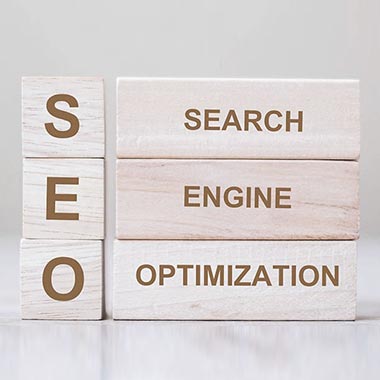
It is important to emphasize that the SEO Strategy should not only be made for the Blog content, but also and most importantly, for the ranking and indexing of products on the search engine.
If you want to learn more about this topic, I invite you to read this article: SEO product sheet
8.4 Link Building Strategies
Link building strategies consist of placing articles and content on third-party sites, portals and blogs that talk about our company, our products and services. Necessarily, the article must contain a link to our E-commerce.
It is essential that the sites, blogs and portals we have selected have excellent online ranking and Domain Authority. The benefits from the Link Building strategy are mainly 2:
- We can increase visits to our eCommerce site. Users who read the article, if intrigued, will click on the link in it, and thus arrive at our online store.
- They increase the SEO ranking of our site.
We can simplify this concept by saying: If so many people are talking about me, it means I am important.
So if we convert the discourse to online, if so many successful newspapers are talking about me, it means I am competent. This transfer of popularity occurs through the link in the article.
N.B. If you want to adopt this strategy, check the link embedded in the article. If it has the “NoFollow” attribute, it is a useless link, because this attribute tells search engines not to follow the link.
8.5 Offline Strategies
If you want to launch your online store, it does not mean that you should only plan online strategies. Activating Offline strategies such as TV, radio, or print campaigns depends on 3 factors:
- Budget we have available
- Type of Product or Service we want to sell through our e-commerce
- Market and Target Audience
If your product targets the masses and you want to reach a large (national) market, you probably need to contemplate, in your Marketing strategy, a budget for offline activities as well.
Do you want to outsource the Strategy to increase eCommerce sales?
Contact us now using the button at the foot of the page, or Book your free consultation.
I hope this guide has been helpful in clearing your mind on how to implement your E-Commerce Strategy.