



All companies want to increase sales.
No matter whether B2B or B2C, the ultimate goal of any business is always to increase revenue.
A company’s ability to convert a user into a customer is also seen on the digital playing field.
The website, promotional newsletters, and landing pages are the most exquisitely commercial means a business can deploy to acquire customers.
Learn how to increase sales through persuasive copy
Despite all the effort, it can happen to fail. The user doesn’t buy. He doesn’t become a customer.
Maybe he interacted with your content, left you a contact and information, even signed up for your newsletter.
Its transformation has stopped at the lead stage. But the chrysalis has not yet emerged at the cocoon.
There is something you can do to turn the tide: improve the copy on your strategy pages.
Words are powerful and are able, when used in the right way, to become a necessary and indispensable tool within your Marketing strategies.
Specifically, persuasive copy, also known as persuasive writing, has the power to direct a user’s mind toward a specific choice or action.
Through targeted and accurate use of certain words, you may be able to excite, interest and subconsciously guide your users toward the goal you have set for your business.
Are you wondering how this is possible?
I will explain this in detail shortly and also show you some techniques to practice in your communication.
In the meantime, however, I can anticipate that the secret to making your content as effective as possible is to know the principles behind Neuromarketing.
How to improve your website if it doesn’t sell
Have you already taken a look at our 15-point checklist to increase your website’s conversion rate?
If you’ve got all the technical aspects in place, if you think the content is in line with the audience, if the buying process is running smoothly, then the problem is in the copy.
Persuasive copy is a writing technique aimed at sales or customer conversion.
In other words, it has the function of convincing the user to buy, or to take other specific actions: sign up for a newsletter, contact you, try a tool, download an e-book or a good discount, etc.
Its weight in a site’s ability to convert is considerable.
Good copy declines in every word the brand’s unique value (or Unique Value Proposition).
Tell what benefit your products will give the target audience, what problem they will solve, how and why.

So if you want to increase customers and boost revenue, keep in mind 6 good tips for your copy:
- Communicate your unique value proposition (UVP)
- Talk about the benefits
- Win the trust
- Tell the user that he can achieve his goals
- Be patient and build a relationship over time
- Don’t lie.
Persuasive Copywriting: First define your Buyer Personas.
Any Marketing and Communication strategy can be more or less effective. The discriminating factor is one element: have you defined who you want to talk to?
In technical jargon, the question would be: have you defined who your Buyer Personas are?
This phase is really the cornerstone of the whole copywriting strategy and more generally of marketing strategies.
For this reason, on the Factory Communication blog you will find a lot of content dedicated to delving into this topic.
From an operational point of view, the article may be useful to you: Get pen and paper and create your buyer personas
Factory Communication’s philosophy starts from the premise that “you can’t sell everything to everyone, otherwise we don’t sell anything to anyone.”
Therefore, it is crucial to define, first of all, Buyer Personas. Be careful, however, not to confuse them with the target audience.
We’ll explain in a moment.
Does your company sell Handbags with a medium/high target price?
The target audience might be Women aged 30/50 who use social.
The Buyer Persona, on the other hand, represents in detail who your typical customer is:
- Social position
- Values
- Type of work
- Hobby
- What magazines he likes to read
- Etc.
Only after you have precisely defined your Buyer Persona can you define your communication style and, consequently, what and how to write.
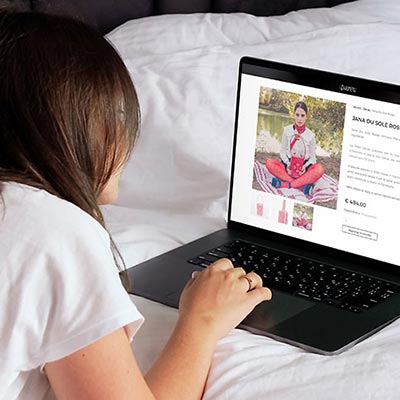
Persuasive copy: How to write a text
By applying the six tips, you’ll be able to write copy that converts.
At this point, we just need to talk to you clearly about each of the six good tips we mentioned earlier.
We want to give you some helpful hints for developing persuasive copy.
A small premise.
These tips are useful whether it is for a site(seo content marketing), a landing page, a direct email marketing campaign (dem campaign) or any other text that aims to convert the user.
Well, let’s come to us.
1. Communicate your unique value proposition (UVP).
If the user (or lead, if he or she has already interacted with your product by showing interest) does not understand the value of your proposition, he or she will not buy anything.
The first thing good persuasive copy does, therefore, is to express the UVP clearly.
Start with the prospect’s need and explain how you can help him or her.
Highlight the strengths of your products.
2. Talk about the benefits
Why should they choose you of all people? People have a right to an answer.
The answer lies in the benefits your product can give to the people who buy it.
Memo: Let’s not just talk about material benefits.
If I’m hungry, any brand of pasta will satiate me.
If I’m hungry, but I want to reduce my environmental footprint, I’m interested in how the grain is grown and imported.
If I’m hungry, but I espouse important ethical causes, I want to buy from a brand whose values I share.
So to talk about benefits, you have to know your audience very well.
3. Win trust
Even you wouldn’t buy anything from someone you don’t trust. Especially not if the exchange or first contact is not face-to-face but on the Web.
You have to work hard to win trust.
Curate every aspect of your online presence with reliable, up-to-date information.
Show your products in photos and add descriptions.
Tell about yourself and your team, show your geographic location.
Last but not least: share (real!) reviews from your customers.
4. Tell the user that they can achieve their goals.
How many times do we find ourselves unsure about achieving a goal, so we don’t even try.
It can happen to your user or lead: maybe he doesn’t believe that buying your product will really solve his problem.
Or maybe he feels he has a problem for which there is no solution in the marketplace.
Make him think again. Instill confidence by telling success stories of customers who were in the same situation as him and scored.
5. Be patient and build a relationship over time
Maybe your copy is perfect for your audience and you didn’t do anything wrong.
Why didn’t you close the sale then?
It simply may not be the right time for the lead to buy.
Maybe it just needs time. In that case, try a nurturing strategy to stay in touch with your lead and increase interest.
Newsletters and email marketing can be winning tactics.
6. Don’t lie
This is our last piece of advice. We left it for last, but it should probably be first.
Today it is unthinkable to do marketing by lying. Persuasive copy is still honest copy.
So tell the truth: Talk only about merits you have, post real reviews, boast benefits you can actually produce.
On the one hand there is the ethical issue, on the other hand there is a fact: today it is easy to discover a hoax.
Web users know their stuff. They are accustomed to advertisements and attempts to sell a product and they have a power in their hands: sharing.
It only takes a few negative reviews to ruin a business.
On the contrary, honestly communicating your unique value proposition, values and mission will make users appreciate you.
Relationship, today, is the basis of marketing and is what allows you to increase sales.
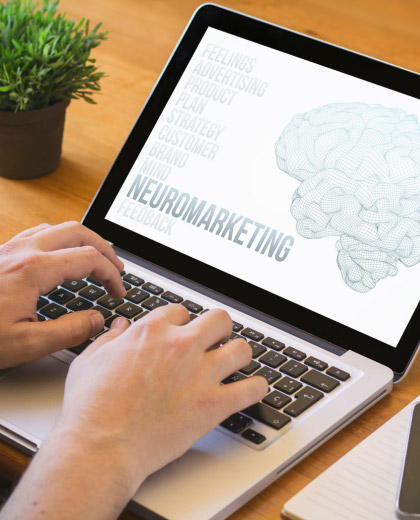
Persuasive Copy and Neuromarketing: the combination to succeed
As we have just mentioned, through persuasive copywriting it is possible to succeed in “getting people on our side” that is, to convince them through appealing and interesting texts that your company is the right one.
Obviously, we are not talking about deception but about achieving as sincere and engaging communication as possible that induces in the user a projection of himself at the end of the cognitive process.
To fully understand and be able to make the best use of persuasive copywriting, we first need to know the two aspects that underlie persuasive communication: copywriting and Neuromarketing.
The first, is exclusively about writing interesting text and content that has a purpose and goals that relate to marketing.
The second, on the other hand, analyzes how certain choices are triggered in the user’s mind and what are the levers that unconsciously lead them to act and consequently, to trust your company. Once this concept is clear, you will understand how to structure a strategy that can increase sales through copywriting.
But let’s take one step at a time and figure out how to write irresistible texts that are able to engage a prospective consumer.
I’ll tell you right now, there are no magic formulas or specific words that can hypnotize the people to whom you address your content. It is not magic but a copywriter’s ability to trigger desire through words and persuasive techniques that stimulate the user’s mind.
What are you waiting for? Continue reading if you want to learn about the techniques I just mentioned!
Persuasive copy: the 6 principles of persuasion
Emotion is the fuel for many marketing strategies (one example is emotional marketing) as it is a very powerful lever that can engage and stimulate people’s minds through unconscious reactions.
Psychologist Robert Cialdini with his immense work was able to analyze human mental patterns in response to different persuasive stimuli.
The result of this in-depth analysis led Cialdini to identify the 6 principles of persuasion that can appeal to the human mind. Principles that, when used flawlessly within texts, can make your writing persuasive, effective and successful.
It is very important to emphasize, however, that these techniques should be used in an ethical and non-manipulative manner so that the trust the user will place in your company or product is as lasting and sincere as possible.
But let’s see what techniques are able to maximize your content in a way that will eventually lead you to maximize your profits as well.
1. Principle of commitment and consistency
Human nature is inclined to remain true and consistent with itself. This means that whenever we take a position or have an opinion about any subject, it is almost impossible to change our minds.
The same thing happens when we decide to rely on a brand, we tend to defend a particular product or company simply because we are safeguarding our choice.
In persuasive copywriting, this technique could be adopted through questions to ask the user.
From these questions that the user commits to answering, the principle of commitment and consistency is triggered in which he or she feels an obligation to continue in the process, committing more and more to the point of conversion.
2. Principle of sympathy
Likeability, as well as liking and empathy, are very powerful psychological levers. Use these levers in your copy by posing as a friend and putting yourself in his or her shoes.
Show him that you understand his problems and only at the end offer a solution. In this way you will appear trustworthy and sincere in his eyes.

3. Social proof
Have you ever stopped to think how much, some times, we are influenced by the choices of others?
Well often, even if we do not realize it we make choices only because others in turn have made that decision.
Let me give you an example: you’re out and about and you ‘re looking for a restaurant where you can get something to eat, you will almost certainly opt for the restaurant that has the most clientele in it, subconsciously making the association “lots of people-great food quality.”
Even if you do not actually know the quality, you will be referred to that restaurant by strangers who have chosen it before you.
In persuasive copywriting you can leverage this through feedback, reviews and testimonials to emphasize your trustworthiness in the eyes of the user.
4. Principle of reciprocity
How many times have you walked into a perfumery and at the time of purchase the saleswoman offered you free samples? This ploy fuels a sense of indebtedness to the company that will lead you to return and rely on the same brand again in the future to “pay it back.”
It’s called the reciprocity principle, and it’s a really powerful persuasion principle. Offer coupons, discounts or free products and the user will feel obligated to reciprocate this courtesy.
5. Principle of authority
We are naturally predisposed to respect authority and trust what we are told, proposed by those we consider authoritative according to the principles of fame, prestige or experience.
Through writing you can nurture this authority through citations, authoritative sources, data, statistics and stories from those who have come in contact with your company.
6. Principle of scarcity
Inserting within the copy of a product, phrases that suggest limited availability to the customer make the product even more desirable in the eyes of the user and, more importantly, suggest a higher quality of the product.
This happens according to the principle of scarcity elaborated by Cialdini, in that we are naturally more prone to conversion when faced with a limited and unrepeatable supply.
Therefore, choose words such as unrepeatable, limited, only two left, and so on to increase scarcity and consequently the desire for a unique opportunity.
In conclusion, persuasive writing can capture users’ attention with unmissable and fascinating content while conveying reliability and motivation.
One of the things you must always keep in mind, however, is your target audience. Writing content aimed at your target audience is critical to fully dissect their search intent and offer them the right solution at the right time.
If you are able to make it clear how much you really understand their thinking or their situation you will be able to win their trust and the results will not be long in coming.
Want to learn more about persuasive copy and content marketing?
Read these articles: