


Imagine a salesperson working for you seven days a week, around the clock, with no vacation and no fixed salary.
It answers your prospects’ questions about your products and services at the exact moment they ask them, always comes up with your best profile, and brings already interested people directly to your door.
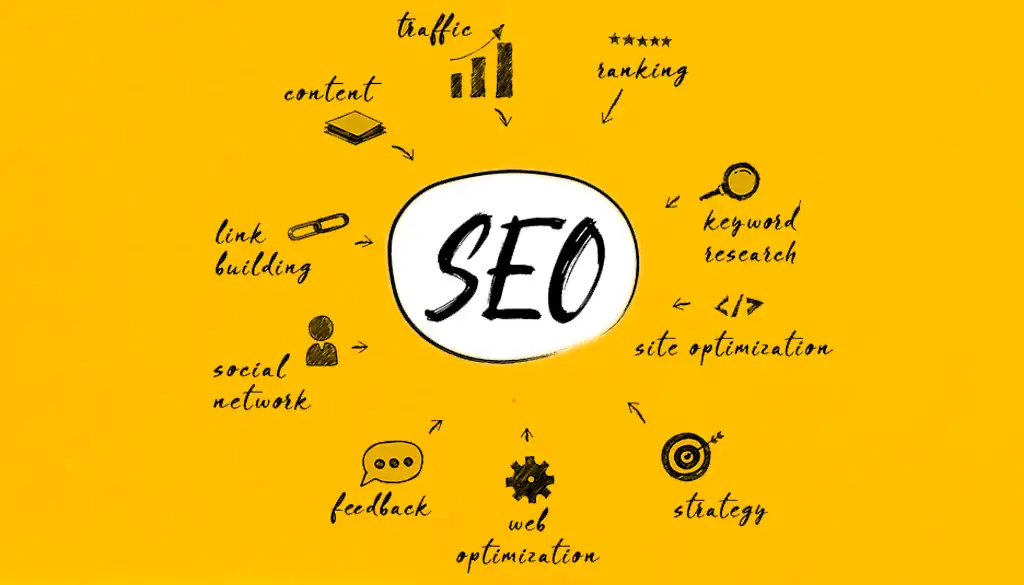
This business exists. It is called an SEO strategy and it allows you to make your website search engine optimized.
Yet, most Italian entrepreneurs still consider it an obscure technical expense, delegated completely to the agency on duty without understanding its real value. The result? Budgets spent without direction, results difficult to measure, expectations dashed.
SEO Consultancy – Search Engine Optimization – is the discipline that enables your site to be found by people searching for exactly what you offer.
Built with method and strategic vision, it becomes one of the most powerful business assets at your disposal.
In this article you will find the 10 key things every business owner should know about SEO strategy: first to understand it, then to actually use it.
Part one: understanding SEO strategy
1. SEO is an investment, not an expense
The first thing to understand is the economic nature of SEO. Unlike paid advertising – where you stop paying and you stop existing – SEO builds a digital asset that accumulates over time.
Think about the difference between renting a store and buying one. With Google Ads you are renting visibility: every month you pay, every month you are featured. With an effective SEO strategy you’re buying a position: you build it with effort, yet once it’s gained it works for you on an ongoing basis.
A hotel in Florence that scales the first page of Google for “boutique hotel centro storico Florence” receives organic booking requests every day, without paying for every single click. This is the compounding performance of SEO.
2. SEO strategy meaning: much more than technical optimization
When talking about SEO strategy, many people immediately think of code, HTML tags, and site speed. These elements matter, however, they are only part of the picture.
A comprehensive SEO strategy has three levels:
- Technical SEO – the site must be accessible, fast, and readable by search engines. It is the foundation of the building.
- On-page SEO – content must answer your customers’ real questions, in the words they actually use. It is the furniture that makes the building habitable.
- Off-page SEO – your site’s reputation in the eyes of Google, built through links from other authoritative sites and the general perception of your brand online. It is digital word of mouth.
A knowledgeable entrepreneur knows how to distinguish between these three levels and can dialogue with his or her consultant without relying blindly.
3. Google is not the only search engine (but remains the main one)
In Italy, Google holds more than 90% of all searches. This means that optimizing for Google is the top priority.
However, SEO strategies today must also consider other scenarios: Bing (used by default by Windows devices and AI systems such as Copilot), YouTube (the world’s second largest search engine by search volume), and internal marketplace engines such as Amazon for those selling products.
In the fashion and luxury industry, for example, Pinterest has become a visual search engine with a direct influence on purchasing decisions. A modern SEO strategy takes this expanded ecosystem into account.
4. Keywords are not words: they are market questions
Keywords-keywords-are at the heart of any SEO strategy. However, the way many entrepreneurs interpret them is limiting: they think of single, generic terms, such as “Milan restaurant” or “financial consulting.”
The reality is more nuanced and much more interesting. The keywords reveal the intention of the searcher: there are those who are looking for information (“how to open a business bank account”), those who are considering options (“best SME financial advisors”), and those who are ready to act (“financial advisor Milan quote”).
A wine shop that intercepts a search intent “organic wine corporate gift delivery tomorrow” is talking to a customer with a specific, urgent, high-value need. This is the power of long-tail keywords: less organic traffic, much higher conversions.
5. AI has changed the rules of the SEO game.
This is the point that many consultants still underestimate. Artificial intelligence has profoundly transformed the way Google evaluates and ranks content.
Google uses systems such as BERT and MUM to understand the meaning of searches semantically, no longer just syntactically.
This means that an article written to really answer a question-with depth, concrete examples and authority-outperforms a text full of repeated keywords but lacking substance.
In parallel, tools such as ChatGPT and Google SGE (Search Generative Experience) are changing the way people search for information: increasingly they are getting direct answers without clicking on any sites.
For a company, this means that the quality and authority of content has become even more crucial.
The framework is called. E-E-A-T: Experience, Expertise, Authoritativeness, Trustworthiness..
Google rewards those who demonstrate real experience, recognizable expertise, industry authority, and perceived trustworthiness.
For an SME in the financial or legal sector, creating content that meets these criteria is now the difference between existing online and being invisible.
Part two: using SEO strategy
6. Before optimizing, define business goals
One of the most common mistakes is to start an SEO project without having clear underlying business goals. SEO is a tool: you have to give the direction.
Do you want to increase your hotel’s direct bookings while reducing dependence on Booking.com? Do you want to generate qualified leads for your consulting firm? Do you want to bring local traffic to your restaurant during off-season times? Each of these goals requires a different SEO strategy, with different keywords, different content, and different success metrics.
A hotel tourism entrepreneur who defines as a goal “to increase direct bookings by 30 percent in 12 months” will give his SEO consultant precise direction. Someone who simply asks “I want to go to Google” will get vague results because the request itself is vague.
7. Content is your most enduring SEO asset
If the technical structure of the site is the foundation, the content is what you build on top of it. And unlike an advertising campaign that lasts the time of the budget, well-crafted content continues to generate traffic for years.
An article answering “how to choose a wine for a wedding,” carefully written by a wine specialist, may receive organic visits every week for three, five, ten years.
A video guide on a fashion brand’s YouTube channel on “how to match colors in fall” brings ongoing visibility at no additional cost.
The SEO content strategy for an SME should start with a simple question: what are the 20 questions my customers ask me most often? Those questions are exactly the content you should publish.
8. Local SEO is the hidden treasure of SMEs
If your company operates in a specific territory-a city, a province, a region-local SEO is probably the most underestimated opportunity you have.
Google My Business (now Google Business Profile) is a free tool that, if carefully optimized, brings your name directly to the map and local search results pages whenever someone nearby searches for what you offer.
A Crema restaurant that appears among the first results for “typical Crema restaurant” intercepts customers with immediate purchase intent.
Online reviews, updated photos, correct times, and responses to comments are all signals that Google interprets to decide who to give visibility to. These are actions that cost time, not money.
9. Measure what matters, not what is easy to measure
One of the trickiest aspects of managing an SEO strategy is figuring out which metrics to look at. Often agencies present reports full of numbers that look impressive but say nothing about the actual business.
The metrics that really matter to an entrepreneur are::
- How many organic visitors come to the site (and whether they grow over time)
- How many of these visits turn into contacts, inquiries, or sales
- For which keywords the site ranks relative to direct competitors.
Tools such as Google Search Console – free and accessible to anyone – allow you to see exactly what keywords bring traffic to your website.
It is the dashboard that every entrepreneur should learn to read, at least in its main functions.
10. SEO requires time, consistency and a long-term vision
The last thing to know is also the most important, and often the least appreciated: SEO is not a sprint, it is a marathon.
The significant results of a well-constructed SEO strategy typically come between 6 and 12 months. This does not mean waiting without doing anything: it means methodically building, month after month, a digital authority that competitors struggle to replicate quickly.
A brand in the food & beverage industry that consistently publishes quality content, optimizes its local presence, and builds relationships with other authoritative sites in the industry is in a competitive position within a year that an advertising campaign alone could never have secured.
SEO rewards those who have the patience to build something solid. And it is exactly the right philosophy for any entrepreneur with a medium- to long-term vision.
What to do now
If you have read this far, you already have an understanding of SEO strategy that many entrepreneurs do not achieve even after years of investment.
The next step is to figure out where your company stands today:
- What is your current visibility?
- What keywords are you already found for?
- What are your competitors doing that you are not yet doing?
SEO strategies: related articles
Are you interested in understanding SEO strategies further, also read these articles:
- What are SEO, GEO, AEO? Why they are important for SMEs
- SEO for Lawyers: the complete guide 2026
- How AI crawlers are changing the rules of the game for online sellers
- SEO and artificial intelligence: how are they connected?
- Differences between topic cluster and pillar page SEO: a guide for Companies
- Average Position Google Search Console (GSC)
- European Accessibility Act: a guide for entrepreneurs and businesses