




In this article we analyze a very important aspect of your eCommerce ranking: product tab SEO!
That SEO for ecommerce and websites is indispensable, we’ve said so in every way on the Factory Communication blog.
Our agency specializes in WooCommerce SEO implementation and optimization, that is, all E-commerce made with a WordPress site.
An e-commerce without search engine optimization is like a sky without stars: you don’t look at it, you don’t use it to navigate, you don’t get your bearings.
Instead, we want to be found by our potential customers. We want to walk them all the way to adding our product to their shopping cart and all the way to making a purchase.
And because no, we are not satisfied, we want them to stay with us afterwards with a good retention strategy.
Here it is: if we dream big, we need to start with solid SEO optimization of product sheets.
They need to be readable for Google and sexy for the potential buyer.
With a little balance between keywords and persuasion, we can make really well-done e-commerce pages.
Product tab SEO: 12 useful tips to improve your eCommerce ranking
How important can having good search engine rankings be for your e-commerce business? Let me tell you: a lot.
SEO allows you to climb the SERP and gain more visibility among search results.
In other words, it helps you attract new customers and potential buyers and, in fact, increase sales by bringing more organic traffic to your eCommerce site.
Conversely, an unoptimized site is one that Google cannot index.
The user searching for a product you also sell will probably never find you.
Or they will find you too many pages further down the page, after many competitors.
Here, doing things without SEO doesn’t get a spider out of the hole.
Better instead to devote a little extra attention and optimize your e-commerce product sheets.

SEO for e-commerce: how to optimize your product pages
In order for our product pages to be properly indexed by Google, it is essential to take care of the SEO of each product page on our website.
The construction of the product name, its descriptions, etc which we will see in the next points, depend on the SEO strategy we have made for the correct positioning of the Brand and its products in the Market.
SEO Strategy allows us to build the Keyword Tree, that is, which keywords to use to write content for our website.
The Keywords Tree is constructed based on 3 basic elements:
- Analysis of search engine traffic to understand which Keywords are used by users to search for a product similar to ours;
- SEO analysis of Competitors to understand how they are positioned on the web and, consequently, what keywords to use to position our site before theirs;
- Building the Buyer Persona to understand the communication style we need to use to build the right trusting relationship with our ideal Target.
SEO for e-commerce: some basic concepts
It is important to remember that a product page is in effect a page on your website.
This may seem like a trite and obvious statement, but I assure you it is not so.
We often consider the home, as the landing point for users doing a Google search.
Fortunately, exactly the opposite happens. That is, if the pages of the website have a proper SEO strategy, they are individually indexed by Google. So a user comes directly to the product page.
For this reason it must be immediately clear, exhaustive and intercept the curiosity of our potential Customer: the famous Prospect who, through subsequent Marketing activities we can then transform into Lead and later into Customer (client).
Consequently, while it is important to perform thorough SEO optimization of our content pages, it is equally crucial to take care of the SEO aspect of our product pages.

SEO for e-commerce: 12 tips from Factory Communication
To optimize your e-commerce product pages for search engines, you need to take care of a few key aspects.
It will take some energy and time, but as we now know, SEO is all you need. Or at least it’s one of the things you need most for your e-commerce marketing strategy.
Don’t worry. If you need to elaborate on any topic, write your questions in the comments and our team can provide you with all the information you need.
And now we begin.
Here are the following points to focus on.
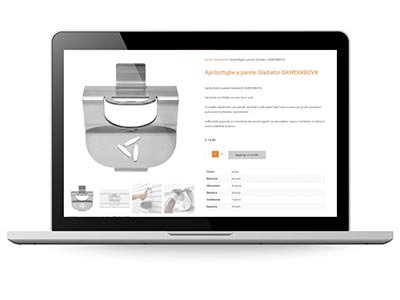
Step 1: Add a comprehensive title
The title of your product is most important, because it incentivizes the user to open the page related to the specific product, and why not, continue browsing your website.
The title should be clear and comprehensive and contain keywords useful for indexing.
For example, if our product is part of a dress collection to simply write “Sleeveless long dress” is reductive.
We have provided Google with only a portion of the information useful for indexing the product.
Suppose the Fashion Brand offering the dress is called “Fashion Girl” and the dress is made of silk with lace embroidery.
We could call our product:
“Silk sleeveless long dress with lace embroidery by Fashion Girl”
What we have reported is a simple example.
As mentioned in the introduction of the article, the construction of the product name and its descriptions, which we will see in the following points, depend on the SEO strategy we have implemented for the proper positioning of the Brand and its products in the Market.
Let us always remember to step into the shoes of our Buyer Persona in order to use the most appropriate keywords for our business.
Step 2: Attention to detail in the description
The product description is often left in the background. However, this content is also very important, consequently it is necessary to optimize it from an SEO perspective to make it findable to users.
Absolutely to be avoided is “copy and paste.” In fact, duplicate content is an indication of low quality for Google. As a result, our content could lead to a negative rating of our site.
A perfect strategy of seo copywriting involves the creation of unique and personalized content.
So let’s not forget that our product descriptions must also be valuable content!
As the great Seth Godin says, “Marketing is no longer about the things you do, but the stories you tell .”
Step 3: Choose keywords carefully
Identify the keywords most appropriate to include in your texts. They must intercept Google searches of users interested in products similar to yours.
You can use keyword research tools such as SemRush, balancing between search volume and the difficulty of competing with other pages using the same key.
Memo: identify the right keys for each product tab.
Step 4: Add an Inviting Meta Description
Often the meta descriptions (Tag Title and the Meta description) are based on generic technical information, made by repurposing “snippets” of content or product description.
In order for our product to be interesting, we need to make a catchy meta description, which will generate such an interest in our ideal potential customer that they will click on our product page.
Of course, meta descriptions must also be unique, for each individual product. As with the descriptions. So absolutely avoid duplicate content.
The Title Tag and Meta description. The title that Google reads and previews and the short description are key elements for SEO.
Always include the keyword in the Title Tag (50/60 characters) and description (about 150 characters).
Think about the user, too: this “metadata” goes right into thepreview among the search results and prompts the user to click and visit your page.
Step 5: Choose a simple and clear URL
It is strategic to use a URL that is easily recognized by users, for each product on our site.
Url should be short and clear and possibly contain your main product keyword.
Step 6: Use high-quality, well-optimized images
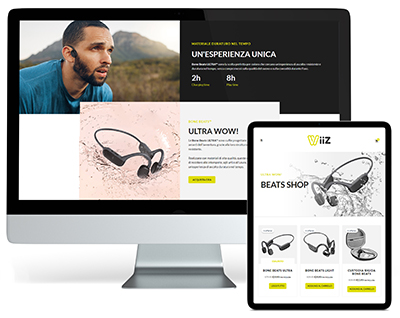
21.5% of users use Google Images for their web searches.
This data helps us better understand how important, and critical, SEO optimization of our product images is.
If you use images to present your products or services, use good quality formats and optimize metadata.
Enter the keyword in the Alt Text, but remember that this string of text is first to explain what is shown in the image.
Step 7: seo product sheets and internal link building
The SEO handbook wants that for each product page on your e-commerce you insert internal links for example to related products.
Linking pages together (internal link building) is very useful because it can give the user an alternative to the product they are viewing-this increases the likelihood of sales.
In addition, link building is essential to make life easier for search engines.
The more internal links we have, the more likely our eCommerce products will be indexed.
Step 8: Speed of opening your eCommerce
The loading speed of each individual page of the site is an important element of the user experience.
In addition, Google mentions it among the vital, UX-related technical parameters that affect ranking.
From a technical standpoint, then, you have plenty of good reasons to make sure that the product sheet loads right away and works great.
From a sales perspective, it is crucial to keep in mind that a user “has no time to waste.”
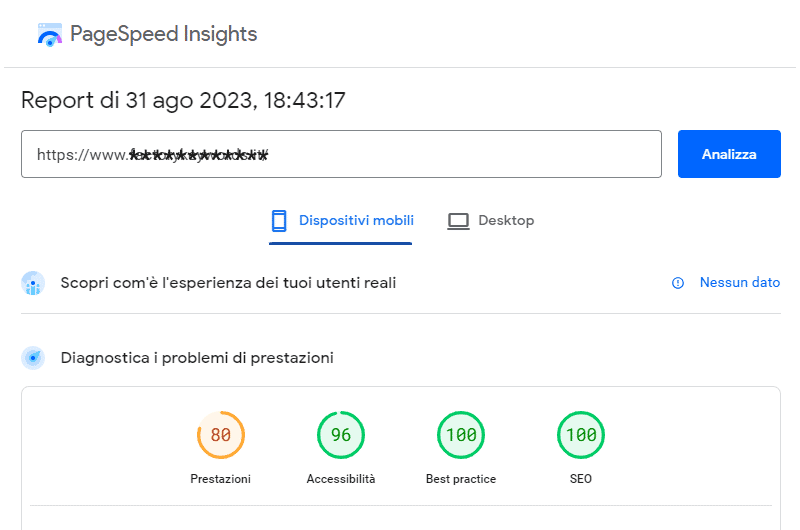
If our e-commerce is slow and opening a page takes more than 3 to 4 seconds, the user will leave and we will have lost a sale, perhaps to a competitor. Disaster!
Run an audit of your e-commerce pages now using Google’s official testing tool: Page Speed Insight
Step 9: seo product sheets and Breadcrumbs
Another technical trick that rewards you on the SEO side.
Breadcrumb navigation is the one that allows the user to always have the path taken in front of his eyes, to know at any time in which product tab he is in, in which category, etc.
Step 10: Use structured data from Schema.org.
Google structured data is critical to any self-respecting SEO strategy. And this also applies to our product page SEO.
Thanks to Schema we will be able to add structured data (add schema markup), that is, send information about our product in a clear and precise way.
Adding Schema markup helps search engines such as Google, which does not have to interpret what it finds in our product’s tab, because each element is highlighted with a specific TAG.
There is a specific Product Schema that helps you get featured search results: so-called “multimedia results.”
Knowing the price in advance, and checking reviews in one go, is definitely something not to be overlooked if our goal is to improve the Customer Experience of our site.
If you have used WordPress is WooCommerce Store to build your website you can learn more about this topic by reading this article Schema.org what it is and why it is critical for SEO
If you want to do further research on the web, you can use one of these keywords:
- woocommerce org schema
- wordpress org schema
- woocommerce schema org
- wordpress schema org
Step 11: Check your product page
Checking data generated by Google Analytics, Search Console or Semrush, can give you a lot of information about how users find your site, and interact with your pages.
This information is very important, because it can help you make changes to further improve the performance of your website.
Although it is essential to keep an eye on your product pages, there is another way to ensure that your page is high performing: User Testing.
The Baymard Institute found that “an average site has 24 structural problems related to user experience on product pages, and only 18 percent of the 60 top grossing e-commerce sites in the United States and Europe have “acceptable” product page UX performance.
82% of sites with benchmarks, have “poor” or “mediocre” performance. And no site offers “state-of-the-art” product page UX performance.
There are a lot of problems to check, from terrible use of images, including broken galleries, to poor handling of sold-out products.
It also appears that many sites do not provide accurate shipping and return information, which leads to trust issues with the Brand.
As you compare your product pages (products pages) with external user research, don’t forget to do your user-side testing!
Doing proper research will give you surprising results that you probably would not have found on your own.
Step 12: Add real reviews
According to Pew Research, more than 80 percent of consumers check reviews before buying anything from an online store.
So it is important to try to get as many reviews from users as possible. Obviously more positive than negative.
Click here to find out How to get good reviews.
With Review and Rating Schema, you can collect all the reviews about your Company and easily show them to your target audience.
Factory Communication: experts in SEO WooCommerce
Factory Communication is a communications agency in Lombardy with strong expertise in SEO and e-commerce site creation and promotion. Factory’s team can help you fit all the pieces of digital marketing into one strategy, from SEO to brand experience, to attract new customers and increase sales of your services and products.
To learn more, contact Factory Communication.
Are you interested in learning more about SEO?
Read these articles:
- SEO Consulting for WooCommerce
- How to use top SEO Strategy for your web marketing
- SEO Strategy: article dedicated to Entrepreneurs
- Four reasons to do SEO (well) for your business
- How to improve the mobile SEO of the website
- Abandoned WooCommerce carts: Which Plugins to best manage them!
- WooCommerce vs Shopify with a look at SEO