Home » Pay-Per-Click Campaigns: Multi-Channel PPC Management
Paid campaigns monitored daily, with the cost per lead always under control.
Anyone who has already invested in paid campaigns knows the feeling: clicks come in, the budget goes down, and when asked, “How many customers did that bring in?” the answer remains vague.
The pay-per-click model is powerful precisely because you only pay for attention when someone clicks.
This very immediacy, however, rewards those who stay on top of the campaign every day and makes things difficult for those who let it run its course on its own.
This page explains how we manage pay-per-click campaigns, what metrics we track, and in what order, so you can quickly determine if this is the kind of work you’re looking for.
Pay-per-click campaigns are the fastest way to reach the right people, and you only pay when someone clicks on your ad: every euro represents one person who chose to visit your site.
This model works across all major platforms. Google targets people who are already searching, while social media channels reach people based on their interests and behaviors.
The choice of channel depends on the objective, and often the best strategy combines more than one.
The difference between a campaign that brings in customers and one that burns through the budget lies in day-to-day management: targeting the right audience, ensuring ads align with the landing page, and constantly tracking which clicks turn into leads.
At Factory Communication, we manage pay-per-click campaigns for small and medium-sized businesses, setting a clear objective at the outset and ensuring that the cost per lead is transparent at all times.
A pay-per-click campaign may show an increase in clicks and a decrease in cost per click, and appear to be performing well.
These numbers describe the campaign, not the business. The important question is a different one: how many of those clicks turned into an inquiry, a call, or an actual lead?
Advertising platforms spend their budgets with or without supervision.
Those who monitor them daily pause keywords that don’t convert, shift the budget toward what does, and optimize underperforming ads.
Those who let them go also pay for their mistakes.
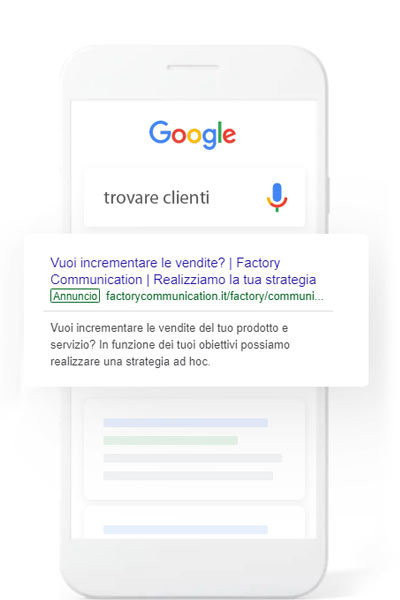
Pay-per-click campaigns are a form of online advertising in which the advertiser pays only when a user clicks on the ad. On platforms like Google Ads, you select keywords, set a budget, and appear among the search results, paying based on the actual number of clicks received.
We define objectives, target audiences, and keywords, and build the campaign structure. Before spending any money, we decide what “it worked” will mean.
We write the ads and ensure they’re consistent with the landing page, because a well-received click is a click that’s more likely to turn into a lead.
We consistently analyze the data, shift the budget toward what’s producing results, and adjust what’s underperforming. It’s this daily work that distinguishes a well-managed campaign from one that’s been neglected.
We make the cost per contact and the return on investment clear, with reports that are easy to understand even for those who aren’t involved in marketing.
Pay-per-click campaigns are a form of online advertising in which the advertiser pays only when a user clicks on the ad. On platforms like Google Ads, you select keywords, set a budget, and appear among the search results, paying based on the actual number of clicks received.
This is the channel for informed search: it reaches people who are already looking for what you offer.
It includes the search network, display campaigns on partner websites and apps, e-commerce shopping, remarketing to people who have already visited the site, and local campaigns for businesses in the area.
This is the channel with the highest search volume, and for many companies, it’s the starting point.
It reaches people based on their interests, behaviors, and characteristics as they scroll through social media.
It’s the perfect channel for reaching people who aren’t yet looking for your product, with visual formats that work well for telling a brand’s story.
The Professional Audience Channel: It allows you to reach people by role, industry, and company. It’s the right choice for those targeting other businesses or specific professionals.
It reaches people when they’re looking for inspiration—from home decor to fashion to food. It’s a channel well-suited for visual industries and planned purchases.
The short-form video channel, ideal for reaching a wide audience with immediate messaging and building brand awareness through the platform’s native formats.
Local campaigns based on seasonality, with budgets focused on the times when theaters are full.
Campaigns designed to increase direct bookings and reduce reliance on booking platforms. Internal link: Tourism & Hospitality Industry Hub
Shopping and display campaigns that reinforce the brand’s perceived value.
Campaigns focused on qualified leads, in compliance with the profession’s ethical guidelines.
“Pay-per-click” refers to an advertising model in which you pay only when a user clicks on an ad. It is the model behind Google Ads: you choose your audience, set a budget, and pay based on the number of clicks you receive.
You choose the keywords you want to appear for, write your ads, and set a daily budget. When someone searches for those terms, your ad participates in an instant auction that determines its position. You pay per click, and the data collected guides subsequent adjustments.
The cost consists of the cost per click—which depends on the level of competition in the industry and the chosen keywords—and the management fees. Google gives you flexibility regarding your budget. We’ll work together to determine both of these components after an initial meeting, once the objective is clear.
Search campaigns show text ads to people searching for a keyword: they address an existing query. Display campaigns show image ads on partner websites and apps and are designed to build brand awareness. Many effective strategies combine the two, with distinct objectives.
Search network campaigns generate the first leads within a few weeks. The algorithm goes through a two- or three-week learning phase, and it takes about three months to produce reliable results. Key performance indicators are visible from day one.
Yes. Google Ads local campaigns allow you to show ads within a specific geographic radius, making them ideal for stores, restaurants, and professionals who want to reach customers in the surrounding area.
Google does not require a minimum budget. The appropriate amount depends on the level of competition in your industry and your goals: during our first meeting, we’ll work together to estimate the right budget for your target market, so we can start with realistic expectations.
Pay-per-click campaigns provide immediate, paid visibility on search engines. SEO builds organic rankings over the medium term without paying for clicks.
These two strategies complement each other: pay-per-click delivers quick results, while SEO builds authority over time.
A one-hour consultation to determine which campaigns will help you achieve your goals, followed by a written proposal.