


In this article we will see together why SEO Strategies can be a valuable solution to get your Company’s business off the ground.
In an ever-changing digital world, entrepreneurs are often faced with having to choose between different marketing tactics to increase sales and attract new customers.
Two of the most talked about digital marketing strategies are Search Engine Optimization (SEO) and advertising campaigns (ADV).
This article aims to clarify the differences between these two strategies, highlighting their strengths and weaknesses, to help entrepreneurs make informed decisions.
An important element you must always keep in mind is that no matter what strategy you decide to adopt, your website or e-commerce must be:
- Quick to load: the user decides in a couple of seconds whether to close a web page
- Rich in useful information for users
- Clear and comprehensive
- Easily navigable
SEO strategies: what are they?
Search Engine Optimization (SEO) is the art and science of optimizing online content so that a website is more visible in the organic results of search engines, such as Google.
SEO is about adapting various elements of a website, including content, metadata and link structure, to improve its ranking and attract qualified traffic.
Why is SEO important?
- Improve Visibility: Good search engine rankings increase your company’s visibility, putting you in front of the eyes of potential customers at the very moment they are looking for products or services you offer.
- Credibility: Pages that appear at the top of search results(SERPs) tend to be perceived as more trustworthy and credible by users.
- Cost-Efficiency: SEO requires an initial investment, but once your site starts ranking well, it attracts “free” traffic without the ongoing cost of paid advertising campaigns. Clearly, SEO must be maintained over time and depends on multiple fa
ADV campaigns: What are they?
ADV campaigns refer to paid advertising on various digital channels. Here is an overview of the main ones:
Google Ads
It allows you to place ads in Google search results or on other sites through the display network. It is great for reaching users with specific purchase intentions.
On average, a campaign with Google ADS requires minimal budgets to be activated and average click cost of 0.6/1 euro.
This determines, for example, that a monthly budget of 600 euros (minimum recommended) could generate 600/1,000 visits.
Instagram and Facebook Ads
These platforms allow users to be targeted based on interests, behaviors, demographics.
It generally has an extremely low click cost of 0.10 euros and does not require large budgets to be activated.
However they involve many curious users, so much of the traffic generated is of low value.
LinkedIn Ads
Perfect for B2B products and services, it allows professionals and decision makers to be reached by industry, job function and seniority level.
Precisely because it is aimed at a professional and specific target audience, the campaigns have a significant click cost (average 1.5/2 euros) and require higher budgets than other channels
TikTok Ads
With a younger user base, TikTok is ideal for brands looking to leverage creative and viral content to engage audiences.
It does not require challenging budgets and the cost of the click waits on the values of the meta channels.
Strengths of SEO optimization strategies
As an SEO consultant I would advise a business owner to use an seo strategy to acquire new customers and sales when:
- He is not in a hurry to see results right away and is aware that a seo strategy of search engine optimization lasts over time.
- Is aware that users place more importance on non-sponsored Google results because they reflect a company’s true ranking
- The product or service he wants to launch is very specific and is aimed at a medium-high target audience.
My experience has been that the low average target audience does not do complex research so they click more on sponsored ads.
Those who are middle- to upper-middle educated know that those results are paid for and prefer to do a more thorough search to find the product or service that meets their needs.
For example, I would never choose an SEO Agency that posts sponsored ads.😅 I would choose an SEO Agency that has a serp ranking in the top 20 results!
Here are some insights into each point.
Long-term vision
SEO is a long-term strategy. It is true that it takes time to see meaningful results, but once the website begins to rank well, it provides a steady stream of “free” and qualified traffic.
This is especially important for entrepreneurs who wish to build a lasting online presence and not depend solely on advertising budgets to maintain visibility.
Credibility and trust
Many studies show that Internet users often skip ads and focus on the top organic results, perceiving them as more authoritative and trustworthy.
Having a better ranking in organic results can therefore mean not only more traffic, but also greater trust from potential customers.
Specific target audience and awareness
SEO could be particularly effective for products or services that target an audience that values quality, authenticity, and depth of information.
This audience, tending to eschew advertisements and seek the “real” answer to their queries, may be more inclined to engage with content found through organic search.
Being ranked among Google’s top organic results is often seen as a sign of excellence in the field of SEO.
In conclusion, an SEO strategy is dedicated to entrepreneurs who aim to build a sustainable and credible online presence, especially when targeting an audience that values quality and authenticity.
When Not to Use SEO Strategies
Now let’s see in what cases an seo strategy to increase sales. may not be the priority or most effective choice for a company.
Companies with Very Well-Known Brands
For brands that are already well-established and globally recognized, such as Coca-Cola, Ferrari or Nike, the need to invest heavily in SEO may not be as critical as for companies that are looking to build or increase their visibility.
These brands already enjoy high recognition and a strong online presence, so they could focus more on reputation maintenance strategies, consumer engagement, and innovative advertising campaigns that further strengthen their market positioning.
Products Sold Primarily on Price Factors.
In cases where the product is widely available on multiple e-commerce platforms and the only real differentiator is price, SEO may not be the most effective strategy.
In these situations, search engine competition can be extremely high, and differentiation based primarily on price can make it difficult to achieve a significant margin or build long-term customer loyalty.
Strategies could then tilt toward paid advertising, flash sales, or other direct marketing tactics to attract consumers.
Innovative Products or Services Unknown to the Market.
When a product or service is so innovative that the target market is not yet aware of it, SEO may not be immediately effective.
In these cases, people are not yet actively searching for the product or service because they do not know it exists.
Here, marketing strategies should focus on educating the market and building awareness through targeted advertising campaigns, public relations, events, and content marketing initiatives that introduce and explain the value and use of the innovative product.
In summary, while SEO is a powerful digital marketing tool, there are circumstances in which other strategies may be more appropriate or necessary to achieve business goals.
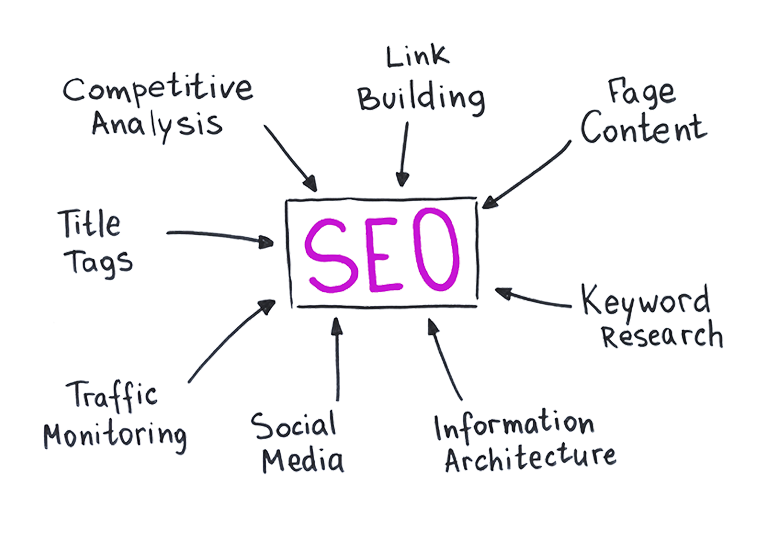
Not only that. SEO techniques are an extremely complex subject and depend on so many factors such as: search volume, seo on page, seo off page, meta description, long tail keywords, just to name a few.
The key is to carefully evaluate the company’s unique context, product positioning, brand awareness, and target market behavior to determine the optimal mix of marketing tactics.
ADV campaigns: when are they effective?
There are some specific cases where ADV campaigns are very effective, such as when I want to:
- Quickly launch a new product in the market
- Figure out if a product has a potential market, i.e., I want to do a market survey
- Launching a start up
- To preside over a part of the online market not to leave it to my competitors
- Understand which keywords are most effective, i.e., those that convert the most
- Build a database for use in other activities such as email marketing strategies, marketing automation, and direct marketing.
Let’s try to see them in detail
Rapid launch of a new product
ADV campaigns are ideal for quickly generating visibility and interest around new products.
The ability to reach a wide audience in a short period of time is crucial to accelerating product adoption in the market.
Market survey
Online advertising campaigns provide immediate and measurable feedback that can be extremely useful in assessing market interest.
Through ad performance analysis, valuable data on user preferences and behavior can be gathered.
Launching a startup
For startups that want to quickly build brand awareness and acquire their first users or customers, ADV campaigns can be a powerful tool.
The flexibility and scalability of online advertising allow strategies to be adapted and optimized based on real-time results.
Online market presidium
In competitive industries, maintaining a dominant online presence through ADV campaigns can be essential to not cede space to competitors.
Online advertising allows you to remain visible at critical moments in the customer’s decision-making process.
Keyword optimization
ADV campaigns provide valuable data on keyword performance, allowing you to identify those that generate the most conversions.
This information is critical for optimizing both advertising campaigns and organic content for search engines.
Database construction
Online advertising can be an effective lead generation tool, allowing you to build a database of interested contacts that can then be fed back into email marketing, marketing automation and direct marketing campaigns. This creates a virtuous circle that continuously feeds and optimizes the overall marketing strategy.
The above demonstrates the importance of using ADV campaigns strategically to achieve specific business goals.
It is clear that, when employed correctly, ADV campaigns can offer significant benefits to companies in terms of visibility, data acquisition and growth.
The key is knowing how to effectively integrate them with other marketing tactics, such as SEO, to build a holistic, high-performing digital marketing strategy.
When not to use an ADV Campaign
ADV (Advertising) campaigns can be extremely effective in increasing visibility, traffic, and ultimately sales.
However, there are situations in which it may not be advisable to rely heavily or exclusively on paid advertising campaigns:
Limited Budget
If the enterprise has a very limited budget, ADV campaigns may not be sustainable in the long term.
The cost per click (CPC) or per impression can add up quickly, consuming the budget without ensuring a positive return on investment(ROI), especially in highly competitive industries.
Lack of an Optimized Conversion Strategy
If the website or landing page is not optimized to convert traffic into sales or leads, investing in ADV campaigns may not be the best choice.
It is essential to have a clear conversion funnel and an excellent user experience (UX) to turn paid traffic into actual customers.
Absence of Quality Content or Unique Offerings.
If the product or service offering is not well differentiated or if the content is not compelling and of high quality, ADV campaigns may not produce the desired results.
Users might click on the ad, but then quickly leave the site if they do not find what interests or convinces them.
Long-Term Dependence
Relying solely on paid campaigns for sales can create an addiction in which sales collapse as soon as advertising spending stops.
If there is no strategy to build organic reach or customer loyalty beyond paid ads, this can be unsustainable for long-term growth.
Sectors with Stringent Regulations
Some industries, such as pharmaceutical, financial or gambling, have strict rules regarding online advertising.
In such cases, ADV campaigns may be severely restricted or even banned, making them a less ideal or feasible choice.
Very Specific Niche Target
If your target market is extremely specific or niche, it may be difficult to reach it effectively through ADV campaigns without wasting budget on irrelevant clicks.
In these cases, more targeted or organic marketing techniques might be more effective.
Lack of Data or Insight on the Target.
Without a clear understanding of your target audience, ADV campaigns can be ineffective or inefficient.
Running advertising campaigns without solid data on your audience’s preferences, behaviors, and needs can lead to poor choices in terms of targeting, messaging, and channels.
In conclusion, ADV campaigns can be a powerful marketing tool, but it is crucial to assess the company’s specific context, available resources, target audience and business objectives to determine whether and how to integrate them into the overall marketing strategy.
What benefits can we achieve by integrating SEO strategies with ADV campaigns?
When we talk about integrating SEO strategies with advertising (ADV) campaigns, we are referring to a holistic approach to maximizing online visibility and ROI.
SEO and ADV, although often viewed as separate strategies, can work in synergy to enhance a brand’s online presence.
Synergies between SEO and ADV
- Shared Data: Use data from ADV campaigns to inform and optimize your SEO strategy.
For example, keywords that perform well in terms of click-through rate (CTR) and conversions in pay-per-click (PPC) campaigns can be valuable for optimizing organic content. - Brand Awareness: ADV campaigns can increase brand awareness, leading to a higher likelihood that users will click on your organic results.
In this sense, strong brand recognition can indirectly improve organic click-through rates (CTR). - Quality Content: SEO relies on quality content that responds to users’ search intentions.
This content can also be promoted through ADV campaigns to amplify its reach and attract backlinks, which are crucial for SEO ranking. - SEO-Driven Retargeting: Use retargeting in your ADV campaigns to reach users who have interacted with your organic content but have not taken a desired action (e.g., newsletter subscription, purchase).
This creates a virtuous cycle between organic and paid traffic. - Landing Page Optimization: Ensure that landing pages used for ADV campaigns are optimized for both ads and organic search. This includes page speed,user experience (UX), and content optimized for relevant keywords.
- Analysis and Monitoring: Monitor both SEO and ADV campaign metrics for a complete understanding of the effectiveness of your strategies. Using tools such as Google Analytics and Google Search Console can help identify opportunities and areas for improvement.
- Keywords and Optimization: Focus on keywords proven to generate not only traffic but also conversions.
Keyword analysis for ADV campaigns should go hand in hand with SEO keyword research to uncover unexplored opportunities and optimize content accordingly.
In conclusion, integrating SEO and ADV campaigns requires a deep understanding of both worlds.
By creating a strategy that leverages the strengths of both, you can build a more robust and high-performing online presence.
Remember that the key is to keep content user-centered, providing value and responding to user needs and questions.
Summarizing: SEO Strategies VS ADV Campaigns
In this last paragraph I have summarized the main elements of the two strategies.
Differences:
- Time for results: SEO takes longer to show tangible results than ADV campaigns, which can generate traffic almost immediately.
- Cost: SEO has an initial cost for optimization, but less ongoing expenses. ADV campaigns require a constant budget to maintain visibility.
- Sustainability: SEO traffic tends to be more sustainable over time, while that of ADV campaigns stops as soon as ad spending stops.
Strengths and weaknesses:
- SEO: Strength is sustainability and cost-effectiveness in the long term. Weakness lies in the time it takes to see results and the complexity of the strategies to be implemented.
- ADV campaigns: Strength is the ability to generate traffic and visibility quickly, with precise control over targeting. Weakness lies in ongoing costs and potential decrease in effectiveness over time without optimization.
When to use:
- SEO Strategies: Ideal for building a long-term online presence, improving brand credibility and attracting consistent organic traffic.
- ADV campaigns: Optimal for short-term goals, such as promotions, product launches or to test new markets.
In conclusion, the choice between Search Engine Optimization Strategies and ADV campaigns depends on the company’s specific goals, available budget, and timing. Often, the most effective strategy combines both approaches to leverage their respective advantages and minimize weaknesses.
Are you interested in learning more about the topic related to SEO Strategies?
Read these articles:
- SEO blog. Confessions of a copywriter
- What impact can Google Multisearch have on your Business?
- Schema.org what it is and why it is critical for SEO
- Black Hat SEO. Who are they?
- SEO copywriter: 12 useful tips for making content for your site
- SEO consultant. What it is and how it can help you!
- Pricing strategies: how they can make a difference