


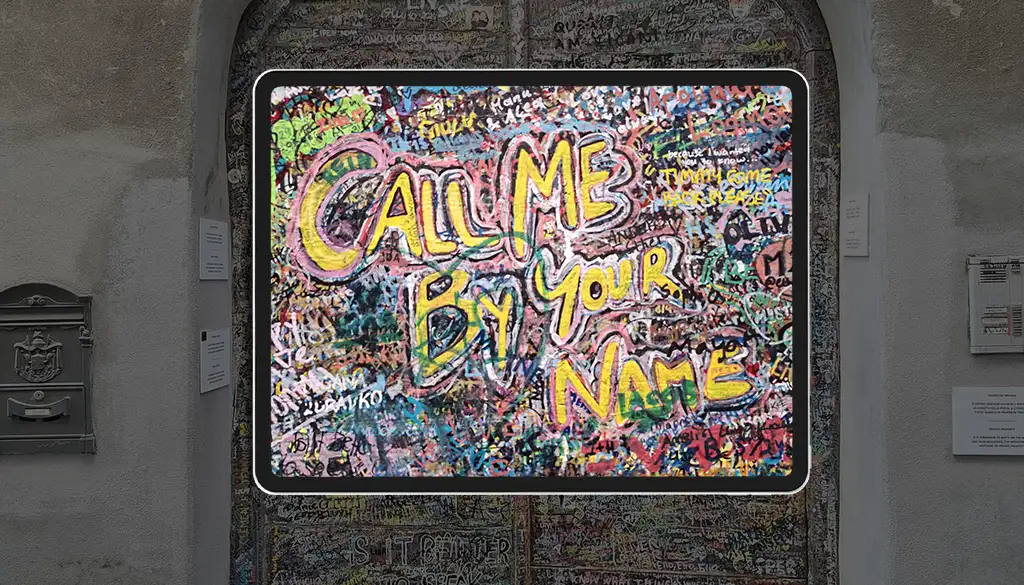
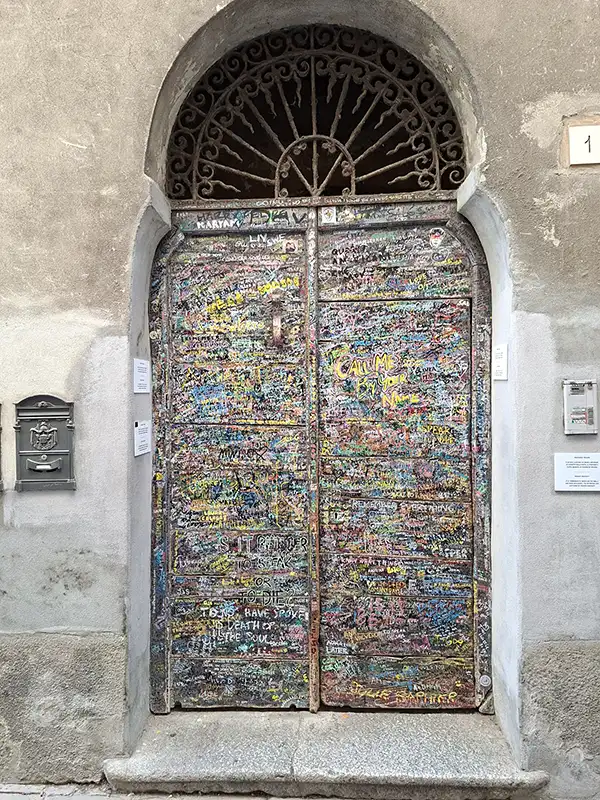
Every day, an average of 150 people arrive in Crema with the same goal in mind: to sit at a table at a café in Piazza Duomo, take a photo of a wooden door in Vicolo Marazzi, and cycle along the country roads of the Serio Park.
On weekends, that number can reach as high as 300. They come from the United States, China, Northern Europe, and Poland. Almost none of them had heard of Crema before 2017.
What has happened in the meantime? A movie has come out. *Call Me by Your Name*, directed by Luca Guadagnino, an Oscar-winning film shot in the summer of 2016 right here, among the streets of the city center and the villas of the Crema plain.
Since then, the story of Elio and Oliver has continued to draw a steady stream of visitors to the Crema area—a trend that has now lasted for nearly a decade.
This article describes how a single film reshaped the tourism industry of a provincial city.
It also attempts to answer a question that should be of interest to anyone involved in regional development: Was this a stroke of luck, or is it a model that can be replicated?
Where was *Call Me by Your Name* filmed?
*Call Me by Your Name* was filmed in 2016 in Crema and the surrounding area, in the province of Cremona.
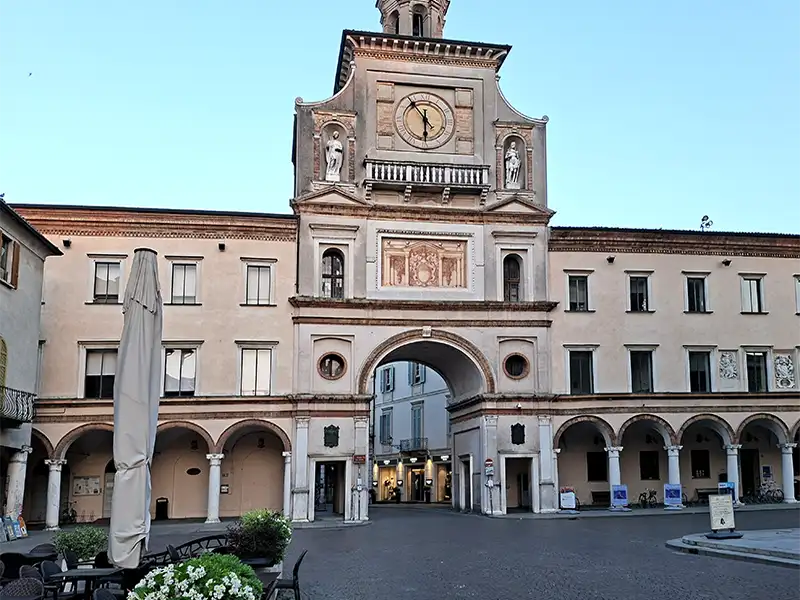
The most visited locations are Piazza Duomo in Crema—with the café table that has become an icon of the film—the gate on Vicolo Marazzi, Villa Albergoni in Moscazzano (the Perlman family’s home), and the Laghetto dei Riflessi in Ricengo, in the Serio Park.
The iconic locations along the route
The film tourism route follows in the footsteps of the protagonists and winds its way on two wheels through the city and the countryside. In the city center, Piazza Duomo and Vicolo Marazzi remain the most photographed spots.
Outside the city, the route takes you to Villa Albergoni in Moscazzano, the Laghetto dei Riflessi in Ricengo, the town square in Pandino in front of the war memorial, and, further away, the Serio waterfalls in Valbondione.
A map available throughout the area, turning every stop into an opportunity to rest, shop, and enjoy new experiences.
For those involved in tourism, this is a valuable detail: tourists don’t just stay in one place, but travel throughout the region.
More stops mean more coffee breaks, more lunches, and more overnight stays spread out between Crema and the nearby villages.
How much tourism did the movie generate in Crema?
The numbers point to a structural transformation, not a flash in the pan. It’s best to interpret them by distinguishing between the different levels of data collection, because each one measures something different.
Across the entire region, 2024 far exceeded pre-pandemic levels with over 239,900 arrivals (+23% compared to 2015) and 470,800 overnight stays, while 2025 confirmed this trend with over 258,000 visitors and more than 521,000 overnight stays: the best results in the last ten years.
The most revealing figure, however, comesfrom the Pro Loco Infopoint in Crema.
Of the approximately 22,000 visitors who checked in in person, 13,933 said they had chosen Crema specifically because they were inspired by the film: nearly two out of every three tourists.
This proves that it is not a side effect, but rather the main reason for the trip for most of those who come here.
To round out the picture,the Urban Data Observatory recorded over 1.7 million total visits to the city during the summer-fall quarter of 2025 alone, and the Infopoint reported a 17% increase year-over-year.
During certain peak months, Crema recorded more tourist visits than the provincial capital, Cremona, itself.
What Is Film Tourism (and Why It Works)
This phenomenon has a specific name: film tourism, or film-induced tourism.
It is tourism driven by the desire to visit the locations where a beloved movie, TV series, or book is set.
The simplest metaphor is that of a “living postcard.”
When a movie becomes part of the emotional memory of millions of viewers, its locations cease to be mere backdrops and become destinations.
The viewer wants to step inside the postcard, walk where the characters walked, and sit where they sat.
The film does what would normally cost millions of euros in advertising: it creates an emotional connection between a person and a place, even before that person sets foot there.
In the case of *Call Me by Your Name*, this connection has an additional dimension: the story has a strong international flavor and resonates deeply with the LGBTQ+ audience, attracting a loyal, motivated group of travelers who are eager to return.
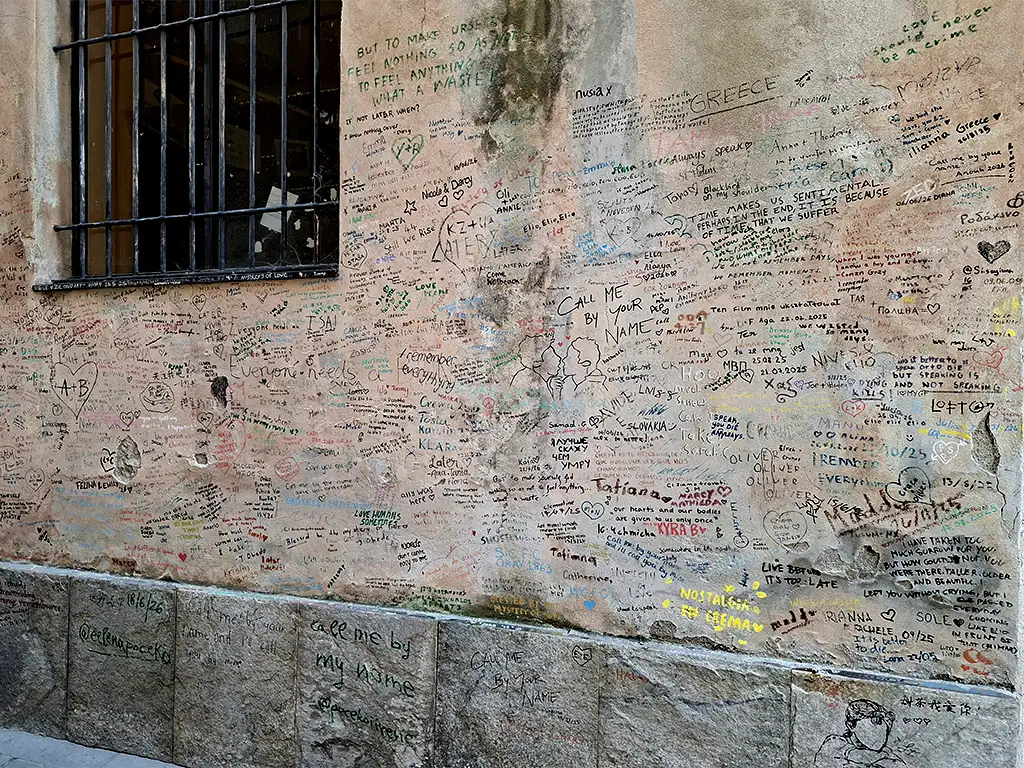
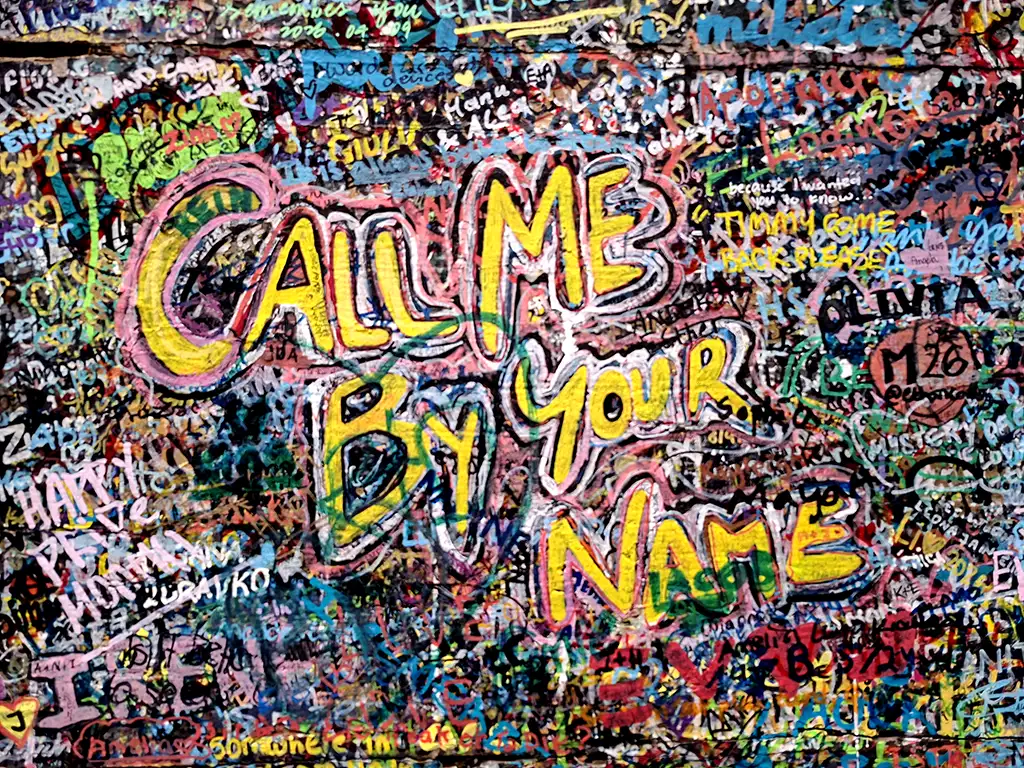
The wall of signatures near Vicolo Marazzi, where thousands of fans leave a mark to show they’ve been there, is the most tangible symbol of this connection: not a man-made attraction, but a tradition that arose spontaneously from the community of visitors.
Every day, I see dozens of young people in Piazza Duomo holding a photograph, trying to find the exact spot where the scene was filmed. When they find it, they hold up the photo and use their cell phone to take a “photo of the photo” to capture the moment and be able to say, “I was there.”
Why the Crema Model Really Worked
Having a successful movie filmed locally is a necessary condition, but it is not enough on its own. Many film locations remain niche attractions. Crema, on the other hand, has turned this opportunity into a system. Three factors made the difference.
Authentic and recognizable locations
The scenes in the film are shot on location at real, accessible places, not on reconstructed sets. Visitors will find exactly what they saw on screen: the same square, the same doorway, the same landscape.
This authenticity is the driving force behind film tourism, because it ensures that the experience stays true to the memory.
A community that welcomed them—but not right away
Bars, restaurants, B&Bs, and vacation rentals have been able to adapt quickly to the new demand.
Today, non-hotel accommodations account for about 93% of the province’s lodging options and provide nearly 60% of the beds: a widespread network that has captured the influx of visitors without the need for large hotel chains.
The value generated was distributed throughout the region, reaching local businesses.
Institutions that have developed this opportunity
The Municipality of Crema, together with the neighboring villages, has secured a grant of 127,000 euros from the Lombardy Region to create official cycling routes titled “Falling in Love with Crema: In the Footsteps of Elio and Oliver.”
To mark the 10th anniversary of the filming, the Pro Loco has launched special tourism packages, merchandise, and themed events. What started as a spontaneous movement has become a project.
What Can a Region Learn from the Crema Case?
Regional tourism marketing does not depend on isolated strokes of luck, but rather on the ability to transform an opportunity into a repeatable and widespread experience. The case of Crema offers some concrete lessons.
First: the value of a tourist attraction should be spread across the region. A multi-stop itinerary generates more economic benefits than a single selfie spot. Every stop is an opportunity for local businesses.
Second: hospitality matters just as much as the attraction itself. A tourist who finds a well-maintained B&B, a restaurant that tells its own story, or a business owner who knows the film’s itinerary has a richer experience and talks about it. In tourism, word of mouth is still the most powerful channel.
Third: leadership is needed. The difference between a spontaneous attraction and a lasting destination is the presence of someone who coordinates efforts, collects data, develops itineraries, and sustains interest over time.
At this point in the discussion, the work we do at Factory Communication comes into play: helping local communities, hospitality businesses, and food and beverage establishments interpret their data, craft a coherent narrative, and turn a stream of visitors into lasting relationships.
However, the Crema case also raises a more ambitious question.
What if a city decided to produce its own movie?
Crema received her film as an unexpected gift. However, the interesting question is another: what if a region decided to deliberately create a similar effect?
Let’s imagine a city that, instead of waiting for a director to choose it, decides to fund the production of a film set in its own streets.
Not solely with public funds, but through a form of crowdfunding among local businesses: restaurants, bars, hotels, shops, and wineries. Each contributes an amount proportional to its means.
The logic is simple and, at the same time, profoundly fair. If even a fraction of the Crema phenomenon were to be replicated, every euro invested would come back in the form of visitors who stay overnight, eat, and shop.
The benefit would be shared by all: not concentrated in a single large company, but spread among dozens of small businesses that, together, made the project possible.
This model is in line with a vision of business as a shared asset: profit arises from collaboration and is redistributed throughout the region, respecting the community that generates it.
Of course, an initiative like this requires careful planning, measurable goals, and a long-term strategy. However, the principle remains valid: the regional marketing of the future can be planned, participatory, and sustainable, rather than left to chance.
Regional Marketing: Frequently Asked Questions
The film was shot in 2016 in Crema and the surrounding area. The main locations are Piazza Duomo, the entrance to Vicolo Marazzi, Villa Albergoni in Moscazzano, and the Laghetto dei Riflessi in Ricengo, in the Serio Park.
The city welcomes an average of 150 film tourists per day, with peaks of 250–300 on weekends. At the Infopoint, out of approximately 22,000 annual visitors, 13,933 say they chose Crema specifically because of the film.
It is a form of tourism driven by the desire to visit the locations where a movie, TV series, or book is set. It is also known as film-induced tourism and is becoming an increasingly important tool for regional marketing.
A successful film is hard to plan for, but the system that promotes it can be designed: itineraries, widespread hospitality, data collection, and strategic management transform a one-time event into a lasting destination.
From Opportunity to Strategy
The case of *Call Me by Your Name* shows that a story can change a city’s tourism prospects.
Crema didn’t have any major traditional attractions: it had a rich history, authentic places, and a welcoming community. The rest was hard work, data, and a long-term vision.
If you manage a lodging facility, a food and beverage business, or coordinate tourism development in a region, there is a tourism marketing strategy behind every sustainable trend.
At Factory Communication, we help companies in the tourism and hospitality industries build their brand, starting with data and a narrative that aligns with the identity of the destination.
Would you like to learn how to turn a one-time opportunity into a steady stream of tourists for your business or region? Let’s talk about it: let’s work together to develop a customized tourism marketing strategy.