


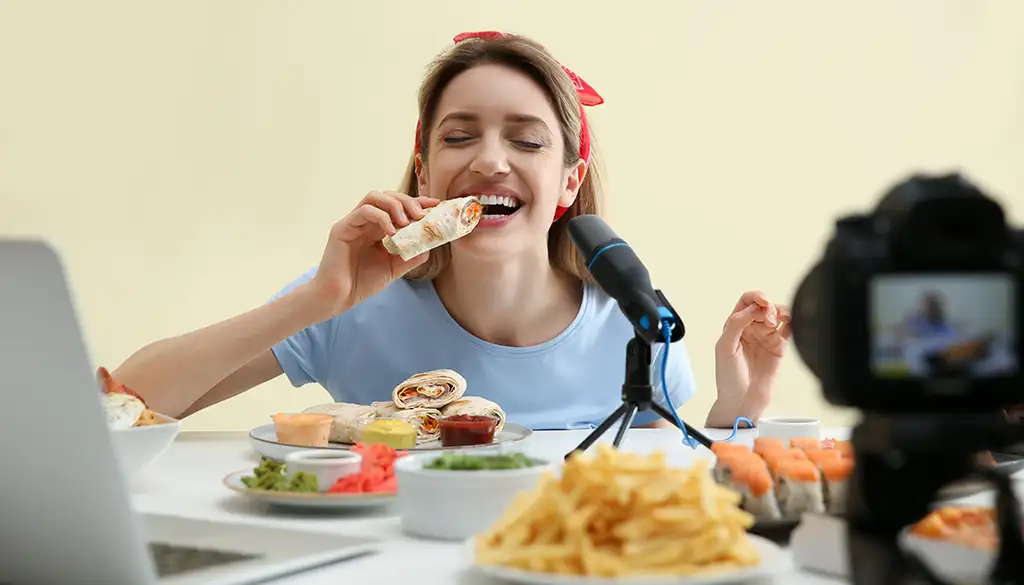
Imagine a full table every night, not thanks to expensive advertisements, however, thanks to the authentic voice of someone who has experienced your kitchen firsthand.
This is not a utopian scenario: it is exactly what happens when an influencer marketing campaign is built sensibly, with the right strategy and the right profiles on the side.
Yet many Italian restaurateurs find themselves in an awkward position: they know that digital matters, they see colleagues posting collaborations on social, yet they struggle to understand where to start, how much to invest, and-most importantly-how to distinguish a serious agency from those who simply sell followers and likes.
This article was created to answer exactly these questions.
Why influencer marketing has become essential for the restaurant industry
The restaurant industry is one of the most visual industries in existence. A well-photographed dish tells a story in half a second.
A Reel showing the atmosphere of an evening at the table can generate more interest than an article in a food guide.
The numbers confirm this trend: according to several studies on digital consumer behavior, more than 70 percent of people looking for a restaurant online rely on reviews and content on social media before booking.
Instagram and TikTok have become, in effect, the new Michelin guides for an ever-widening segment of the public.
The trust that traditional advertising fails to build
There is a substantial difference between a paid ad and a creator’s authentic storytelling.
The former is perceived as a commercial message-the human brain recognizes it and often filters it out.
The second comes as a personal recommendation, with the full force of the trust the creator has built over time with his audience.
For a restaurant, this means that a story published by a food blogger with 15,000 truly engaged followers can generate more bookings than a poorly designed €500 Meta campaign.
UGC: the content that works even when you stop paying
Alongside traditional influencer marketing, the importance of UGC – User Generated Content, or content created spontaneously by customers themselves – is growing rapidly.
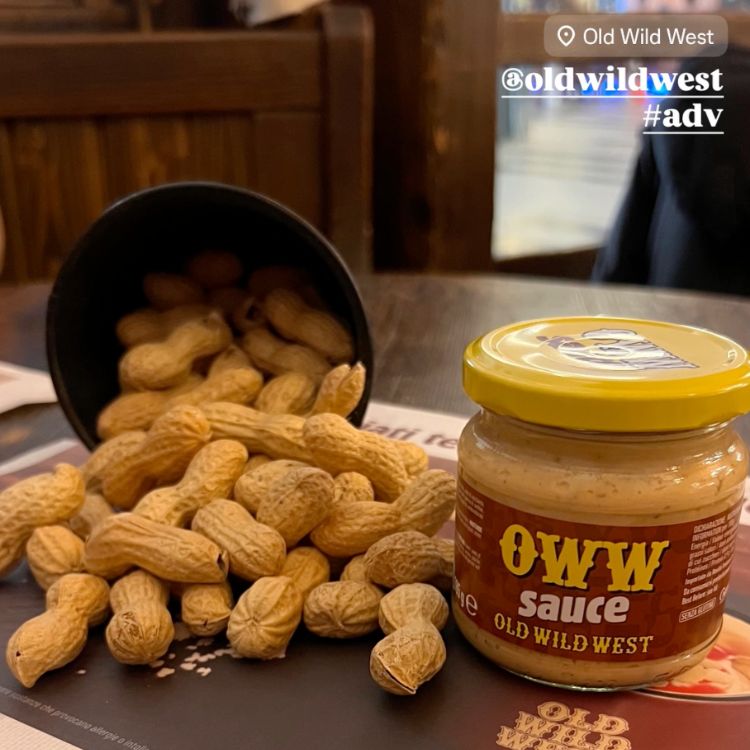
A photo posted by a satisfied guest, an amateur video of a particularly scenic dish, a story shared during a special evening: this content has tremendous value because it stems from a real experience and reaches networks of contacts that the restaurant could not have tapped otherwise.
Integrating a UGC strategy means turning every customer into a potential ambassador for your venue.
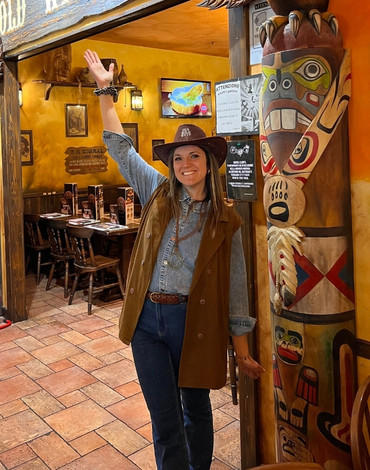
The influencer marketing strategies that really work for restaurants
Every restaurant is different: a completely different rationale applies to a regional cuisine establishment in a Tuscan village than to a Milanese cocktail bar or a gourmet restaurant on Lake Como.
However, there are some cross-cutting strategies that-when well adapted to the context-produce solid and measurable results.
Micro- and nano-influencers: fewer followers, more conversions
One of the most widespread-and most expensive-beliefs in the restaurant business is that the more followers an influencer has, the better.
The reality is often the opposite. Micro-influencers (between 5,000 and 100,000 followers) and nano-influencers (under 5,000) have significantly higher rates of engagement than profiles with hundreds of thousands of followers, and their audiences tend to be geographically concentrated and thematically consistent-two valuable characteristics for local catering.
A food creator with 8,000 followers all residing in your city is strategically worth much more than an influencer with 200,000 followers scattered throughout Europe.
Collaborations based on experience, not just on the plate
The most effective campaigns for restaurants do more than just show a dish.
They tell an experience: the welcome, the atmosphere, the chef’s story, the philosophy behind the wine list.
This kind of storytelling resonates with an audience that seeks authenticity and consistency-exactly the kind of customer a quality restaurant wants to attract.
Working with creators capable of building a narrative-and not just photographing food-makes the difference between a collaboration that brings bookings and one that only brings likes.
Seasonal and special event campaigns
The restaurant calendar naturally offers many opportunities to activate targeted campaigns: the Christmas menu, the reopening after the winter season, the launch of a new tasting menu, a theme night.
Structuring influencer marketing campaigns around these occasions allows you to focus your investment at high-potential moments and measure results more accurately.
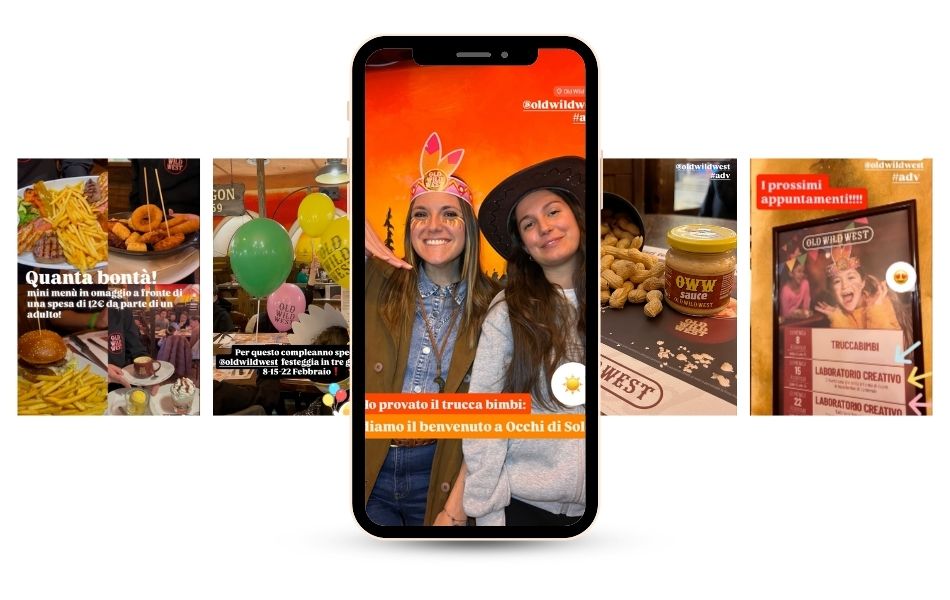
How to choose an influencer marketing agency for your restaurant
We come to the point that for many restaurateurs is the most sensitive: How do you evaluate an agency? What do you rely on to determine whether they are really worth relying on?
The honest answer is that the right choice depends on how well the agency can combine strategic expertise, food industry knowledge, and the ability to measure results.
A serious agency proposes a plan, sets goals, selects creators methodically, and returns clear data at the end of the campaign.
Questions to ask before signing any contract
When evaluating an influencer marketing agency for your restaurant, a few questions will help you understand right away who you are dealing with:
By what criteria do you select creators? The answer must go beyond the number of followers: engagement rate, thematic consistency, quality of content produced, authenticity of the audience.
How do you measure results? An influencer marketing campaign produces data: reach, impressions, clicks, saves, trackable bookings. If the agency can’t answer you on this, it’s a signal not to be underestimated.
Do you have specific experience in the restaurant industry? Food & beverage has dynamics of its own-seasonality, online reputation, review management, visual identity of the dish-that a generalist agency is likely not to master with the same depth as someone working vertically on that sector.
The signs that distinguish a serious agency
A quality agency works with transparency: it shows you creator profiles before proceeding, explains the strategy, provides a clear contract, and walks you through the evaluation of results.
It offers collaborations based on authenticity-the creator must actually visit your venue, experience it in a genuine way-and not just send products or coupons in exchange for a post.
It is in this approach that we see the difference between those who do influencer marketing as an ancillary service and those who integrate it into a broader communication strategy.
Working with a partner that combines strategic expertise, sensitivity to the food sector, and the ability to manage the entire supply chain-from creator selection to final reporting-is what turns a campaign into an investment with measurable return.
This is exactly the approach that guides Factory Communication’s work with its clients in the restaurant industry: every campaign is born from analysis, developed with precise criteria, and measured against real data.
This is clearly not only the case for UGC and influencer marketing campaigns.
If a restaurateur asks us to do a strategy, rebranding, etc., the first thing I do is go for lunch or dinner. Incognito.
I want to live the customer experience and gather so much useful information that goes beyond the quality of the food: welcome, friendliness, cleanliness, distance between tables, background noise, air conditioning, table layout–just to name a few.
How much does an influencer marketing campaign cost for a restaurant?
It is the question every restaurateur asks-rightly so-before making any decision. The answer varies greatly depending on the size of the creator, the length of the campaign, and the level of production required.
As a general guideline: a campaign featuring local micro-influencers can start with a modest budget (a few hundred euros per collaboration), while campaigns involving multiple creators and professional content production require investments in the range of a few thousand euros per month.
In both cases, what determines the value of the investment is not the absolute cost, however the return generated: bookings, media coverage, reusable content on your channels.
The hidden cost that is often underestimated
Many restaurateurs calculate only the cost of working with the creator and forget the cost of managing the campaign: profile selection, briefing, coordination, collection of materials, data analysis.
Relying on an agency to manage the entire operation-rather than improvising in-house-is often the most cost-effective choice in the medium term.
KPIs to monitor to understand if the campaign is working
A local influencer campaign yields visible results, provided you know what to look for. The key metrics a restaurant should track are:
Reach and impressions: how many people have seen the content produced by creators.
Engagement rate: the ratio of interactions (likes, comments, saves, shares) to views. It is the most reliable indicator for measuring the quality of the audience reached.
Traffic to the site or Google profile: well-constructed campaigns generate a measurable increase in direct searches for the restaurant name and visits to the Google Business tab.
Trackable bookings: through dedicated discount codes, tracked links or surveys at the time of booking (“how did you meet us?”), you can directly link bookings to the campaign.
Generated content (UGC): every photo, story or video posted by creators and customers is an asset that the restaurant can reuse on its channels, multiplying the value of the initial investment.
The next step: build a strategy, not a single campaign
Influencer marketing works when it is part of a larger vision. A single collaboration produces a spike in visibility that wears off in a few days.
A structured strategy-with selected creators, planned content, defined goals and monitored results-builds a solid digital reputation over time that attracts the kind of customers your restaurant deserves.
The Italian restaurant market is competitive, full of talent and wonderful stories to tell. The challenge is not having good food-that, many have it- however finding the right way to get it out to the right people, at the right time.
💬 Let’s talk about your restaurant.
Do you prefer a face-to-face discussion? Tell us about your current situation-we offer a free initial consultation to figure out together which strategies are best suited for your venue, your audience, and your goals.
FAQ – Frequently asked questions about influencer marketing for restaurants.
The number of followers is only one element to consider, and often not the most important one. A creator with 10,000 highly engaged and geographically concentrated followers in your city may generate more bookings than a profile with 300,000 followers distributed nationwide. Audience quality and engagement rate matter more than quantity.
It depends on the profile of the creator and the type of collaboration. For activities such as events or openings, a free dinner with possible guests may be an appropriate form of compensation. For creators who work professionally on the content creation and promotion aspect of the content-whether micro or with larger audiences and structured campaigns-it is appropriate to provide a financial compensation that also ensures a higher level of commitment and professionalism in content production.
There are analytical tools-such as HypeAuditor or Kolsquare-that allow you to check the quality of the audience: percentage of real followers, geographic origin, engagement rate compared to the industry average. A serious agency uses these tools in the selection phase and shares the data with you before proceeding with any collaboration.
The first signs-increased visits to the social profile or Google tab, increased direct searches-are generally seen within 7-15 days after the content is published. Actual bookings also depend on other factors (availability, seasonality, price range), however, a well-constructed campaign produces measurable effects already in the short term.
Yes, however, it is wise to start with a minimal digital presence-a curated Instagram profile, an updated Google Business tab with quality photos-before starting a campaign. The influencer brings traffic primarily to your restaurant’s digital environments: if what they find online is poorly curated, the campaign’s potential is significantly reduced. Building the digital foundation is the first strategic step.
Marketing strategies for Food & Beverage: related articles
- How to Choose an Influencer Marketing Agency: A Guide for Italian SMEs
- Competitor analysis in the Food & Beverage industry in 5 steps
- Marketing no alcohol: how to talk to those who choose to stop drinking
- Influencer Marketing Agency in Milan
- Brand Positioning: an important requirement for every company
- Ideas for attracting customers to a restaurant
- Description of menu dishes: you have to give value to your Product
- Local SEO for Restaurants. Grow your business!