

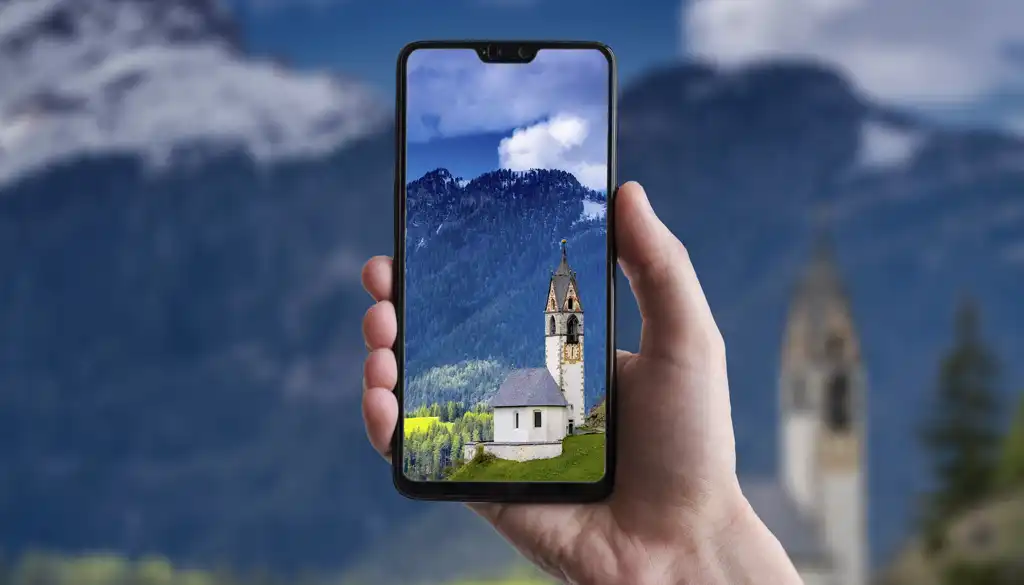
Mid-August, under a beach umbrella, phone in hand. There are still four days left in this vacation, and some people are already typing out the question about next year: where to go in September, with two kids, little desire to drive, and a set budget.
The response comes in twelve seconds and consists of a list of four place names.
One of those four names just won an award. And the interesting part is that they won it months ago, for work that no one sees.
The journey begins long before you make a reservation
In the 45 days leading up to a purchase, a traveler views an average of 141 pages of travel content and spends over five hours—303 minutes, to be exact—doing so.
The figure that really matters, however, is another one: 59% don’t have a specific destination in mind when they decide to travel, or are considering more than one. That’s where the choice is made.
The study that measures this combines digital tracking data from more than 70,000 travelers with a survey of more than 5,700 people in seven markets, none of which include Italy.
However, this trend is also evident in the most recent Italian data.
Where does inspiration come from?
Among online resources, destination websites are the leading source of inspiration at 45%, ahead of meta-search engines at 36% and online travel agencies at 35%.
Social media plays a different role: among those who use it throughout their trip, three-quarters use it specifically in the initial phase, when the idea for the trip is taking shape.
When the Research Gets Underway
During the research phase, the order changes, with the destination’s official website rising to 68%, trailing search engines at 72% and tied with metasearch engines and social media at 69%, ahead of online travel agencies at 59%.
Those who promote a region therefore have at their disposal the tool that two-thirds of travelers consult as they narrow down their options.
Being known is the first goal; being chosen is the second
Take two towns overlooking the same sea, thirty kilometers apart, with the same fish on their plates and the same sunset.
Both have names that people recognize. One takes reservations from April through October; the other works for three weeks in August.
The difference lies in a clear promise: anyone who goes there already knows what they’ll take home.
You can see the promise for yourself
The destination brand comes to life in the hotel room, on the menu at the local restaurant, and in the way the museum ticket counter greets visitors as they enter.
When private operators and those who promote the area convey the same message, visitors find exactly what they had imagined when they arrive and share their experience with others.
The most effective form of communication is still the one where someone else does it for you.
The development of the region begins with a choice
Defining which experiences truly define a place means leaving others out, and it is that very step that brings everything else into sharp focus.
Small destinations that outshine much better-known major cities have one thing in common: they’ve decided what they want to be remembered for.
What is place marketing?
Regional marketing refers to the set of activities that make a region recognizable and attractive to a specific target audience.
It includes defining the promise, the content that supports it, visibility in search engines and generative responses, and campaigns that amplify the message to those who have yet to decide where to go.
Content is still being posted on August 15
Guides, themed itineraries, event calendars, directions, and information on which month to visit: these are the answers to the hundreds of small decisions that come before making a reservation.
The solutions a region has at the ready
How far is the station? Is the trail accessible with a stroller? What happens during the second week of October? These are small questions, and each one influences a decision.
The asset that appreciates over time
A campaign lasts only as long as the budget that supports it.
A well-written guide keeps working even while you sleep, and it continues to do so into its third year, by which time it has already been linked to, cited, and referenced by others.
It also has a valuable side effect: it becomes the source others draw on when talking about you.
Now people are asking questions, and some are answering them
Race Statistics
A study by Mindtrip, conducted in partnership with Sabre, Sojern, and MMGY Travel Intelligence, finds that 54% of travelers have already used artificial intelligence to plan a trip and that 75% plan to do so.
The most common uses are planning itineraries (42%) and comparing flights, hotels, and tours (32%).
40% discovered a destination through AI, and 29% changed their plans based on a recommendation they received.
Phocuswright measures the same race from a different angle and shows a clear trend:
- 33% in the first half of 2025
- 43% in the second
- 56% as of March 2026.
In Italy, the integration of AI into travel planning stands at 26%, up six percentage points from 2025, while the European average is 24%, compared with 16% the previous year.
A necessary clarification: The Mindtrip and Phocuswright surveys were conducted in the United States; the former surveyed 1,006 adults and 103 destination executives and operators.
The Italian data, on the other hand, comes fromthe Holiday Barometer by Europ Assistance and Ipsos, which was conducted between late February and early April 2026 in twenty-six countries.
The front-row seat is still available
In terms of promoters, 22% of destination management organizations offer AI-based planning features on their websites, and 26% have a documented strategy.
62% of travelers would use an AI-powered trip planner if they found one on a destination’s website, and 25% are less likely to use a website that doesn’t have one.
Among destination managers, 72% believe that those who delay adoption beyond two years risk being left out of the discovery process.
Being featured by a conversational assistant rewards those who publish verifiable and well-organized information: seasonality, accessibility, hours of operation, distances, and crowd levels throughout the different months.
And the link still drives traffic, because only 8% of travelers consider the AI’s response alone to be sufficient, while 51% still click through to the source sites.
The Test That Takes an Afternoon
Open ChatGPT, Gemini, Perplexity, and Copilot, and ask each one the same question a tourist would ask: where to go for three days “in your area,” with “your typical audience,” during a “specific month.”
For example: “Where can I go for 3 days in December in Valtellina with my family?”
Make a note of who appears, what they say, and which sources are cited. Repeat this in thirty days. It takes an afternoon and provides the most accurate snapshot of your current standing.
Creators tell stories about what already exists
A creator brings their community to a place and shows it from a perspective that the area itself struggles to convey.
It works best when the choice prioritizes consistency over numbers: someone who speaks to that audience, in that tone, with that level of credibility.
Efficiency Comes from Reuse
The video, filmed over three days, will be used for the website, the newsletter, marketing campaigns, and the guide, which will be updated in January.
The measurement criteria are agreed upon during the briefing phase, along with the content to be delivered: trackable links, dedicated codes, and written reuse rights.
Long-term value lies in what remains, rather than in the weekly views.
How do you measure the success of a regional marketing project?
Success is measured on four levels:
- the presence of conversational assistants in the responses,
- brand searches for the name of the region,
- organic traffic to official content
- reservations attributable to staffed channels.
The first indicator is measured over the course of one afternoon; the others require a time series spanning at least two seasons.
The paid ad turns on what is already on
Meta, Google, YouTube, and retargeting quickly drive traffic to a specific audience within a chosen timeframe.
They perform at their best when everything else is in place: a clear promise, content that stands up to scrutiny, and a presence that’s already visible in search results.
19% of travelers say that advertising influenced their decision to book, and for the majority, this happened during the inspiration phase.
This is the time when a destination you haven’t decided on yet can be added to the list, and it explains why your budget goes further when you plan early rather than waiting until the last minute.
The five levers sound together
- Identity
- organic search
- presence in generative engines
- original content and creator-generated content
- Paid amplification.
Each one has an effect. Together, they create a stance, which is something different and much harder to shake.
To start on Monday, it’s best to begin with the least expensive option, which is submitting requests to the conversational assistants.
From there, the order of priorities practically falls into place on its own: you focus on the promise, write the missing answers, choose who will convey them, and set the budget.
It’s worth noting where we’re starting from: 90% of Italians travel at least once a year, and 70% say Italy is their destination for their next summer vacation. For an Italian destination, the main market is already right at home.
You can see the result at a specific moment: when, sitting under a beach umbrella, someone types in a question and finds your name among the four.
Regional Marketing: Frequently Asked Questions
It makes the region recognizable for a specific feature, extends the season beyond the peak weeks, and reduces dependence on intermediaries. The most tangible benefit comes from private operators, who find a shared vision on which to build their offerings.
Ask three questions: How does it measure results? What data does it provide before proposing a strategy? What decisions will ultimately be left to the local community? An agency that starts with the existing data before talking about creativity is on the right track.
It depends on the scope of the project, the number of staff to be involved, the status of the content already available, and the duration of the support. A region with an up-to-date website and a clearly defined value proposition starts from a much stronger position than one that has to build both from scratch.
An up-to-date official website with verifiable information, a content calendar, monitoring tools for online mentions, and metrics to track presence in AI-generated responses. Management tools come later, once the workflow is clear.
Answering the practical questions that no one else answers: distances, parking, accessibility, seasonality, and events. These are topics with low competition and a high likelihood of being cited, because conversational assistants are looking for exactly that kind of verifiable information.
By prioritizing audience relevance over size, defining content reuse rights in advance, and requesting links or trackable codes. Long-term value lies in the material that remains, rather than in the weekly view counts.
Thematic itineraries, seasonal guides, stories from locals, and answers to logistical questions. They work because they help you make decisions—not just dream—and because they remain useful even years later.
What matters are the events where the destination connects with those who plan trips—that is, tour operators, travel agencies, and the travel press. The return on investment is built through the work done before and after the event, much more so than through mere attendance.
Let’s talk about your area
An hour-long discussion to understand how your community is portrayed today and where it makes sense to start.
Official sources
- Expedia Group, The Path to Purchase
- Expedia Group, Full Report
- Mindtrip with Sabre, Sojern, and MMGY Travel Intelligence
- Phocuswright, The AI Surge
- Europ Assistance and Ipsos, Holiday Barometer 2026