


There are over 200 agencies operating in Italy that claim to specialize in influencer marketing.
For an SME entrepreneur using this tool for the first time, making the right choice is the difference between a campaign that yields measurable results and one that burns through the budget without leaving a trace.
The problem is that the market is opaque. Agencies use similar language, promise similar results, and showcase similar portfolios.
To find your way, you need a method: knowing what questions to ask before signing a contract, what red flags to watch for, what KPIs to expect, and how much it’s reasonable to spend.
This guide collects:
- 7 operational questions to ask any agency
- 5 red flags that should make you say no
- KPIs to be claimed depending on the type of campaign
- the honest cost ranges for the Italian market.
- the specifics for the sectors where influencer marketing makes the most impact: Food & Beverage, Fashion & Luxury, Tourism & Hospitality.
No hidden business goals in this guide-the goal is to put you in a position to make the best choice for your business, regardless of who you choose.
What an influencer marketing agency really does
Before talking about how to choose it, it is worth clarifying what an influencer marketing agency actually does. The term is often used confusingly, overlapping with adjacent services that have different perimeters.
The four typical operational activities
An influencer marketing agency, in its most structured form, actually delivers these activities:
- Selection of creators consistent with the company’s brand, product, and target audience
- Operational briefings that translate marketing objectives into creative guidelines for the creator
- Contract management, production, publication, and campaign monitoring
- Reporting with KPIs defined in brief, not a posteriori on available data
What an influencer marketing agency is not
Three frequent confusions worth clarifying:
An influencer marketing agency is not a talent agency.
The talent agency manages and contracts creators as represented: its main client is the creator, not the brand. The influencer marketing agency has the brand as its client, and activates external or proprietary network creators for campaigns.
An influencer marketing agency does not deliver pure UGC marketing.
UGC marketing collects and enhances spontaneous content generated by the brand’s real customers. The two activities are complementary, rarely alternatives, and require different operational skills (compliance, usage rights management, repurposing).
An influencer marketing agency is not a PR agency.
PR works on media relations and public opinion. Influencer marketing works on digital content creators with trackable audiences. The methodologies and metrics are different.

The 6 questions to ask before signing a contract
The six questions below are the quickest filter to distinguish a structured agency from one that presents itself as such without being so.
No serious agency should have difficulty answering all seven in a concrete and verifiable way. Vague answers are themselves an answer.
1. How do you select creators for my campaign?
Why ask: The answer must be methodological, not anecdotal. “We know the market well” is a non-answer.
A valid answer describes quantitative criteria(engagement rate, audience demographics, thematic consistency), qualitative criteria (tone of voice, values, previous collaborations) and operational criteria (use of dedicated platforms, AI for matching, anti-fake follower verification)
2. What KPIs do you guarantee and how do you measure them?
Why ask: This is the question that separates agencies that sell visibility from those that sell results. The answer should specify KPIs related to the campaign objective (awareness, conversions, drive-to-store) and describe the measurement tool.
Be wary of agencies that only talk about reach or number of followers reached.
3. Can I see the operational brief you give to creators?
Why ask: The operational brief is the document that translates strategy into creative guidelines. Serious agencies have established brief formats that they gladly show (anonymized, if confidentiality on previous clients is needed).
Improvised agencies have no structured format and handle briefings via WhatsApp messages with the creator.
4. How do you manage contracts with creators and rights to use content?
Why ask: Often overlooked and high-risk topic. A campaign without written contracts and clear usage rights exposes the company to legal problems and prevents repurposing of content on SEO, paid, and email.
A valid response describes a standardized contractual process differentiated by campaign type.
5. What are the results of three recent campaigns you have done in my area?
Why ask: The question is deliberately specific. Three campaigns, in your industry, recent. Structured agencies have presentable cases with verifiable numbers and contactable references.
Generalist or improvised agencies slip on “we have lots of cases” or present portfolios that are out of date or not vertical to your industry.
6. How does one of your campaigns fit into my overall marketing strategy?
Why ask: Pure operating agencies respond by limiting themselves to the scope of the influencer campaign. More mature facilities explain how the campaign ties into SEO, paid, email marketing, site, CRM.
If the agency cannot answer this question, it is an indicator that it is working in silos: the risk is that the campaign is an island that does not produce compounding effects on the rest of the marketing.

The 5 red flags that should make you say no
If, during the selection process, an agency exhibits even one of these five behaviors, it’s worth taking a moment to think things over before moving forward.
None of these red flags automatically means that the agency is unsuitable; however, each one is a sign that warrants further investigation before signing a contract.
#1 Promises of results without specifying KPIs and how to measure them
“We guarantee you great visibility,” “We will make a splash,” “We will go viral.” These are marketing formulas from the agency itself, not measurable promises. A serious agency commits to concrete, verifiable KPIs, not qualifying adjectives.
#2 Difficulty talking about costs and how they are composed
If the agency tergizes about the cost structure (what goes to the creator, what is agency fee, what is production, what is operations management), the risk is opacity. Structured agencies have transparent pricing and decomposed cost items. Opaques have a single price that cannot be broken down.
#3 No questions about your business before proposing a solution
If in the first few meetings the agency only talks about itself, its services and case studies, without asking you about your product, your buyer, your real goals, it is selling a standard package. Agencies that work by objectives do deep discovery before proposing.
#4 No proposed integration with the rest of marketing.
The agency that thinks of the influencer campaign as an isolated activity is losing 80% of the potential value of the work. Content produced by creators has life beyond the campaign: repurposing SEO, paid content, email marketing. If it is not being talked about, there is a methodological maturity problem.
#5 Anecdotal portfolio, without verifiable numbers and contactable references
“We did campaigns for [big brand]” is not a case study. A case study is objective, activity, measured KPIs, results with numbers, available client reference. If the agency fails to provide this level of detail for even one recent case, it lacks evidence of verifiable results.
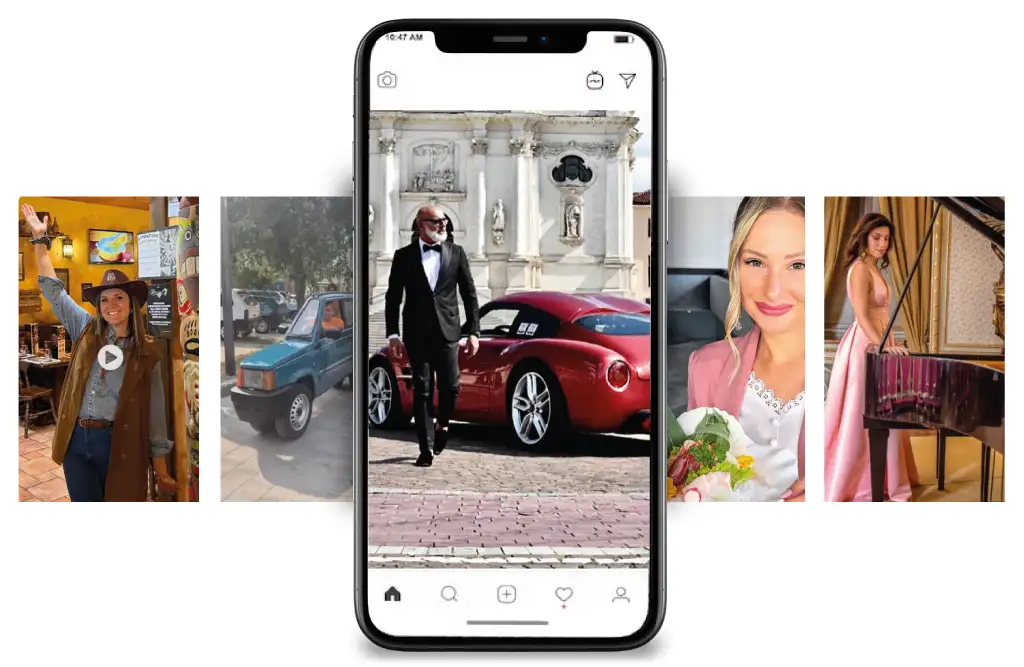
The KPIs that an agency must guarantee you.
The KPIs of an influencer marketing campaign depend on the goal of the campaign itself, not the tool.
An awareness campaign and a product launch campaign produce different numbers and must be measured differently.
A good agency defines KPIs at the strategy stage, before it starts, not after the fact on the data that are convenient to it.
The rule of KPI defined at brief
The principle is simple: the campaign success KPI should be agreed with the client before activation, written in the operational brief, and measured with tools defined in advance.
Agencies that propose “let’s see the results at the end of the campaign and then decide what to tell” are operating structurally weak.
Here is a reference table for key KPIs by campaign type, and what to check when selecting an agency:
| TYPE OF CAMPAIGN | MAIN KPIS. | WHAT TO CHECK |
|---|---|---|
| Awareness | Qualified reach, engagement rate by cluster | That the reach is segmented by buyer person, not aggregated |
| Drive-to-store | In-store traffic, traceable codes | That there is a verifiable physical tracking mechanism |
| Drive-to-event | Actual holdings vs. registrations | Let the KPI be attendance, not just enrollment |
| Product Launch | E-commerce conversions with dedicated UTMs | Let the MTUs be defined in brief, not a posteriori |
| Brand reputation | Sentiment analysis, share of voice | That there are continuous monitoring tools, not just at the end of the campaign |
At Factory Communication, we focus exclusively on KPIs that are comparable over time across our five areas of specialization, which are agreed upon during the strategy phase and tracked using integrated dashboards.
This is a methodological choice that we consider non-negotiable: without measurable KPIs, influencer marketing is an expense, not an investment.
How much does an influencer marketing agency cost
The issue of cost is one that agencies typically approach most reticently, and for which SME entrepreneurs struggle most to find referrals.
The honest premise is that there is no one-size-fits-all list: costs vary depending on many factors, some of which it is reasonable to know before the first call.
The five main drivers of price
What makes the cost of a campaign go up or down:
- Number and profile of the creators involved: A local micro-influencer costs a fraction of what a national macro-influencer does; however, a campaign featuring 10 micro-influencers can cost as much as one featuring 1 macro-influencer
- Territorial scale: local, regional, national or international campaign significantly affect the budget
- Business sector: regulated sectors (Finance, Legal, Healthcare, Food) require dedicated compliance that results in higher costs
- Production complexity: spontaneous creator content costs less than productions with direction, set, crew, and post-production
- Content usage rights and duration: content that can be used only on creator channels costs less than content acquired for multi-year use across all brand media
Indicative ranges for the Italian market
The ranges below are approximate and refer to the Italian market in 2026. They vary depending on the drivers listed above. They serve to give an order of magnitude, not to compare specific offers.
| TYPE OF CAMPAIGN | INDICATIVE RANGE (EURO) |
|---|---|
| Single campaign with 3-5 local micro-influencers | 5.000 – 15.000 € |
| National multi-creator campaign (8-15 creators) | 20.000 – 60.000 € |
| Integrated campaign (Influencer + UGC + Talent) | 40,000 – 120,000 over 3-6 months |
| Annual retainer for ongoing management | 60,000 – 200,000 € / year |
Bids significantly below these ranges should be checked carefully: they often hide either unreported follow-up costs, or creators of insufficient quality, or lack of structured campaign management.
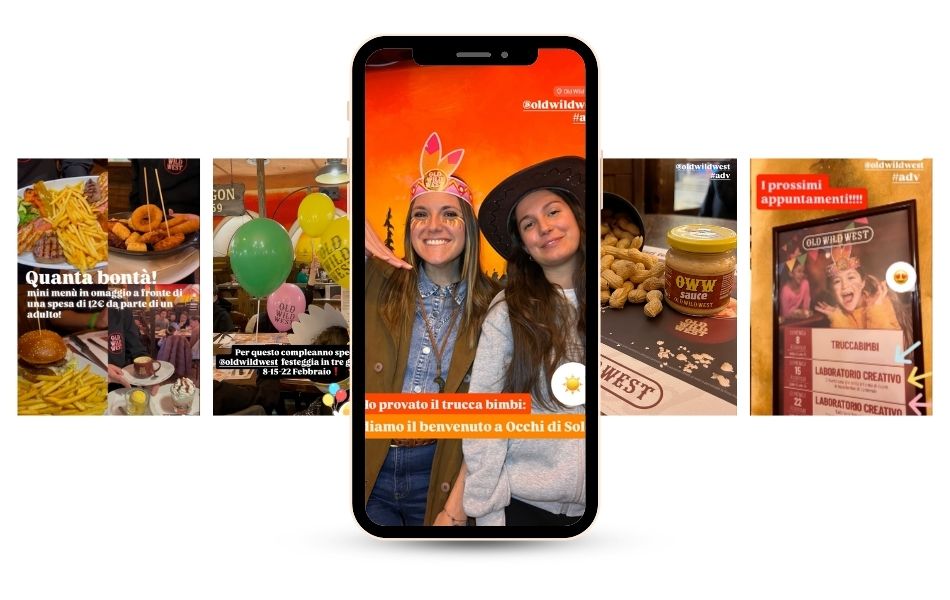
How it changes for specific sectors: F&B, Fashion, Tourism
Influencer marketing produces structurally different impact depending on the industry.
Three industries where the difference is worth knowing before choosing an agency: Food & Beverage, Fashion & Luxury, Tourism & Hospitality.
These are areas where FC has established direct experience and where we have seen generalist agencies fail because they did not have the necessary verticality.
Food & Beverage
Local-driven creators work better than national names. Territorial authenticity trumps aggregate notoriety.
A micro-influencer from the province with high engagement on local restaurants produces more in-store traffic than a national macro-influencer.
The agency must have territorial, not just national, creator mappings. Also check seasonality management (summer, holidays, events) and ability to plan drive-to-store campaigns with trackable physical KPIs.
Fashion & Luxury
Consistency between creator and brand aesthetic code is the first criterion, before audience.
A creator with 50,000 followers consistent with the brand’s aesthetic produces more value than one with 500,000 misaligned followers.
The agency must have visual expertise and the ability to evaluate qualitative aspects of content, not just quantitative.
For true luxury, the focus shifts to niche creators, long-term ambassadors, and multi-year usage rights management.
Tourism & Hospitality
The primary asset is conversion to booking, not content display.
Campaigns must integrate specific tracking mechanisms (dedicated discount codes, UTM on booking systems, partnerships with OTAs).
The agency must demonstrate the ability to handle high variance seasonality, precision geo-targeting and multilingual activations for foreign markets.
For Italian accommodations, the source market is often decisive: agencies without international network creators are structurally limited.
A summary checklist for your choice
To help you navigate the process of choosing an influencer marketing agency for your business, here’s a practical summary of what we’ve covered. Use this checklist as a reference during your initial calls with potential agencies.
The 6 questions to ask
- How do you select creators for my campaign?
- What KPIs do you guarantee and how do you measure them?
- Do you have a monitoring dashboard accessible to the customer?
- Can I see the operational brief you give to creators?
- How do you manage creator contracts and usage rights?
- What results have you produced in 3 recent campaigns in my industry?
- How does the campaign fit into my overall marketing strategy?
The 5 red flags not to be ignored
- Promises of results without specifying KPIs and how to measure them
- Difficulty talking about costs and how they are composed
- No questions about your business before proposing a solution
- No proposal for integration with the rest of marketing
- Anecdotal portfolio, without verifiable numbers and contactable references
The minimum KPIs to be expected
- KPIs defined before the campaign, written in the brief, not after the fact
- Measurement tools agreed in advance, not chosen on outcome
- Reporting accessible during the campaign, not just at the end of the activity
- Contactable references that can confirm the agency’s way of working
The good news is that applying even just the first 4 questions of the checklist cuts out most improvised agencies and leaves those that have built method and organization standing.
The bad news is that applying them requires taking the time to ask them: in a market where decisions are often made quickly, the discipline to ask these questions is already a competitive differential for your company.
TAKE ACTION
Do you want to see an agency working with this method?
DISCOVER INFLUENCER MARKETING SERVICES →
Do you first want to understand how we think strategically?
Agency Influencer Marketing: Related Articles
- Influencer marketing 2026: from campaign to system
- Influencer Marketing – The four dimensions of a system that works
- Influencer marketing for restaurants: how to choose the right strategy (and the right agency)
- The 10 (+3) Trends for the Influencer and Creator Economy in 2026
- Influencer Marketing Integrated into the Digital Strategy
- Influencer Marketing Agency in Milan
- Factory Talent Agency – Influencer and Content Creator Validation.
- UGC Creator: the future of influencer marketing is real, authentic and performing.