

Home » SMS Marketing: SMS Campaigns for Businesses
There is one channel that almost everyone opens and almost everyone reads within a few minutes of receiving it.
It doesn’t require an internet connection, it doesn’t end up in a promotions folder, and it doesn’t ask you to install anything: it’s a text message.
Precisely because it goes straight to people’s pockets, SMS marketing should be used in moderation.
A useful and welcome message strengthens the relationship with the customer; one too many is annoying.
The difference lies in the database, the timing, and what you choose to communicate.
This page explains how an SMS campaign works, when it’s a good idea to use one, and how we manage it to ensure it’s effective and respectful of the recipients.
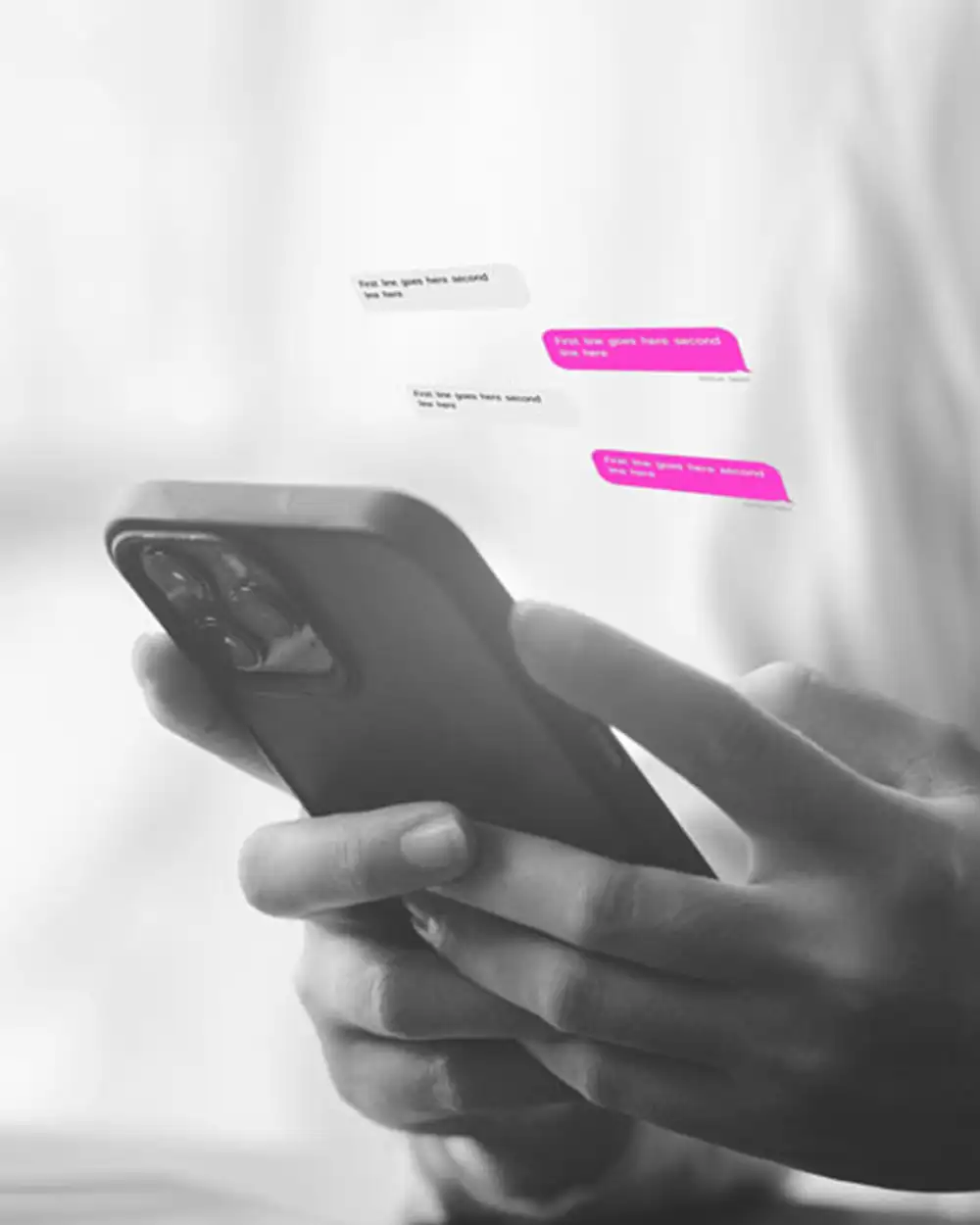

SMS marketing involves sending promotional or informational text messages to a list of contacts who have given their consent to receive them.
Its main strength is read rates: messages are almost always opened almost immediately—much more so than any email.
This is the ideal channel for time-sensitive communications: a limited-time offer, an appointment reminder, the opening of a store, or the launch of a promotion.
It works when the message is short, useful, and comes at the right time.
At Factory Communication, we manage SMS campaigns using databases that comply with consent regulations, with messages designed to be read and appreciated—rather than perceived as a nuisance.
The channel rewards those who communicate respectfully
The text message arrives directly on your phone, in a private space.
This strength is also its weakness: one useful message is welcome, but one too many is annoying.
The best campaigns send out just a few emails, at the right time, with content that’s worth reading.
A Few Words for a Clear Course of Action
A text message has limited characters and only a few seconds of the recipient’s attention. It needs to be a concise message, asking for just one action and providing a concrete reason to take it right away. Brevity is what makes this channel so direct.


SMS marketing is a form of direct communication that involves sending promotional or informational text messages to a list of contacts who have given their consent.
It stands out for its high read rate and the speed with which messages are opened—features that make it well-suited for timely communication.
Text messages have an open rate of around 93%, compared with about 31% for marketing emails in Italy.
About 98% of text messages are read almost immediately after being received, and 90% within three minutes.
Coupons sent via text message are used much more often than those sent via email.
There are tens of millions of active cell phone numbers in Italy, a user base that makes SMS a channel with wide reach and direct contact.


We define the strategy based on your business goals, identify your ideal audience, and choose the right tone to communicate with them.
Sender profiling takes into account geographic location, age, occupation, and company type.
We work with profiled and segmented databases whose members have authorized receipt of communications, in accordance with consent rules, and we ensure that each message includes an option to unsubscribe.
Partnerships with national providers enable bulk mailings to high-quality mailing lists.
We write short messages that ask for just one action, with a recognizable, personalized sender and a short URL leading to dedicated landing pages.
The timing of the submission is determined based on the industry and the objective.
Before sending a mass email, we recommend running small test campaigns to compare messages, identify the most effective time to send, and verify the entire user journey to the landing page.
We analyze the results and use them to improve future campaigns.

SMS campaigns for limited-time promotions and reservations, with messages sent at times when the theaters are full.
SMS campaigns for new reservations and last-minute deals.
SMS campaigns for previews and exclusive invitations, consistent with the brand’s values.
SMS campaigns for reminders and service announcements, in accordance with professional standards.
SMS marketing involves sending text messages to a list of contacts who have given their consent, for promotional or informational purposes. It operates through professional messaging platforms that manage the list, the sender, and the tracking of results.
To send promotional text messages, you need the recipient’s explicit consent, a recognizable sender, and the option to unsubscribe in every message. Proof of consent must be retained. A professional service handles these requirements automatically.
Text messages are almost always read within a few minutes and are well-suited for brief, urgent communications. Email allows for longer, more detailed messages, which are read over a longer period of time. The two channels complement each other: text messages for immediacy, email for in-depth communication.
It depends on the industry and the objective. In general, mid-morning and early afternoon time slots on weekdays work well. For the restaurant industry, sending messages around mealtimes is more effective. Choosing the right time is part of the campaign strategy.
Yes. It’s one of the most effective channels for stores, restaurants, gyms, and professional practices, which can send offers and reminders to local customers already on their contact list.
The list is built by collecting consent through forms on the website, in-store promotions, dedicated pages, or integration with the company’s management system. Consent must be freely given, specific, and documented.
A single text message contains up to 160 characters. You can send longer messages by stringing together multiple text messages, but the strength of this channel lies in its brevity: a concise message requesting a single action works best.
Yes. Professional platforms integrate with business management software and marketing automation tools, allowing you to send personalized messages based on user behavior, purchases, or deadlines.
A one-hour consultation to help you understand how to use SMS to achieve your goals, followed by a written proposal.