


Strategy, content, automation, and media relations. Eight services operating on the same level, with a single manager and metrics agreed upon at the outset.
Most of the companies we meet are already doing marketing. They post on social media, send out newsletters, update their websites, and occasionally appear in industry publications.
Each activity, taken on its own, works. Taken together, they tell different stories, speak to different people, and are measured by different standards.
You know the result: a lot of work, a lot of content, and the feeling that the payoff falls short of expectations.
It all comes down to direction—someone who decides the order of things and keeps everything on track.
In the following paragraphs, you’ll find out how we work, what each service includes, and how we measure results.
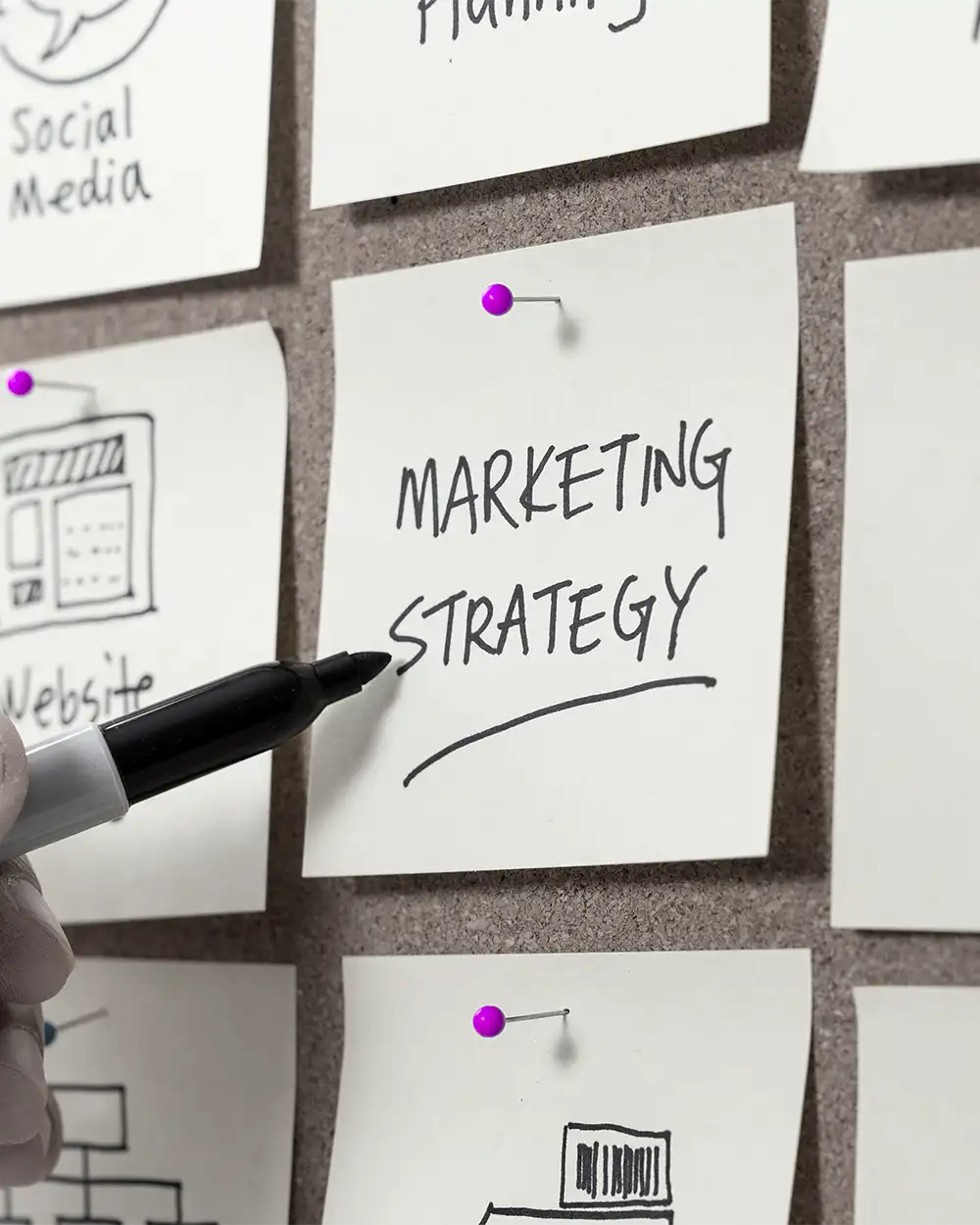

A company with twenty employees generates dozens of messages in a year: its website, social media posts, marketing campaigns, emails to customers, sales presentations, product descriptions, and interviews in industry magazines.
Everyone is born at a different time, often to different people, and almost always with different priorities.
This gives rise to three effects that you’ll recognize.
This is exactly where a unique strategic approach comes into play. It determines who we’re speaking to, what promise we’re making, in what order, and how we measure our success.
Each department then carries out its part within that framework, while the fundamental decisions remain the focus of strategic marketing and communications consulting.
There are times when a company benefits most from entrusting the reins to someone looking in from the outside.
These are the most common types of projects we handle.
In all these cases, the process starts from the same place: figuring out where you are today and where you want to be within twelve months.


Every project follows the four phases of the FARO method. You’ll find the same sequence across all services, because it’s this sequence that makes the results comparable over time.
Analysis of your current positioning, the market, and competitors; listening to the people in your company who interact with customers.
By the end of this phase, you’ll have a written plan outlining who your target audience is, what value proposition you’re making, and which metrics you’ll use.
The plan: which services to implement, in what order, according to what schedule, and how to allocate the budget.
This is also where we decide what your team will handle and what you’ll entrust to us.
Execution —content, campaigns, automation, and media relations—with a single project manager and scheduled reviews.
Monthly review of the data, adjusting what’s underperforming and expanding what’s overperforming.
This is the phase that brings the plan to life for all twelve months.
They encompass eight areas that operate on the same level: competitive analysis and positioning, naming, content strategy, inbound marketing, email marketing, marketing automation, customer experience, crowdfunding communications, and digital PR.
A project activates some of them, in line with the company’s objectives, under a single management structure and using metrics agreed upon at the outset.
Each card links to the service page, where you can find out what it includes, how long it takes, and how it’s measured.
Who are your competitors really, what markets do they dominate, and what opportunities remain?
This is the phase that lays the foundation for every subsequent decision.
The name of a company, a product line, or a product.
A process involving semantic analysis, availability checks, and real-world testing with the people the name speaks to.
The plan that determines what content is needed, for whom, on which channels, and at what frequency. It replaces the haphazard editorial calendar with a sustainable strategy.
Content and pathways that attract people who are already looking for what you offer, and guide them all the way to submitting a contact request.
Delivering value to the company’s contacts: newsletters, welcome sequences, and reactivating dormant customers.
The system that powers everything else: automated workflows, lead scoring, and CRM integration. It frees up people’s time so they can focus on higher-value activities.
Mentions in the online sources your target audience consults—industry publications, websites, newsletters, podcasts—and reputation management. This is the strategy that gets your name included in the responses from conversational assistants.
The planning and documentation of a fundraising campaign: webpage, materials, schedule of events, and engagement with the community.
Some projects start with execution, because the path is already clear and someone is needed to follow it.
Others stem from a more fundamental question: Where is the company headed? Who does it want to reach over the next three years? What promise can it uphold over time?
When that’s the question, the work starts from a different place.
With metrics selected at the outset and tracked every thirty days: qualified leads generated, cost per lead, share of visibility in industry searches, mentions in conversational assistants, email response rate, and revenue attributed to digital channels.
The metrics are agreed upon before starting, so that month-over-month comparisons remain clear.
That’s the first question that comes to mind, and it deserves a well-reasoned answer. Four factors determine the scope of a project.
During our first meeting, we’ll work through these four elements together and provide you with a realistic minimum investment threshold for the result you have in mind, along with a timeframe for when you can expect to see the first signs of progress.


The method remains the same; what changes are the language, the channels used, and seasonal trends. These are the four areas where we have the greatest depth of expertise.
Food production, restaurants, wineries, and breweries. An industry where real-world experiences—tastings, events, and local creators—complement digital initiatives.
A brand of clothing, accessories, and jewelry. Here, a consistent brand image across every touchpoint is just as important as the product itself.
Law firms, accounting firms, and financial services companies. Understated communication, proven expertise, and adherence to ethical standards.
Hotels, lodging facilities, and destinations. Seasonality, direct bookings, and online reputation guide every strategic decision.
Eight areas: competitive analysis and positioning, naming, content strategy, inbound marketing, email marketing, marketing automation, crowdfunding communications, and digital PR. A project activates the areas relevant to its stated objectives, all within a single plan with a single point of contact.
Three criteria are more helpful than any others: ask which metrics will be used and how often they will be reviewed; find out who will monitor the project on a daily basis; and ask to see an example of a situation where something didn’t perform as expected and how it was corrected. The answers to these three questions reveal a great deal about the approach.
The two approaches complement each other well. The in-house team knows the product and the customers better than anyone else; the external partner brings structure, insights from other industries, and continuity during peak periods. In the projects we manage, the division of responsibilities is determined in the second phase, on a service-by-service basis.
The first measurable results appear between the second and third months: incoming leads, email opens, and improved rankings in industry-specific searches. The full picture becomes clear after twelve months, which is the timeframe on which we base our plan.
The number of services implemented, the portion of work that remains with the in-house team, the duration, and the company’s starting point. During the first meeting, we review these elements and establish a realistic minimum threshold, along with the timeframe within which to expect the first results.
As a tool that speeds up repetitive tasks—research, first drafts, data analysis—and frees up people’s time for higher-value activities. Decisions regarding positioning, tone, and customer relationships remain in the hands of those who know the company best.
Yes. Projects are largely conducted remotely, with in-person meetings held as needed: at the start of the project, for plan reviews, and for team training. The offices are located in Milan and Crema.
Factory Communication has its registered office in Milan and its operational headquarters in Crema, and manages projects throughout Italy and for some clients abroad.
Closeness helps during moments that rely on being there in person: launching a project, training people, and reviewing the plan midway through the year.


An hour together to figure out where you stand today, which services make sense for your goals, and what metrics we’ll use to track your progress. By the end of the meeting, you’ll have a clear picture—one that’s yours to keep no matter what.